
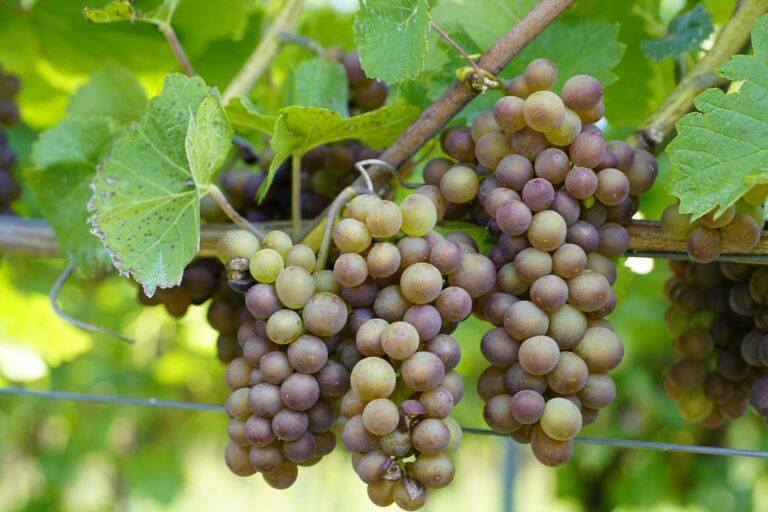
John 15:1-10
This is what Jesus had to say in each of these verses.
1. “I am the true vine, and my Father is the husbandman”.
2. “Every branch in me that beareth not fruit he taketh away: and every branch that beareth fruit, he purgeth it, that it may bring forth more fruit”.
Please notice what Jesus said. He said that every branch “in me” that beareth not fruit he (the husbandman) taketh away. As I develop this further, you will see how various Christians bring their presuppositions (assumptions) to this and falsely claim an interpretation that is not supported by the text.
They will tell you that the expression “in me” doesn’t mean that they were actually born-again Christians, but only that they professed a nominal Christian belief. But how can a nominal Christian be “in Christ?” Jesus says the branch bearing no fruit is in Him, the vine. In no sense is an unsaved individual in the vine or in Him because they are not in the vine.
Jesus goes on to say that “every branch (all branches are in the vine) that bearth fruit, he (the husbandman) purgeth it, that it may bring forth more fruit.” Some branches bear fruit and others do not. Those that do bear fruit are pruned by the Father, so that they will bear more fruit. But those branches in the vine (Christ) that bear no fruit will be taken away and disposed of (burned).
3. “Now ye are clean through the word which I have spoken unto you”.
4. “Abide in me, and I in you. As the branch cannot bear fruit of itself, except it abide in the vine; no more can ye, except ye abide in me”.
Jesus tells us that it is our responsibility to “abide in Him.” Only by abiding in Him can we produce fruit. Yet many evangelicals teach and believe that Christ did it all, and there is nothing we must do that Christ has not already done for us. If that were true, then the commandment for us to ‘abide in Him’ makes no sense at all.
5. “I am the vine, ye are the branches: He that abideth in me, and I in him, the same bringeth forth much fruit: for without me ye can do nothing”.
For the hard of hearing, Jesus repeats Himself. To bring forth much fruit, we branches must continue to abide in Christ. If the abiding were automatic, then the comment would be senseless.
6. “If a man abide not in me, he is cast forth as a branch, and is withered; and men gather them, and cast them into the fire, and they are burned”.
Jesus goes on to say that ‘If a man abide not in me’, which plainly means this is our responsibility to abide in the vine (Christ) by our own will and determination, aided by the grace of God. This is what we must do, and Christ did not do it for us as most Christians believe.
If we do not abide in Christ (our choice), “men gather them, and cast them into the fire, and they are burned.” It is clearly stated that we, the branches, must abide in the vine, or we will find ourselves (not our works, as many evangelicals falsely believe) in the fire.
7. “If ye abide in me, and my words abide in you, ye shall ask what ye will, and it shall be done unto you”.
Yet again, Jesus tells us to abide in Him and let His words abide in us. If we do that, then He will answer our prayers. It is conditional.
8. “Herein is my Father glorified, that ye bear much fruit; so shall ye be my disciples”.
9. “As the Father hath loved me, so have I loved you: continue ye in my love”.
Jesus then tells anyone who will listen that His love is not unconditional, for He says, ‘continue ye in my love.’ If continuing in His love were unconditional, then the command would be unnecessary, false, and misleading.
10. “If ye keep my commandments, ye shall abide in my love; even as I have kept my Father’s commandments, and abide in his love”.
Now Jesus tells the readers that ‘If ye keep my commandments, ye shall abide in my love.’ To abide in the love of Christ, we must do something more than believe, and that is to keep His commandments. This is what we are instructed to do, and Jesus did not do it for us as many falsely claim.
How did the Early Church Fathers (Patristic) interpret this passage?
Chrysostom (c. 349–407) — *Homilies on John* (esp. 75–76): stresses real participation in Christ that must continue. “Abiding” refers to ongoing faith and obedience; failure leads to severance and judgment by fire. He treats the warning as genuine, not hypothetical: baptism/grafting is real, but fruitlessness brings cutting off and judgment (with Judas as an example).
Cyril of Alexandria (c. 376–444) — *Commentary on John* (Books 10–11): union is lifegiving through the Son’s indwelling Spirit. Yet the Husbandman “cuts off” barren branches. Emphasizes synergy: grace supplies life; we must co-work (faith working through love). Pruning = painful discipline that increases fruit; removal = loss through persistent unbelief or vice.
Origen (c. 185–254) — *Commentary on John* (fragments): “in me” can describe a real but unperfected attachment. God “lifts/prunes” toward fruitfulness; stubborn barrenness ends in removal.
Augustine (354–430) — *Tractates on John* (80–81): the vine/branches image shows the church’s mixed body. Some are truly enlivened; others are only enlivened sacramentally/visibly in Christ. Those not abiding by love are cut off and burned. Warnings are real means God uses to keep the faithful.
Summary: This passage speaks of a genuine union that is real and saving, but must be persevered in; pruning is fatherly discipline; continued fruitlessness brings cutting off. The warning is genuine. Salvation is not guaranteed apart from abiding in the vine. They taught no such thing as once saved, always saved.
How does the Eastern Orthodox interpret this passage?
EO’s view of John 15 is within the framework of ‘theosis’ and ‘synergy’. Baptism and chrismation graft us into the Vine; the Eucharist sustains divine life. “Abiding is ongoing communion (faith + ascetic struggle + love). “Pruning” is an ascetic/liturgical discipline; “removal” is apostasy (freely turning from grace).
Perseverance is not automatic; salvation is dynamic communion. The “fire” is eschatological judgment for those who refuse to remain in Christ or abide in Him.
How does the contemporary Calvinist (Reformed) interpret this passage? (From ChatGPT)
Two main readings:
1. “In me” is a covenantal and or visible church connection, not necessarily a saving union. The fruitless are cut off from outward privileges and judged. The truly regenerate will persevere; warnings are God’s means to ensure perseverance. Judas exemplifies “in me” externally but not vitally.
2. Some note **αἴρει (airei)** in v.2 can mean “lifts up” (supports) rather than “takes away.” The Father first raises barren branches to help them fruit; persistent refusal ends in v.6 burning.
“Abide” is to continue trusting Christ; “fruit” is necessary evidence of life (James 2; Gal 5). v. 6’s fire is the final judgment of false professors.
How does the Arminian / Wesleyan interpret this passage?
Genuine believers can apostasize. “In me” refers to real saving union; abiding is conditional (“if ye abide”). Persistent fruitlessness is being cut off (loss of salvation). Pruning is the sanctifying grace; removal is severance from life or the loss of salvation. John 15 parallels Hebrews 6:4–8; 10:26–31; Romans 11:20–22, emphasizing the need to continue in faith or face being cut off. Assurance is conditional on abiding faith working in love.
How does the Broader Evangelical Spectrum interpret this passage?
> Lordship Evangelicals (Reformed-leaning): close to the Calvinist—fruit evidences life; false professors are removed.
> Free Grace Evangelicals: “In me” refers to the believer, and removal or burning refers to temporal discipline or loss of reward (1 Cor 3:12-15), not hell.
> Classical Non-Calvinists align with Arminian conditional security: warnings are real, and salvation can be forfeited and lost.
Key Textual Hooks
> “In me” (ἐν ἐμοί)** — Vital/saving union (Early Church Fathers, Arminian, Orthodox) vs. external/covenantal (Calvinist).
> “Taketh away” (αἴρει)** — “Take away” or “lift up.” Either way, v.6 shows final judgment for non-abiders.
> “Abide/remain” (μένω)** — Conditional. Calvinists: a means to preserve the elect; others: a genuine contingency of faith.
>“Clean/prune” (καθαίρει / καθαροί)** — Pruning as sanctification; the Father disciplines to produce fruit.
In Closing
Ultimately, each of us will need to consider the various views and determine which of those views most closely aligns with the apparent meaning of not only this passage but also the hundreds of similar passages.
I firmly believe that this passage conveys the clear message that abiding in the vine is a work/condition that we Christians must do. And for those who refuse to keep the commandments to remain in Christ, and as required by Christ, they will be taken away and burned. Not that their works will be burned, but they, as a branch in Christ, will be burned in perdition.
Chat GPT Endnotes
1. John Chrysostom, *Homilies on the Gospel of John* 75–76.
2. Cyril of Alexandria, *Commentary on the Gospel of John*, Books 10–11.
3. Origen, *Commentary on John* (fragmentary, in ANF 9).
4. Augustine, *Tractates on John* 80–81.
5. Eastern Orthodox catechesis on theosis and synergy (see *Philokalia*, vol. 1, and St. Maximus the Confessor).
6. Calvin, *Institutes* 3.2; modern Reformed commentaries (Carson, Morris).
7. Wesley, *Notes on the New Testament* (John 15); cf. *Sermons on Several Occasions* 16.
