
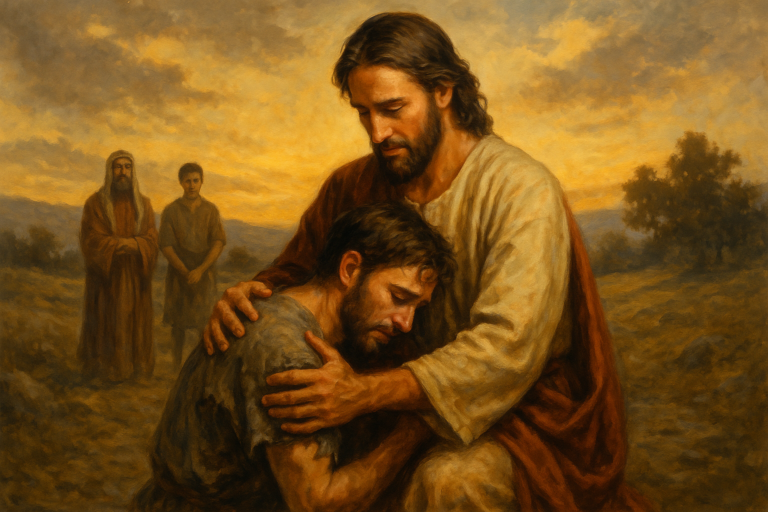
Acts 3:19
December 8, 2025
“Repent ye therefore, and be converted, that your sins may be blotted out…” Acts 3:19, KJV
I suspect that many Christians will read this verse, and because they are brainwashed, they will believe that the word repent is just another name for believe or faith. They have been taught to think that repentance unto salvation (conversion) has nothing to do with forsaking their sins. Repent means a change of mind about Jesus, not forsaking our sins so that they may be blotted out. Anticipating that phony argument, I have included the following verse.
“Unto you first God, having raised up his Son Jesus, sent him to bless you in turning away every one of you from his iniquities.” Acts 3:26. The context demands that we interpret the word repent to mean, “turning away every one of you from his iniquities.”
Verse 19
Let us look at both verses separately. We will start with verse 19 of Acts chapter 3.
1. Additional Scriptural References on Repentance and Forgiveness, (Blotting out sins) (KJV)
A. Repentance and Conversion
– Ezekiel 18:30-32. God calls Israel to repent and promises life.
– Matthew 3:2. “Repent ye: for the kingdom of heaven is at hand.”
– Luke 24:47. “Repentance and remission of sins should be preached…”
– Acts 2:38. “Repent, and be baptized… for the remission of sins.”
B. Blotting Out of Sins / Forgiveness (no payment necessary)
– Isaiah 43:25. “I, even I, am he that blotteth out thy transgressions…”
– Psalm 51:1. “Blot out my transgressions.”
– Colossians 2:13-14. Handwriting of ordinances “blotted out.”
– 1 John 1:9. “If we confess our sins…”
C. Purification, Washing, Cleansing
– Titus 3:5. “Washing of regeneration.”
– Acts 22:16. “Arise, and be baptized… wash away thy sins.”
– Hebrews 10:22. “Hearts sprinkled… bodies washed with pure water.”
2. Expanded Early Church Father Perspective (Pre-Augustine)
The earliest writers saw repentance from sin as a life-change and forgiveness as literal cleansing. “Blotting out” meant God truly removes sin, particularly through baptism. It did not involve a payment for sins, as many Christians today have been taught.
A. Ignatius of Antioch (c. 107)
– Repentance is urgent; sin separates from God.
– Focus on holiness, not legal justification.
B. Clement of Alexandria (c. 190)
– Repentance from sin restores purity and knowledge of God.
– Baptism = illumination and cleansing.
C. Origen (c. 185–254)
– Repentance of sin = healing of the soul.
– Forgiveness removes spiritual corruption.
3. Augustine’s Later Influence on Christian Theology
Augustine of Hippo (354–430) dramatically reshaped the Western worldview. His teachings differed significantly from those of the earlier fathers and his own opinions when he was younger.
A. Doctrine of Original Sin
– Augustine interpreted Romans 5:12 as the entire human race inheriting Adam’s guilt. In addition, Adam’s descendants were thereafter born with a sinful nature.
– Earlier fathers saw inherited mortality and corruption, not legal guilt and inbred sin, as Augustine did.
B. Forensic Shift
– Augustine introduced a more legal or forensic understanding of salvation, which is still used today by many, especially those who espouse the PSA theory of the atonement.
– Forgiveness becomes a judicial clearing of guilt, the appeasement of the wrath and justice of the Father, and Jesus paying the exact price for our redemption, not primarily healing from the bondage of sin and the blotting out (forgiveness without payment, the cancellation of our debt).
C. Grace and Free Will
– Augustine argued that fallen humanity cannot choose God without irresistible grace. Monergism. God alone is the source and cause of our salvation. God saves a few and damns the rest, all for His own glory. God is sovereign over all that comes to pass.
– Earlier fathers taught synergism, which is a cooperation between man and God. God is the procuring cause (that for the sake of which) while man is required to meet the conditions of salvation (that not without which).
D. Repentance and Baptism
– Baptism for Augustine removes inherited guilt from infants. And without this, a child who dies goes to hell for a sin that they did not commit.
– Earlier tradition emphasized repentance for actual sins, baptism for cleansing and illumination.
E. Influence on Medieval Western Christianity
– Augustine shaped Anselm, Aquinas, Luther, and Calvin.
– Led to doctrines of:
- Original guilt
- Total depravity (later)
- Predestination in strict terms
- Imputed righteousness and imputed obedience (developed fully by Reformers)
4. Eastern Orthodox vs. Augustinian Divergence
A. Orthodox View (Aligned with earlier fathers)
– Sin = sickness needing healing. (It is unfortunate to equate the crime of sin with sickness, which is no crime or sin.)
– Salvation = restoration and theosis.
– Repentance = ongoing metanoia.
– Blotting out = God’s healing and cleansing.
B. Augustinian/Western View
– Sin = guilt needing legal pardon.
– Salvation = judicial justification.
– Repentance = part of conversion, but not cleansing itself. And repentance from all sin is not expected or required.
5. Protestant Traditions (Further Expanded)
A. Calvinist (Reformed)
– Emphasis on forensic justification.
– “Blotting out” = removal from legal record.
– Repentance is evidence of regeneration and is not necessary for salvation.
– Scripture emphasized: Romans 4; Ephesians 2:8–9; Acts 13:38–39.
B. Arminian
– Repentance is enabled by prevenient grace, because they also believe mankind is born sinful.
– Forgiveness can be forfeited.
– Scripture emphasized: Hebrews 6:4–6; 2 Peter 2:20–22.
C. Wesleyan/Holiness
– Repentance leads to justification.
– Sanctification is the second work of grace.
– Scriptural emphasis on holiness: 1 Thessalonians 4:3; Hebrews 12:14.
D. Baptist/Evangelical
– Repentance = turning from sin, trusting Christ. But total or complete repentance is not necessary or required for Christians who are eternally secure.
– Forgiveness = complete removal at conversion. Generally, it includes the forgiveness of sins we will commit in the future.
– Often emphasize John 3:16; Romans 10:9–10.
Now we will consider the second passage in chapter 3 of the Book of Acts.
Verse 26
“Unto you first God, having raised up his Son Jesus, sent him to bless you, in turning away every one of you from his iniquities.” KJV, Acts 3:26.
Meaning of “Iniquities”
Iniquities in this passage refer to sins, especially habitual sin patterns or moral crookedness. The Greek term “ponēria” (root: ponēros) points toward active wrongdoing, not merely mistakes or unintentional sins. It indicates moral evil that twists the soul, both in individual acts and in the underlying disposition.
Early Church Fathers Before Augustine. The ante-Nicene Fathers generally taught that:
• Iniquities are the sinful habits and moral distortions that Christ heals by repentance and obedience. These are the conditions sinners must meet to receive the gift of salvation.
• Salvation involves a real power and genuine obligation from Christ to turn away from sins, not merely forgiveness of the guilt and penalty of sin.
• Emphasis is on moral transformation, synergy (cooperation between human will and divine grace), and healing of the will.
Key Fathers:
1. Justin Martyr – taught that Christ enables people to repent and live righteously, turning from past wickedness through real obedience empowered by God, but required the person’s obedience.
2. Irenaeus – emphasized that Christ “recapitulates” humanity and restores our ability to resist sin; iniquities are the old works of darkness that are undone in Christ.
3. Tertullian – stressed that repentance and amendment of life turn the believer away from iniquities, rejecting the idea that sin is unavoidable and not required for salvation.
4. Origen – saw iniquities as disorders of the soul healed by Christ through repentance, spiritual growth, and participation in the divine life.
Views of Later Christian Traditions on Acts 3:26
Calvinist (Reformed) Understanding:
• Iniquities are total depravity, not just actions, but a corrupt nature inherited from Adam.
• Christ turns people from their iniquities by sovereign, irresistible grace, regenerating the elect.
• Repentance is the result of God’s monergistic (one-sided) work in the new birth.
• The “blessing” is primarily justification and sanctification that follow from irresistible grace, which God decreed in eternity past.
Arminian / Wesleyan Understanding:
• Iniquities are sinful acts and dispositions, but humans are enabled by prevenient grace to repent.
• Christ turns people from their sins by offering grace to all; humans must cooperate and respond in repentance and faith.
• Repentance is synergistic but entirely dependent on God’s enabling grace and the exercise of our free will in turning from sin.
• The blessing includes forgiveness, transformation, and the restored ability to obey God.
Evangelical (General Protestant) Understanding:
• Iniquities are sinful actions, habits, and inner corruption.
• Christ blesses by offering forgiveness and empowering moral change through the Holy Spirit.
• Most evangelicals hold to some form of synergistic justification and sanctification.
Eastern Orthodox Understanding:
• Iniquities are passions, disordered energies, and habits of the soul.
• Christ blesses by healing human nature through His resurrection and by imparting grace in the sacraments.
• Salvation is theosis (deification): turning from iniquities is part of growing into likeness with God.
• Strong continuity with early Fathers: salvation is therapeutic, not merely legal.
In Conclusion
Both of these passages in Acts chapter 3 strongly suggest that repentance from sin or our iniquities is a condition of conversion and salvation. It is not a suggestion. Nor is repentance from sin optional. Repentance is not simply a change of mind, as many evangelicals actually believe. It is a wholesale change in what we live for and in our purpose in life. It is a brand-new direction and purpose in life: to please God. It is the death of the old man or woman and the birth of the new man or woman. Repentance is a condition, (that not without which), while the love of God toward sinners is the procuring cause of our salvation, (that for the sake of which).
Think of salvation like the gift of an inheritance. Many inheritances include conditions that must be met before the gift is distributed. Age and education might be two of those conditions. Conditions do not alter the fact that an inheritance is a gift, even if there might be performance-related conditions attached to the gift. In 1 Corinthians 6:8-10, we are told that the unrighteous will not inherit the kingdom of God unless they cease from the sins the apostle Paul lists there.
