
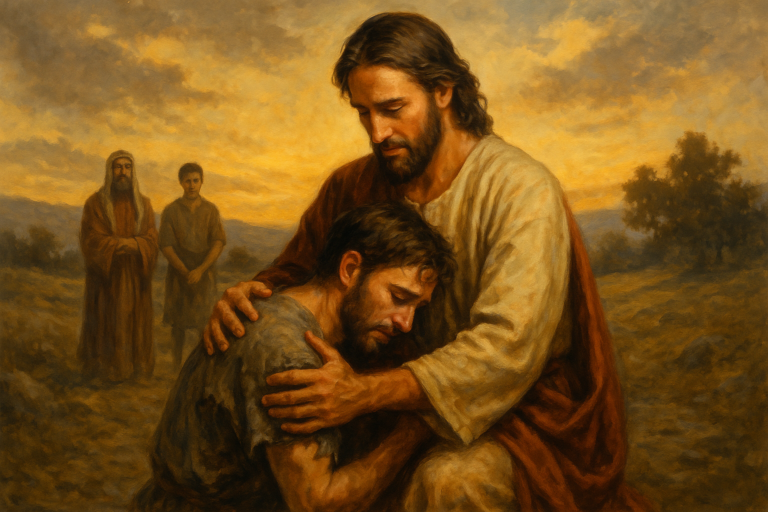
It seems that much of evangelical Christianity is focused on dealing with the symptoms and side effects of sin and not the root cause. Every effort to address only the outward manifestation of sin will never address the real cause and will never offer a victorious solution. It is very much like medicine. Much of medicine focuses on symptoms rather than the underlying cause. Sometimes, that is all that can be done to help those who are suffering. Very often, Christian books, programs, and messages focus on symptoms rather than the root cause. Could it be that Jesus came to deliver us from the root cause of all our moral problems, which bring pain and suffering into our lives and the lives of others? Is it possible that Jesus Christ came to save us from sins (the root cause) and not “in” our sins? That would be some great news, wouldn’t it?
In Matthew chapter one, the angel announced the coming birth of the Savior and said His name was to be called Jesus, “For He shall save His people from their sins.” Notice that the angel did not say that Jesus would save His people “in their sins, which is the gospel message today in just about all evangelical Christian churches. As we might expect, God wants to heal us from the root cause of our problems, which is sin. Most, but not all, Christian messages, books, and programs aim to heal us from the symptoms and side effects of the root cause, rather than the root cause itself. They have been brainwashed into believing there is no cure. All efforts that focus on the symptoms are doomed to failure. Christ came to give us victory over the root cause of our problems, which is sin.
Where did sin come from?
“Wherefore, as by one man, sin entered into the world, and death by sin, and so death passed upon all men, for that all have sinned.” Romans 5:12. Adam sinned and brought death into our world. Humanity followed his example and sinned, “so death passed upon all men.” Sin brought death and all manner of evil into the world. Sin is our cancerous enemy.
Why did Adam and Eve sin? Apart from the lies of the serpent in the garden, they let their excessive love of themselves blind them to the goodness of God. In this state of blind selfishness, they lost their trust and confidence in God and sinned. This is the root cause of sin, misery, pain, suffering, and death in the world. When we sin, we recapitulate Adam’s fall. Until the root cause is dealt with, there is no efficacious solution to the sin problem.
Remedies for the symptoms, instead of the solution
Church messages, programs, conferences, and so forth, may offer advice on how to control such things as addiction to pornography, drugs, and how to control other sins, but almost never, or very seldom, get at the root cause of the problem. And what is the root cause? Many Christians will tell you that the root cause is the Sinful Nature we all inherit from Adam and Eve, which we will have with us until we die. However, that is not true, and a solution is available to us. Read on. One very important root cause is a lack of faith in God’s promises. This root cause is a failure to believe in God, which prevents us from fully repenting of our sins and becoming a new creation in Christ Jesus. Many Christians are Christians in name only (CINOs) and have never heard or believed the truth about repentance from all sin, substantiated or proven by deeds. The real gospel is the power of God to heal us from sin and not in sin. The whole gospel is not just about being forgiven of the guilt of sin; it is about being healed from living in sin. Many of these souls have been taught never to expect to be healed from the bondage of sin in this life. What kind of healing is that? It is merely superficial healing without proper healing. The very works of Christ testify against this understanding.
When Jesus walked the earth, He healed the lame, the blind, the deaf, and the leper from their disease. It was a complete healing, not a partial healing. They were made whole again. In a similar fashion, Jesus came to heal us from the practice/slavery of sin, which is even more important than being forgiven of our guilt. This truth has been replaced with the lie of a sinful Christianity or carnal Christianity. (See my article on Carnal Christianity). This is another root cause of our problems: a compromised gospel of salvation “in sin” but not “from sin”.
The Remedy = “such were some of you”
This refusal to address the root cause applies not only to secular programs and messages but also to the evangelical church. Take, for instance, AA or Alcoholics Anonymous. In that program, which does help some people control their lust for this drug, there is no final solution. AA and similar programs never offer complete and total healing from addiction to drugs. Participants are told that they will forever be an alcoholic or a drug addict. That is not what Christ offers us. He will save us completely, and we will be victorious over our besetting sins, such as sexual immorality and drunkenness. As Paul writes in 1 Corinthians 6:9-11, “And such were some of you.” They were healed by the power of God once and for all. They are no longer drunks, adulterers, thieves, covetous, murderers, fornicators, or homosexuals. Sinners are now saints. That is the gospel, and anything short of it is not the gospel.
The false gospel = “Such are some of you”
Most evangelical Christians are told that they will never stop sinning until they die. In other words, there is no victory in this life (You will always be an alcoholic-such are some of you). What a pathetic offer of healing that is. Christ offers complete and total healing (victory) over sin. We are not talking about absolute perfection. We are talking about becoming a saint of God, where sin is the exception in our lives and not the rule. But there are strings attached to this salvation. And that is why many seek to be partially, and not fully healed, from the slavery of alcohol addiction and other sinful habits. Christ commands complete surrender (repentance) in all areas of our lives, and that is too much of a commitment for many. Christ demands that all sin be put away and stopped. AA and other programs like it make no such demands and offer only partial healing and lifelong bondage. For complete healing to occur and victory over such sins as drunkenness and sexual immorality, the root cause must be dealt with. We must become a new creation in Christ; the old man or woman must die in genuine repentance and faith. We must fully repent, and our lives must testify to the truth of it.
Confessing Christ, receiving Christ, accepting Christ, and trusting Christ are meaningless and, even worse, it is deceptive, without the demonstration of personal holiness expressed in Paul’s comment, “And such were some of you.” Churches are full of those who have trusted, received, accepted, and confessed Christ, but are still part of those unrighteous persons who mistakenly think they will inherit the Kingdom of God. For those individuals, Paul wrote, “Know ye not that the unrighteous shall not inherit the Kingdom of God? Be not deceived: neither fornicators, nor idolaters, nor adulterers, nor effeminate, nor abusers of themselves with mankind, nor thieves, nor covetous, nor drunkards, nor revilers, nor extortioners, shall inherit the kingdom of God. And such were some of you but…..” 1 Corinthians 6:9-11, emphasis added. Despite the clear warning by the Holy Spirit through the apostle Paul, most Christians today do not believe it. Instead, they feel the exact opposite. They believe that the unrighteous “Christian” will, in fact, inherit the Kingdom of God as long as they have trusted, believed, confessed, accepted, or received Christ. They are calling God and Paul liars, are they not?
The law of sowing and reaping
If the Christian message or program is Biblical, it must be based on the truth that you reap what you sow. That truth applies to all areas of life, including our spiritual life. If you sow according to the flesh, you will, of the flesh, reap corruption (die in your sin and be lost forever). But if by the Spirit of God, you put to death the deeds of the body, you will live. This requires complete repentance, which is proven or verified by deeds (the sinning stops and righteousness starts). It must be much more than good advice on how to cope with and manage your lusts and your sins. We must come clean before God and man. Does that seem unreasonable to you? It appears that many Christians absolutely abhor the idea that Christians might stop sinning. And that might be the unpardonable sin; that you and I ever stop sinning!
Is it really a ridiculous expectation that married couples remain faithful and never commit adultery? Is it impossible for a husband and wife to be steadfast and never once commit adultery? If you think it isn’t possible, you may be beyond hope. Is it possible for a Christian to never murder anyone? Or rape anyone? Or steal anything ever again once they become a follower of Jesus Christ? Is it so ridiculous to think that a born-again follower of Christ might actually live without constant sin in their life?
The big problem with this repent of all sin message is that it will chase many giving members out of the typical evangelical church. Why? Because many churchgoers want to be told that God loves them no matter how much sin they practice in this life. Moreover, it is challenging to build and fund a big church enterprise on such a hard gospel message. There is likely much less money in it. Churches are full of those carnal Christians who demand to have their ears tickled and be told that they are wonderful Christians and that God loves them no matter how sinful they remain. In other words, God will tolerate our constant infidelity. The few church members who might stay after being told the whole truth could be helped if they really do repent. Still, the chances of them being swallowed up in the false system of evangelical Christianity afterward are exceptionally high. But we are expected to try to reach them and leave the results in God’s hands, aren’t we?
The oxymoron of an unteachable Christian
Another problem is that most so-called Christians are not teachable. This is another manifestation of the root cause of the problem. Many of these Christians do not desire to know the truth at any cost, which is necessary to be set free from the bondage of sin and lies. Does any real born-again Christian actually believe that being unteachable is a fruit of the Spirit of God? Why is it so very difficult to find like-minded believers who are willing to know the truth no matter the cost to themselves personally? Many professing Christians would rather have the support, encouragement, and friendship of other unteachable nominal Christians than be set free by the truth. I am always amazed by how few professing Christians genuinely desire to know the truth and how many fight against it when they are exposed to it. Most of the time, I suspect, that they have some besetting sin they do not want to deal with and repent of.
What can we expect to find in most evangelical churches?
If you regularly attend a typical evangelical church (liberal or progressive churches are much worse), you will find that a compromised gospel message is all that is approved of and supported. Anyone attempting to change things from within will most likely not be welcomed for long. The truth is in short supply. Lies abound to deceive and ensnare you. To break free, you must be willing to be put out of your church and likely lose friends, possibly family members, over it. Not very many who claim to love God care enough to pay the price. It will require diligent effort on your part to seek after God, read and study His Word, pray, and find fellowship with genuine believers.
The gospel message today is to come to Christ, receive Him, accept Him, and trust Him to forgive your sins and make you a child of God. Very often, not a word about the absolute necessity of repentance is mentioned. If repentance is mentioned, it typically refers to repentance over time, as directed by God, and when God intervenes. And it usually includes a strong message of security while you continue to live in sin, hoping to repent someday. New Christians are told that God will clean them up over time. Just trust Him to do it. And many wait on God to do for them what God has already told them they must do for themselves. Not surprisingly, the clean-up process is a slow one, if there is one at all. And some Christians are left wondering why the process takes so long. What is God waiting for? How is this to be understood? Does God want us to sin so that we stay humble, as some Christians actually teach?
Is salvation magic?
There is really nothing mysterious about salvation. God does not mysteriously and magically give you a new nature that will actually change everything in your life without your active participation and wholehearted commitment. All of our desires will not magically change from bad to good while you sit around waiting for God. Most pastors take pains to let their members know that God is responsible for our spiritual cleansing. Yet, God requires that we purify ourselves. We are told to repent of all our sins, and He will not do that for us. Yes, God will help us, but we are the active agents contrary to what many Churches tell us; we are not to be passive in the repentance process. Work out your own salvation is what the Bible tells us. We were created with a free and independent will that has the ability (and duty) to choose right over wrong. We do not have a sinful nature at birth that forces and causes us to sin even after we become a Christian. God doesn’t need to give us a new nature; He wants us to use the one He gave us correctly. God is waiting for us to believe in Him and, in faith, obey Him.
The corrupting influence of the Original Sin dogma
It is true that the compulsions of our flesh are a powerful force of temptation. And we learned our corrupted behavior through long practice and tradition from our youth. But our sin isn’t inbred into our flesh. That’s the Original Sin lie that has been told to basically all Christians for the last 1,500 years, thanks to Augustine. We have a choice, and God expects us to make righteous choices. We must turn our ears away from the lying preachers and superficial programs that fail to address the root causes of our problems. We are not born sinners. We are sinners because we sin. Every one of our sins has been voluntary on our part, and consequently, sin is inexcusable. Therefore, we are not born drug addicts, fornicators, adulterers, drunkards, liars, thieves, or homosexuals. The Bible does not teach it. I know the religious system makes it sound like we are born sinners. I believed it for many years. May I recommend that you dig deep into the Word of God? The truth is plain, clear, reasonable, and simple. The Bible teaches us to “Cleanse yourself of all filthiness and overflow of wickedness and receive with meekness the implanted Word that is able to save your soul”, NKJV James 1:21.
You and I must amend our evil ways and not wait on God to do it for us
The message of the prophet Jeremiah is still applicable today. He told the Jews to amend the evil of their doings, to wash their hearts of wickedness, and to forsake their evil ways. Then and only then will any of us find victory over our passions and desires of the flesh. But if we never lift a finger to escape our lust and depend on some program or on God to do it for us, it proves we really have no desire to escape the bondage of sin, doesn’t it? That’s the bottom line, whether we want to admit it or not. It seems that most nominal Christian people want to wallow in their sins. They appear to take pride in referring to themselves as sinners. And the many Christian messages, programs, and events accommodate them fourfold. Only a clear and authoritative message on true repentance will set the soul free.
The root cause of our sin, what is it?
Is it our inability to do good, as many believe? Or is it God’s unwillingness or His inability to give us victory over sin? If it is up to God, why wouldn’t He clean us up right away? Why does He wait so long? Why does He never complete the cleanup process during our time on earth? Or could it be our unwillingness actually to repent of sin that is the hang-up? Could the root cause of our sin be that we love ourselves too much? I know that some will find that hard to swallow.
Why do Christians need a program to get control of their behavior?
What drives people in general into these Christian and secular programs, when the facts show clearly that they do not work that well? Is it the desire to find a rationale that will allow them to indulge their lusts and not feel condemned? Are Christian preachers taking our money while they keep us addicted to their methods of treating only our symptoms? Once they can convince us that we were born with this sinful nature, which is inbred into our flesh and inherited from Adam, we are blind followers of a blind teacher. We now have the best excuse ever devised to remain in our sins. And the organized Christian Church enterprise will pamper us for the rest of our lives. It won’t be long before we are so brainwashed that we can no longer think for ourselves. And then God will give us over to our lusts in strong delusion. See 2 Thessalonians 2:11-12.
Romans 1 discusses those who know God but reject Him nonetheless. These God haters hold or suppress the truth in unrighteousness. It is not much of a stretch to say that most professing Christians do the same thing and never think that this chapter is written about them. Christian teachers rarely warn their congregations about their refusal to embrace the whole truth, believe it, and do it. They don’t think it is possible.
Many Christian pastors assume that most of their congregation is already saved by having received Jesus, accepted Jesus, or trusted Christ. Many have, at one time, responded to an altar call or professed belief. The pastor balances his sermons accordingly. He is obligated, because of his false assessment of the root cause, to ‘soften or compromise’ the gospel truth of repentance from sin. He will teach the word of God in such a way that the average Christian can be admonished but not required to live according to the Bible and give up their sins. The pastor might even tell them that there is no doubt that life would be better for them if they were to put away sinful practices, but it certainly can’t be mandatory as far as salvation is concerned. Way too many pastors will remind them that they are saved and eternally secure, no matter how sinful they remain. And if there are those in their congregation who are interested in accepting, receiving, or making a decision for Christ, the Pastor will go out of their way to make it as painless as possible by not making it clear that they must repent of all sin and serve Christ from that day forward. The end result is that churches add more unsaved “Christians” to the membership role of their church and pat themselves on the back for growing their membership numbers and cash flow.
Is real, practical holiness impossible?
The very idea that Christians can and must repent of all sin seems unattainable and ridiculous to most. Moreover, how often are Christians told that real repentance must be validated and proved by deeds? How often is this message taught as a condition of salvation? The root cause of sin is never addressed because that would require understanding and commitment to these conditions. To the Pastor and everyone in a position of leadership in the church, salvation is achieved by ‘repeating’ some words and “trusting in Christ” to save us from the penalty of our sin, but not the bondage of sin. Evangelical Christians are repeatedly told they are saved “in” sin and not “from” sin. If repentance and faith are mentioned at all, both must adhere to the gospel of salvation in the present commission of sin. The root cause is ignored and repudiated. The root cause of our most important problems is our sin, which comes from excessive self-love. The root cause of the world’s problems is sin. The only remedy is to stop sinning, dethrone self, and enthrone God, but few are those who are even willing to consider that option as viable.
What is sin?
According to the Word of God, sin is defined as lawlessness, as seen in 1 John. Sin is to disregard the laws and will of God to gratify our own lusts. Sin is intentional and deliberate. Sin is not temptation, as many think. We are all tempted, as was Jesus. We yielded to sin, and Jesus did not. That makes us sinners. Jesus was tempted to sin just like we are, but He did not yield to temptation. Some ignorant Christians think that sin is temptation, but that is not sin. All of us have unpleasant thoughts and ideas that enter our minds to tempt us. God never promised us that we would be free of temptation. But He does require us to be free of unrepentant sin. Way too many Christians mistakenly think that virtue resides in our emotions and feelings first and foremost. That is a ruinous idea. Feelings and emotions are only indirectly controlled by us, and sin is, strictly speaking, under our direct control. Sin resides in the will (motives, choices, and decisions), not the intellect or the emotions.
Read 1 Corinthians 6, Ephesians 5, and Galatians 5 to get a better idea about the sins we are to be concerned about, for if we practice these sins, we are unrighteous and will not inherit the Kingdom of God and Christ. (See my book, When Lies Become Truth, for a fuller explanation.) This includes these sins: fornication, idolatry, adultery, homosexuality, theft, lying, covetousness, drunkenness, extortion, reviling, witchcraft, hatred, strife, seditions, heresies, all kinds of sexual immorality. Which of these sins do you honestly think are impossible for us to stop committing? Are they beyond human capability? If so, is real love beyond our capability as well? If we are unable to do good and evil, we are not under moral law, and there is no such thing as virtue and vice.
When Tradition is a problem
The evangelical Church can’t deviate from its traditional understanding of the Bible even if it contradicts the Bible. Because they are unteachable, they will never seriously test what they have been taught against the actual Word of God. If a new convert arrives among them who has a better grasp on the truth and is filled with the Spirit of Truth, he or she would be driven out from among them. This new convert would be a complete contrast to the average church convert sitting destitute in church, but happy in their delusion and promoting this fake Christianity to their friends and family. Praise God, there are exceptions. But do you doubt that there is much truth in these statements?
Truth and error cannot blend without polluting the truth. Darkness and light are opposites, having nothing in common. It’s two entirely different Spirits at work. The Biblical principle of fruit bearing, that a good tree cannot bear bad fruit, nor can a bad tree bear good fruit, is not taught in the Church. Most Christians, I fear, are taught and believe that good trees (themselves) bear both good and bad fruit all the time. Christians are falsely taught that they can be,
- Carnal Christians and still go to heaven,
- Christians with little or no good fruit at all still go to heaven,
- Sinning Christians and still go to heaven,
- Sunday-only Christians and still go to heaven,
- Double-minded Christians and still go to heaven,
- Old man and new man Christians all at the same time, and still go to heaven.
- Christians who go backward and forward at the same time, or who can go north and south at the same time. That Christians can be holy and unholy at the same time and still go to heaven.
- Christians can serve God and mammon and the same time and still go to heaven.
- That a Christian house divided does, in fact, stand in the good graces of God and will still go to heaven.
- Ongoing sinning is what normal Christian experience looks like, they are told. Principles in Scripture are thus turned around to accommodate these lies.
- Christians do not reap what they sow. If they sow to the flesh, they will not reap death but will reap eternal life.
- That Christians do not go to hell for living in unrepentant sin, they go to heaven.
- Christians are told the lie that the wages of sin are physical death, not eternal death.
All of this is the exact opposite of the truth, in my humble opinion. It is most assuredly a different gospel from what Jesus and the apostles taught, as well as from what the early church taught up to the 5th century, when Augustine’s influence on Christianity began to take hold.
As a result, almost every ‘Christian’ based program, conference, church, and message/book offered to the people is established on one or more of these lies. By taking part in them, if you are indeed a bearer of the truth, you and I risk taking part in another person’s sin, do we not? Might it be that our very presence in the group condones their methods and messages? We must be careful. Might this explain why we are told to come out from among them and not be partakers with them in their sins? Any book, preacher, or Church that condones ongoing rebellion against God can’t be the light of the world and the truth of God, can it?
A seared conscience
All these lies deaden and sear the conscience of the believer because they do not abide by the dictates of their conscience. Continuing to refuse to conform to the dictates of our conscience sears it. And a person who hardens their heart after much reproof, will suddenly be broken and that without remedy. Our very presence among them, assuming we are really walking in the light, is an offense to them. It is a shining light on their hypocrisy. Unless, of course, we are non-confrontational and believe these false teachers are doing ‘some good’ for the sake of the Kingdom in spite of their false teaching on what it takes to become a child of God. Can we really remain silent? I know how hard that is for most of us who would rather stay out of it. What do you think would please God?
Christians never stop sinning
Many of these teachers believe wholeheartedly that all ‘Christians’ are the Chief of Sinners and remain ‘Wretched’ throughout their entire lives. And believing that, the root cause of their problems will never be dealt with. Hypocrisy is common in the churches and accepted as a necessary evil. Hypocrisy is often accepted as usual, even if it is unfortunate. If we tell these people that real Christians have stopped sinning habitually and been cleared of their wrongdoing in repentance before they received the Holy Spirit, we just made ourselves a heretic of the first order and made ourselves ineligible for their church. Basically, we are telling them that all their addictions and fleshly lusts, for which they are attending the class in the first place, should have been taken care of already. That is, if they were saved, these sinful habits would have been stopped long ago. Essentially, we are telling them they are not saved. Those are fighting words to many believers. This is anathema in the typical evangelical Church. We will wear out our welcome very fast. The possibility of you and I completing one of their classes or group meetings, attending Bible Studies, or becoming an active member without suddenly becoming a thorn in their sides is unlikely, if not impossible. Acquiescence on our part spells compromise, regardless of how we calculate it. What do you think? Have I overstated the risk or the response?
Unequally yoked
Is it not wrong to be unequally yoked with a false gospel message and messenger, no matter how many apparent good deeds are being done? Destructive behavior is detrimental to everyone, including family and friends. But the greatest thing anyone can do for themselves and others is to achieve actual salvation through repentance, which is validated by deeds. Remember that all these supposedly good works done in the name of God, coupled with all the charitable outreach, add up to nothing in the eyes of the Lord if they are done instead of or in place of obedience to God’s laws. God has already said that to obey is better than sacrifice. When will Christians believe in God?
Depart from Me, for I never knew you
Remember the parable about people coming to the Lord in Matthew 7:21-23 claiming to have done wonderful works in His name, but who were still living in iniquity or sin? What did Jesus say to them? “Depart from Me, you who commit iniquity, I never knew you”. These lost souls were deceived into believing that their sacrifices and good works were indeed better than their obedience to God. They were disqualified from the Kingdom because they did not stop their iniquity. Jesus told these folks that He never knew them, who commit lawlessness. To other people, they appeared godly and sincere. However, they failed to pass the obedience test and the stop sinning test, and were rejected by Christ.
Is God pleased with us?
Is it not strange to you that just about all Christians assume that God approves of everything they are doing because?
1) their pastor approves it or fails to rebuke them,
2) outwardly it looks and feels good on the surface, and or,
3) They can find some passages of scripture that appear to support their belief.
Bottom line with all three of these false witnesses is that Christians can live in unrepentant sin and still go to heaven. For these lost souls, who have been deceived by a false message of salvation in sin, their personal sin can never be stopped in this life. They have been taught continuously the lie that sinning, as a Christian, is normal and everyone does it. Habitual sin is the rule and not the exception. These are deluded Christians who offer to God all kinds of blemished sacrifices instead of the unblemished obedience and love God demands. God says it is better to obey than to sacrifice. Deceived and deceiving pastors say it is better to sacrifice, even with blemished and impure motives/actions, than to obey. Even if they do not use these words, their message is no different, is it? Because they have believed the lie that they will never, until they die, be free of their sinful nature. They expect to be saved “in” their sins and not “from” their sins. Thus, they will never deal with the root cause of their lost condition and its attendant problems.
Almost all evangelical churches teach something similar to what I have been describing. Are they not wolves in sheep’s clothing, that we are warned about? Are they not Ministers of Unrighteousness spoken of throughout Scripture? Christians listen to their messages and are brainwashed by them. And they seldom question what they are being told to believe. They consume their favorite pastor’s books and written messages, assuming their pastor is a man of God. And I am hopeful that a few of them are. However, they mistakenly think that because their pastor knows a great deal about the Word of God, it must mean they are actually living the truth. But how many times have we all been shocked and disappointed about the moral failures of well-known pastors and evangelists? Additionally, lay Christians seldom, if ever, question a message that gives them excuses to continue their sinful life. They love that message, for it appeals to their flesh and makes them feel good.
Can any person, in this Christian business system, arrive at the Truth? If a person has any desire within them to come into the light (see John 3:19-21) and really know the truth (which is perfectly and totally comprehensible to the human mind), they will find rejection, not encouragement. Christians have been told so often that it is ridiculous and dangerous to ever think that they can be free from a sinful life, that when they hear a message of salvation from sin, they immediately think they are listening to a demon-possessed person, not a real Christian. In Jesus’ day, the religious elite and others actually thought Jesus Christ was demon-possessed. Imagine that if you will. Can that happen today? You better believe it. God has sent on these fake Christians a strong delusion that they should believe a lie because they took pleasure in sin instead of repenting of sin. This is the root cause of the moral decline in the evangelical church and in our society. Is that not true?
The Lie of Inability
The wrong spiritual foundation includes the belief that man does not possess the ability to seek God, to obey His Word, and to repent of sin. The full Calvinist believes that only if a person is chosen or elected by God can they be saved. God is the sole cause of salvation. They believe God is sovereign over all of our desires, emotions, decisions, passions, and will. The partial Calvinist may think that we have a choice to accept God’s provision of grace in salvation, provided we once believed, trusted, or received Christ. After that, we no longer have free will, and grace becomes irresistible subsequent to initial salvation. But even the partial Calvinist believes we are born in sin with a sinful nature that we have with us until we die. Thus, they too believe that Christians will never have victory over sin in this life or until they die. And both groups of Calvinists teach that God will purify them, someday, to some degree. Unfortunately, the clean-up process is never successful in this life. I wonder why that is true, don’t you? Is God unable to cleanse us? Doesn’t God have enough power and wisdom to do it? Maybe God doesn’t want to clean us up? Perhaps God receives more glory from our ongoing sin than He does from cleansing us? I hope you will consider this. If God is entirely responsible for our salvation, then why didn’t God save us from the practice of all sin? That way, Christians can be clearly identified from non-Christians, right? However, what we have now is confusion and a mixture that makes it hard to identify who the faithful and true followers of Christ actually are. Why did God save us but not clean us up? Could this explain why Christians and non-Christians are often indistinguishable?
Bottom line, in most cases, is that it’s all up to God whether or not we overcome our addictions, lusts, and sinful behaviors. Christians are predisposed to failure and living a life of sin, but going to heaven notwithstanding their ongoing sin. They are taught that God’s Word is subject to a thousand interpretations and that it’s difficult to understand as some hidden mystery you must accept even if it doesn’t make any sense. This lie translates into a culture devoid of personal responsibility. Ultimately, everyone can, and many do, blame God for their failings. Sin is not really a decision they made, but some kind of inbred affliction/disease they were born with. Therefore, they have God’s apology in Christ’s provision. The atonement is justice and not grace. Doing the right thing is not part of the salvation equation; just an attempt to do better (as feeble as it usually is) to do the right thing is sufficient. What is that saying? The road to hell is paved with good intentions.
They may not say these things in plain language when teaching the saved-in-sin principles in their programs and sermons. And if you ask the right questions and expose their rhetoric, it will be revealed as heresy, legalism, or even Pelagianism. Be prepared. The scriptures, common sense, and reason prove them wrong, leaving them desperately seeking real light. We are commanded to test all things by the WORD, are we not? We are, but most Christians do not take the time to investigate these matters for themselves. Way too many Christians hitch their wagon to the leader, hoping against hope that he knows what he is talking about. So very few leaders are real men of God who have not compromised themselves. We must believe that if the blind follow the blind, both fall into the ditch. This, too, is part of the root cause of the moral freefall we are experiencing in our evangelical churches. It is not just the pastor who is negligent; the rank-and-file Christian also must wake up. It is easy to be distracted but hard to be focused. I keep praying I will do better, consistently. How about you?
Is it possible to be faithful to God?
Dr.Michael L. Brown, in his new book, titled Revival or We Die, published by Destiny Image, wrote something worth repeating. Brown also wrote another book in the 1990s titled “How Saved Are We?” And in that book, he tells a story about a man who asks the woman he loves to marry him. She responds, “Yes, I will marry you. But do I have to give up my other boyfriends? Will you want me back home every night? Can I still sleep around and have fun?” Brown goes on to ask the obvious questions about the man’s response to the bride’s counter marriage proposal. No right-thinking man would agree to such a wicked proposal, would he? No woman would accept it either. But isn’t this exactly what many fake Christians offer in God’s marriage proposal to us? Dr. Brown rightly dismisses this proposition with disgust. He writes on page 81, “America is sin-sick to the point of death. We don’t need a pretty Band-Aid. “For the wages of sin is death, but the gift of God is eternal life in Christ Jesus our Lord”, Romans 6:23. Let’s preach this as if the fate of the nation depended on it-because, in fact, it does.”
The church of Jesus Christ is the bride of Christ. Do you really think Christians can offer Christ, our bridegroom, partial fidelity and be saved? It seems that most Christians are like the woman in Doctor Brown’s story, who wants to be married to Christ but does not want to be faithful to Jesus Christ. Is that not the offer of an adulterous relationship? Is Christ so desperate that He would accept such an offer? Would you take it from your spouse? Yet it seems that the whole evangelical church is hoping to be married to Christ and never cease their whoredoms (sin) in this life. Sin is adultery against Christ.
Understanding the root cause(s) is critically important. This short article highlighted some of those root causes, which draw us away from life in Christ. To be all that God wants us to be, we must conquer those things, with God’s help, that will cause us to miss out on eternal life. The primary root cause of sin is excessive self-love and the lust for self-gratification. The end for which we live must be to please and glorify God, not ourselves. Secondary root causes of sin in our life are such things as unbelief in the Word of God, unteachableness, believing in false teaching, and a refusal to actually repent and give our all to Jesus Christ. Jesus Christ promises us an abundant life here and now, as well as in the hereafter. Let us not fall short of His plans for His people. The doorway to this abundant life is through repentance and faith.
