
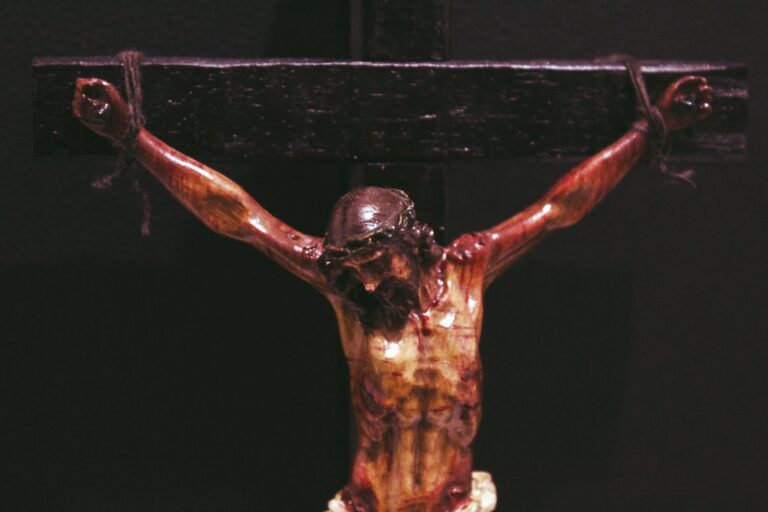
“And almost all things are by the law purged with blood; and without shedding of blood is no remission.” Hebrews 9:22 (KJV)
This verse lies at the center of Christian teaching on the atonement. It connects the Old Testament sacrificial system with the redemptive work of Christ. The phrase ‘without shedding of blood’ signifies that sin’s remission requires the offering of life itself. Below is a summary of how the Early Church Fathers (before Augustine), the Eastern Orthodox Church, Calvinists, and Arminians have interpreted this passage.
1. Early Church Fathers (Before Augustine)
The pre-Augustinian Fathers interpreted this verse not as a legal necessity for divine wrath to be satisfied, but as a description of the spiritual reality that life must be offered to overcome death and corruption. The shedding of blood signified the outpouring of life by which Christ cleanses and restores humanity.
• Athanasius (c. 296–373 AD): In *On the Incarnation*, Athanasius explains that the Word took a mortal body so that by His death He might destroy death. The shedding of blood was necessary to restore immortality, not to appease God’s anger.
“He takes to Himself a body capable of death, in order that by partaking of the Word who is above all, it might be worthy to die in the stead of all, and might, because of the Word dwelling in it, remain incorruptible.” (*On the Incarnation*, §9)
• Irenaeus (c. 130–202 AD): In *Against Heresies*, Irenaeus wrote that Christ offered His blood to recapitulate and reconcile humanity. The blood was a restorative gift, not a penal transaction.
“By His own blood He redeemed us, giving His soul for our souls, and His flesh for our flesh, and poured out the Spirit of the Father to unite and reconcile God and man.” (*Adv. Haer.* V.1)
• Gregory Nazianzen (c. 329–390 AD): Rejected the idea that God demanded blood as payment.
“To whom was the blood offered? We were under a tyrant; was the ransom paid to the tyrant? Certainly not. To the Father then? But why to the Father? … It was to the Father, indeed, but not because He demanded it, but because it was His plan to sanctify man by the humanity of His Son.” (*Oration 45*, On Holy Pascha)
Summary: The Fathers viewed the blood of Christ as the life that cleanses and restores creation, conquering death and sin. Atonement was restorative and victorious, not judicial or penal.
2. Eastern Orthodox Interpretation
The Eastern Orthodox Church maintains the patristic interpretation almost unchanged. The shedding of blood represents Christ’s voluntary entrance into death to defeat it and to unite mankind with God. The Orthodox understanding emphasizes the blood of Christ as the ‘medicine of immortality,’ a life-giving mystery rather than a legal payment.
“The blood of Christ is the medicine of immortality.” – Ignatius of Antioch, *Letter to the Ephesians* 20
Summary: Hebrews 9:22 in Orthodox theology expresses that remission requires the offering of life itself, because death must be overcome by death through Christ’s sacrifice.
3. Calvinist Interpretation
Calvinists interpret Hebrews 9:22 as a foundational verse for penal substitutionary atonement (PSA). The shedding of blood is understood as the judicial necessity of death required by divine justice. Christ’s death satisfies God’s wrath and justice, securing forgiveness for the elect.
“For unless the blood of Christ were shed for us, there could be no expiation, for it is written, ‘without shedding of blood there is no remission.’ The blood of His Son appeased God’s wrath, and His justice satisfied.” – John Calvin, *Institutes of the Christian Religion*, II.17
Summary: For Calvinists, blood equals the penalty paid for sin; remission equals legal forgiveness; and the atonement is substitutionary and limited to the elect.
4. Arminian Interpretation
Arminians agree that without the shedding of blood there is no forgiveness, but they reject the Calvinist notion of limited atonement and unconditional election. They teach that Christ’s blood provides a universal atonement, sufficient for all, but applied only to those who believe and repent.
“The death of Christ is the meritorious cause of justification, yet God requires that the sinner apply by faith that blood which was shed for the remission of sins.” – Jacob Arminius, *Works*, Vol. 2
Summary: For Arminians, the blood of Christ seals the New Covenant and provides remission for all who respond in faith and repentance. The atonement is universal in provision and conditional in application.
It appears that most Christians today believe that Jesus needed to suffer and die to appease the justice and wrath of God the Father and move the Father to be willing to forgive sinners. That is not accurate or true. God has always been desirous of reconciling sinners to Himself. The atonement did not create that desire; that desire made the atonement. It was out of God’s love for humanity that He made atonement for all who will meet the conditions of repentance and faith.
Please see my articles on the atonement for much more information about the atonement and the theories associated with it. (seekgodintruth.com under the page Augustinian Calvinism.)
