
May 15, 2025
From the time human beings first walked on this earth, men and women have been inquiring about the origin of the sun, moon, stars, the world, animals of every kind, the birds that fill the sky, and the seas teeming with life. Did a Creator do this, or is there some other explanation for it? Is the universe eternal? How do we explain all that we see around us? Is there a God? And if there is a God, who is He and what is He like?
If you believe that God exists, you are a theist. If you do not believe God exists, you are an atheist. If you are unsure, you are an agnostic. If God does exist, what is He like? People profess to believe in a number of different deities, collectively referring to them as God. Are they all the same? Absolutely not. Allah and the God of the Bible are very different. Allah has no son. Jesus Christ is the only begotten Son of God the Father. Someone who believes in many gods is a polytheist. Do all gods lead to the same end? Absolutely not. The challenge for those of us who believe in God is to determine which God we should believe in, trust, and commit to. What is God really like?
Classical Theism, according to Wikipedia, “is a theological and philosophical form of theism that conceives of God as the ultimate transcendent reality, characterized by attributes such as omnipotence, omniscience, and perfect goodness. Rooted in the ancient Greek philosophy of Plato and Aristotle, classical theism presents God as a being who is.
- immutable (unchanging in His character, will, and covenant promises)
- impassible (God does not experience pain or pleasure from the actions of other beings. This has been associated with divine aseity, the idea that God is absolutely independent of any other being-in no way causally dependent. If God were emotionally affected by another person, that might suggest He is causally dependent.
- entirely self-sufficient (God needs nothing from anyone else at any time). This understanding of God emphasizes divine simplicity (God is simple and without parts. He exists as one unit, and there are no attributes. God’s existence is identical to His essence), making Him fundamentally distinct from all created beings.”
Wikipedia also states the following: “The early church fathers, like Augustine, incorporated classical theistic ideas into Christian theology, establishing a framework that was later refined by medieval thinkers such as Thomas Aquinas.” In Jewish theism, the philosopher Maimonides emphasized the unity and transcendence of God, which aligned closely with classical theism. The same goes for the religion of Islam. Avicenna and Al-Ghazali are two Islamic names associated with Classical Theism.
In terms of theology, Wikipedia is never the final word on what the Bible actually teaches. But this resource can be helpful in terms of general knowledge. What is important to note is that the early church father that is quoted, Augustine, is a 5th-century “father”, not a “father” of the 2nd or 3rd century. Their idea of an early church father differs from mine. In any case, if you have read my articles on Augustine, you are aware that he introduced much pagan philosophy and error into Christianity. Most of that is built into Augustinian Calvinism that we hear so much about today. Therefore, Classical Theism should be questioned, and all that is unbiblical within it must be rejected. We do not and should not get the truth about our God from pagan idolaters who are the foundation for Classical Theism. We will delve into this further as the article progresses.
Many Calvinistic theologians and other intellectuals consider Augustine one of the greatest minds that has ever lived, and his influence is hard to overestimate. Many Calvinists believe he was possibly the greatest theologian of the last two thousand years, aside from the writers of the New Testament. And there are others, fewer in number, who think Augustine was possibly the greatest heretic. Before we delve into Classical Theism, let us briefly review the determinism associated with Augustinian Calvinism. It is often summarized using the acronym “T.U.L.I.P”.
- The “T” stands for Total Depravity and total inability. We are born sinners. As such, we can’t repent and believe the gospel on our own. Nor can we understand spiritual truth on our own. God is the sole cause of salvation.
- The “U” stands for Unconditional Election. Only the elect is saved, all others are damned. God alone is responsible for the salvation of the elect and the damnation of the non-elect. God regenerates the elect, who then believe.
- The “L” stands for Limited Atonement. Christ died for only the elect. He did not die for the non-elect.
- The “I” stands for Irresistible Grace. Salvation is involuntary and unconditional. God’s grace brings us to salvation and keeps us saved.
- The “P” stands for Preservation or Perseverance of the saints. Only the elect are assured of entering heaven.
Full Calvinists (obviously, not every Calvinist is a full Calvinist, and even full Calvinists have differing views) believe that God, in eternity, decreed all that would come to pass, including both all that is good and all that is evil. Because God is immutable, all God’s decrees are effectual, exhaustive, meticulous, and can never change in any way. The decrees cover everything in the physical and moral universe. As John Piper said, God determines all of our besetting sins. The late R. C. Sproul said there are no rogue molecules. God elects a few to salvation, and the rest are non-elect and will spend eternity in hell, all for the glory and honor of God. God determines every act of adultery, fornication, sodomy, rape, child sexual abuse and so on with ultimate specificity (the goriest detail, all for His glory). Like the Classical Theist, the Calvinist agrees with ideas about the immutability and impassibility of God as well as His being outside of time.
Classical Theism states that one of God’s most important attributes, if not the most important, is that He is immutable, that He never changes. Closely related to that is the idea that God is impassible. That means that God doesn’t experience emotional change in any way, nor does God suffer or feel pleasure. God doesn’t merely choose to be immutable and impassible. He is impassible and immutable by nature. It is part of His intrinsic being. Let us look more closely at these ideas.
Tom Burger produced a YouTube video on Classical Theism. Classical theism is not old-fashioned theism. Classical refers to its origins in Greek or Roman influences. It is not like classic movies or classic cars. That is a crucial definitional distinction. Tom used the Routledge Encyclopedia of Philosophy for the definition of the phrase, Classical Theism. According to Classical Theism, which is rooted in Plato’s beliefs, God is:
- A se (from self, wholly independent of all else. From this, we get the word aseity (existence originating from and having no source other than self). Independent from all else. (Apparently, we get the word suicide from this source word, the killing of oneself.)
- Immutable. God is incapable of changing or undergoing real, intrinsic change. He can’t change his mind or make any changes at all. His immutability is absolute. This statement is critically important and is the reason why many of us reject their understanding of God’s immutability. Some of us also reject the idea that their idea of immutability is the most important of all God’s attributes. Scripture discusses the numerous instances in which God changes His mind. We will consider many of them in this paper.
- Impassible. God is unaffected by beings other than Himself. For if he was affected by us or anyone else, his emotional state would be dependent on us, and so God would not be wholly “A se”. Prayer and our suffering don’t move God because he is impassible. Opposing this notion are numerous verses of scripture that convey the exact opposite. For example, Ezekiel 5:6-7, 13, where God says Israel refused to obey Him, so He judged them. God poured out His fury, and then it is written that God would be comforted by that wrath on His stubborn, rebellious people. In verse 14, it is written that God is angry and furious, as shown in His furious rebukes in verse 15. Chapter 6, reveals the heart of God that is broken by Israel’s whorish heart. So much for the impassibility of God as understood in Classical Theism. God’s anger and hurt feelings obviously do not in any way diminish His essence or holy character. But God feels as we do, who are made in His image and likeness.
- Eternal. In the sense of timelessness. God is alive without past or future, living a life neither contained in nor located within any series of earlier and later events. Timeless life has no past and no future. A timeless being enjoys its entire life in one timeless present. The eternal “now”. That is what they say, but not everyone agrees. Atemporal is a word that is often used. It means free from the limitation of time. God has no sequence. For God, a day is like a thousand years, and… But that verse doesn’t actually teach this idea. More on that later.
Is God outside of time? It is a yes and no answer, or is it? God is eternal, meaning He has no beginning and no end. God is infinite time. He is not such a timeless being as He encompasses all time, being limitless. Could it be that God is both outside of time and inside of time at the same time? God interrupted eternity (infinite time) by creating the universe with us in it (finite time). The deity of the Bible (God) is living and active, as He is intimately involved in His creation, moment by moment. This is not what they mean by this, however. Their god is not free, but is stuck in time and can’t adapt to changing circumstances.
Where does all this come from? How reliable is it?
As already alluded to, the origin of Classical Theism includes the teachings of Plato, Aristotle, Middle Platonism, and Neoplatonism. It entered Christianity as early as Irenaeus (130-202 AD) and Clement of Alexandria (150-215 AD). It became Christian orthodoxy as the Roman Empire fell apart, especially through the influence of Augustine of Hippo (354-430 AD). Although increasingly challenged after 1300 AD, it remains orthodox and is widely accepted even today. As Christianity grew and Gentiles entered the faith, many of them carried these Greco-Roman ideas with them due to their Greek and Roman backgrounds.
The following timeline will provide historical context for this.
Timeline
Socrates 469-399 BC gave the Western world a foundation in Philosophy. He rejected the Greek pantheon of gods but believed in a higher power-that was his idol.
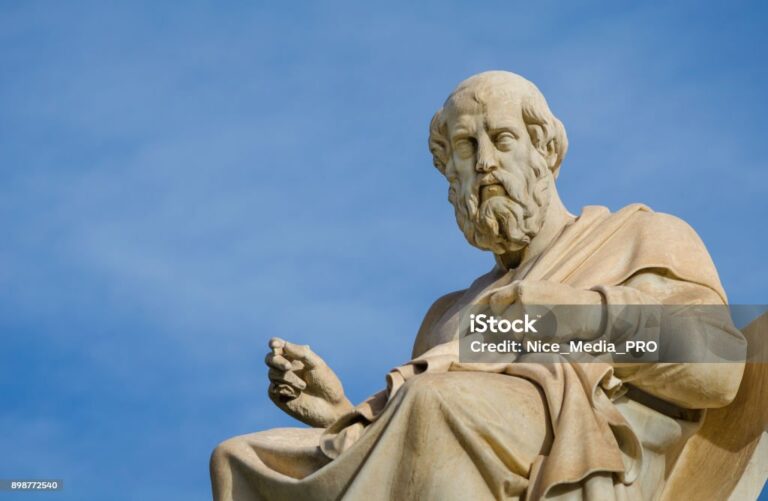
Plato 420-347 BC, a student of Socrates. Our understanding of Socrates comes from Plato, as we do not have Socrates’ writings.
Aristotle 384-322 BC, tutored Alexander the Great (born 356, died 323 BC). Tutored by Aristotle, 343-340 BC.
Alexander founded Alexandria, in Egypt, in 331 BC, and he advanced Hellenization. He conquered Israel in 329 BC.
Middle Platonism Philo of Alexandria, Jewish philosopher (20 BD to AD 50). He interpreted Greek ideas into the OT scripture. Justin Martyr (100-165 AD), Clement of Alexandria (150-215 AD), Origen of Alexandria (185-254 AD), and Augustine of Hippo (354-430 AD). Roman Emperor Constantine the Great made Christianity a legal religion in the Roman Empire in 313 AD. Thomas Aquinas in 1200 or so AD.
Neoplatonism Is a philosophical and religious system that emerged in the 3rd century AD. It was built upon Plato’s ideas, but incorporated mystical and religious elements. The One is a central idea. It began with Ammonius Saccas and his student Plotinus (204/5-271 AD).
Augustine of Hippo lived from 354 to 430 AD. He is one of the most influential figures in the last two thousand years. He influenced all of Christianity, both Eastern and Western. He also influenced Western philosophy. “According to his contemporary, Jerome of Stridon, Augustine established anew the ancient Faith. In his youth, he was drawn to the Manichaean faith, and later to the Hellenistic philosophy of Neoplatonism.” (According to Wikipedia).
(There is about an 800-year gap from Augustine to Aquinas, as there is little information to draw from during the Dark Ages, I suppose.)
Thomas Aquinas lived from 1224/5 to 1274 AD. Hewas an Italian Dominican theologian and philosopher as a Roman Catholic priest. He wrote a very important Catholic theological book, titled Summa Theologica. He attempted to reconcile faith and reason, drawing inspiration from Aristotle in the areas of metaphysics, personality, creation, and Providence.
Martin Luther lived from 1483 to 1546.Martin Luther, best known for the 1517 Reformation, was a Roman Catholic monk of the Augustinian order. He is the father of the Protestant Reformation. Reformed theology is synonymous with Calvinism. He wrote a book titled Bondage of the Will in 1525 to refute Erasmus’s book, The Freedom of the Will, which was published in 1524. Luther had a high view of Augustine.
John Calvin lived from 1509 to 1564.Calvin was also a Roman Catholic, like Luther. He wrote The Institutes of the Christian Religion in 1536.
From these early influential men and movements, we get the Socratic method of teaching. Socrates and his pupil Plato often used it. The teacher would ask questions that lead to the answer rather than just giving students the answer. For example, the teacher might ask. “Is God perfect? If he changes, it must be because he is getting more perfect or less perfect. Therefore, God can’t change. He must be immutable. (See Appendix 1 for more on the Socratic method.)
Plato was the best student of Socrates, and he said, “If God changes at all, he can only change for the worse… Then it is impossible that God should ever be willing to change; being, as is supposed, the fairest and best that is conceivable, every God remains absolutely and forever in his own form.” Plato, The Republic, Book 11 (c. 360 BC). Change indicates a flaw; therefore, God can’t change.
According to Wikipedia, “Aristotle is known as a foundational figure in Western Philosophy, for his contributions to logic, ethics, politics and science. He believed in a supreme, unchanging, and immaterial God, the “unmoved mover,” as the ultimate cause of motion and change in the universe, though not in the way of a traditional, intervening deity.” In other words, his ideas of God are much different than the God of Judaism and Christianity.He is also known for his writings on Metaphysics (the underlying theoretical principles of a subject or field of inquiry; philosophy in its more abstruse, hard-to-understand, reconcile, esoteric, hidden branches of philosophy…).
Aristotle is known for the expression, the “unmoved mover”. We see in this description from Wikipedia that Plato’s influence on Aristotle regarding the immutability and impassibility of God. We also note his pagan, not Christian or Jewish, ideas about God. The God of the Bible is often moved with compassion for us. The God of scripture is not an unmoved mover. The God of the Bible is also moved with anger toward the impenitent wicked. The Bible speaks of the truth, that there is joy in heaven over one sinner who repents (see Luke 15:7). Are we to assume that only the angels of God in heaven have joy over a sinner who repents? No, of course not. God also experiences joy when sinners repent of their sins against their Creator. In Ezekiel 18, we read of God taking no pleasure in the death of the wicked. God would much prefer that the wicked repent and find life. Are we not to assume that God has pleasure with those who repent and turn from their sins and practice righteousness? Of course we are. Aristotle comes close to discussing God’s timeless nature when he addresses the concept of duration in God. Nonetheless, others who followed him do make the connection regarding the timelessness of God (that is, God being outside of time), according to Tom.
Recap thus far on how the idea of the divine being was created
All these Greco-Roman ideas are about the most excellent perfections that mankind can imagine, which “God” must possess, if there is a God. It is what man can and did imagine as the most significant and most essential perfections a god or that the god must possess. It is not based on what the Bible states about the person of God and His attributes. These pagan philosophers believed that a God who changes His mind, speaks and acts in real time, and is moved by His emotions, is less than perfect. That might sound somewhat reasonable to many of us, but it is not what God says about Himself in the Bible. These Platonic ideas about the divine being actually turn “god” into a deaf, dumb, and blind idol. An idol is an “unmoved mover”. An idol is outside of time. An idol remains unchanged in every way. An idol is non-feeling and impassible. The God of the Bible is none of these things.
Another important person is Plotinus from 205-270 AD, the first of the Neoplatonists, who states that God is timeless and unchanging. “Then we reconstruct …a sole life in the Supreme… a life never varying, not becoming what previously it was not, the thing immutably itself… and knowing this, we know Eternity…knowing nothing of change, forever in a “Now”…it cannot include any past;…Futurity, similarly, is banned. Enneads 111.7.3.
According to his teaching, God exists in an eternal “Now”. God has no past or future. God is outside of time. In Jeremiah 10, God contrasts Himself with deaf, dumb, and blind idols that can do neither good nor evil, but they are immutable and static. Men usually prefer an idol of their own making to a God who has laws, for obvious reasons.
Plotinus continues, “We know it as a life changelessly motionless… not this now and now that other, but always all, not existing now in one mode and now in another (but what about the incarnation of Jesus the Christ?)…nothing in it ever knows development: all remains identical within itself, knowing nothing of change (but the Bible says God repents/changes in many passages?), forever in a “Now” since nothing of it has passed away or will come into being but what it is now, that it is ever. The identity in the Divine…has not futurity but eternally is.…and could it come to be anything, which it is not once for all? God has no past or future. God experiences all these things in the “Now”, emphasis added, according to quotes provided by Tom. Today, I hear theologians opine that God is “Pure Actuality”.
Plotinus states that God knows nothing of development. Wait a minute. Doesn’t Scripture say that Jesus increased in wisdom and stature, and in the favor of God and man (see Luke 2:52)? Elsewhere, it says that Jesus learned obedience through the things He suffered. Does that sound like a God who knows nothing of development and change? Of course not. Scripture also tells us that one day in time, God became flesh/man and dwelt among us. The incarnation of the Godhead in the person of Jesus Christ is an eternally significant change or development, is it not? The Word (God) became flesh (John 1:1) about 2,000 years ago, but now He is the God/Man forever. Jesus, the Holy Ghost, and God the Father were changed by the incarnation, were they not? Their essence remained unchanged, for God will always be God, but they evolved or developed with the incarnation.
Plotinus wrote around six books. In Enneads, 111.7.3, he writes, “That which neither has been nor will be, but simply possesses being; that which enjoys stable existence as neither in process of change nor having ever changed—that is eternity. Thus, we come to the definition: that Life-instantaneously entire, complete, at no point broken into period or part, which belongs to the Authentic Existent by its very existence, that is the thing we were probing for: this is Eternity.” In contrast to this philosophical jargonizing sophistry, we read of God taking six days to create the universe and all that is in it, and then resting on the Seventh day, in Genesis 1-3 and Exodus 20:11. And in Revelation 1:4, we read the following.
“John to the seven churches which are in Asia: Grace be unto you, and peace, from him which is, and which was, and which is to come (does that sound like a God who has no past, present and future?); and from the seven Spirits which are before his throne; and from Jesus Christ (God who in time became man and walked among us), who is the faithful witness, and the first begotten of the dead (another significant change), and the prince of the Kings of the earth, Unto him that loved us, and washed us from our sins in his own blood (God loves us and cleanses us from our sins which will damn us. Is that a love without feelings and emotions?).” Revelation 1:4-5, emphasis added.
God who was, God who is, and God who is to come. Does that not refute the idea that God doesn’t and can’t experience sequential time as the Platonists and Calvinists state? Of course, it does.
Augustine of Hippo (354-430)
Classical Theism is akin to science and its influence on the pursuit of truth. For instance, the concept of macroevolution has inspired Christians to reinterpret the account of creation presented in the book of Genesis. Likewise, Augustine initially rejected Christianity and the Bible due to his background and beliefs in Plato (and other Gnostic pagan ideas) and his notions about God. Augustine said that this Christian God is not the same as the god of Plato, and he initially rejected the God of the Bible. When he was shown the allegorical method of interpreting scripture, Augustine then embraced Christianity and its Bible. Augustine believed that God never changed or responded to people, as is clearly evident in the Bible. Like theologians who attempt to reconcile the creation story in Genesis and the idea of macroevolution, we have theologians who have tried to reconcile Plato’s god with the God of the Bible. It will never work.
In Classical Theism, God exists outside of time and has no experience of events in time, as there is no sequence, because He is the eternal present. With God, there is no past and future, so they say. Plato and others who followed him suggest that God is outside of time and remains unchanged in any way. However, this thinking does not come from the Bible, as we just discussed. It originates from Christians who adopted these pagan ideas about God, particularly after the fall of Rome in 476 and the subsequent decline of the Roman Empire over the next 100 years. This development brings us to Augustine of Hippo, who died in 430 AD. Augustine is the key figure in incorporating these pagan ideas into Christianity. His influence is hard to overestimate.
As already alluded to, Augustine’s first reading of the scriptures led him to think the Bible was foolishness. His mother’s tutor was Ambrose, who taught them to read the scripture as allegory, not literal truth, and then Augustine could accept it. The unbridled use of allegory can literally rewrite the entire Bible.
Some excerpts on Augustine’s writings comment on how much he preferred the writings of Plato over those of all others, including the authors of the Bible, apparently. Many Christians have followed suit and revered these pagan ideas due to the influence of Augustine’s life and work. It is hard to overstate the negative impact Augustine has had on Christianity. To assess the effect, we will look at Augustine’s book titled Confessions. Confessions is an autobiography, whereas The City of God, by Augustine, is more theological in nature.
Book V, chapter 14, of Confessions by Augustine
The book “Confessions” was supposedly written around 400 AD. I did not use original sources for these quotes. I used the quotes provided by Tom Burger, who I believe is a man of God, in his numerous videos. I did verify the accuracy of some of the quotes using ChatGPT. If you think going back to the original source material is necessary, then I encourage you to do so. Having read extensively about Augustine’s influence and beliefs, I do not believe his contributions to the truth have been beneficial. Much of this article comes from Tom, who did a great job explaining how the Christian evangelical church has been polluted by false teachings from early pagans and Christians who embraced these false teachings.
Augustine writes, “First of all, his (Bishop Ambrose’s) ideas had already begun to appear to me defensible, and the Catholic faith…I now realized could be maintained without presumption. This was especially clear after I had heard one or two parts of the Old Testament explained allegorically, whereas before this, when I had interpreted them literally, they had “killed” me spiritually,” emphasis added.
Can you imagine any real Christian ever making such a claim, that a literal reading of the Bible “killed” them spiritually? If one uses unfettered allegory to interpret the Bible, one can literally make it say anything one wants it to say. I find Augustine’s comment disgusting but very revealing about his lack of spirituality. Augustine read the Old Testament and understood that the God of the Old Testament was not immutable. He also understood that the Old Testament God was moved emotionally, so He was not impassible either. Therefore, Augustine rejected the Old Testament. The Old Testament is the foundation for the New Testament. Rejecting the Old Testament is tantamount to denying the God of eternity, as far as I am concerned.
Book VI, Chapter 4, Confessions.
“I was also glad that the old Scriptures of the Law and the Prophets were laid before me to be read, not now with an eye to what had seemed absurd in them when formerly I censured thy holy ones for thinking thus, when they actually did not think in the way. And I listened with delight to Ambrose, in his sermons to the people, often recommending this text most diligently as a rule: “The letter kills but the spirit give life” (2 Cor. 3:6b) while at the same time he drew aside the mystic veil and opened to view the spiritual meaning of what seemed to teach perverse doctrine if it were taken according to the letter.”
More obvious and blatant unbelief from Augustine. I thought unbelief was a sin? Augustine grew up believing the pagan ideas about God handed down through Plato and his followers. When he read the Old Testament, he was rebuked, but found refuge in the teachings of Ambrose, who employed the allegorical method of interpretation. What bothered him so much? The Old Testament knows nothing of a God that is absolutely immutable, who is outside of time, and a God who is impassible. Those biblical truths rebuked his Platonic pagan idolatry, and he would not accept them. It seemed absurd to him when his pagan ideas were actually the absurd concepts about God. Augustine misuses the 2 Corinthians 3:6 passage to give him the license to rewrite the passage and all of the Bible he doesn’t like. The context clearly reveals that this is about the cleansing of the heart by the Spirit, rather than obedience to God through force and compulsion. It is most certainly not about taking his position that the Bible, as it is written, is the letter and his allegorical interpretation is the spirit. What utter nonsense that is. The letter is the law of Moses, and it kills. The spirit refers to the Holy Spirit, who gives life. It has nothing to do with allegory. Augustine calls the plain reading of the text a perverse reading, which must be rejected. Augustine was fully committed to Plato’s understanding of the perfect deity, god. Plato’s and Augustine’s god, who can’t change, is outside of time and is impassible, but that is not what the Bible teaches.
Confessions. Book VII, Chapter 3.
“But I also, as yet, although I said and was firmly persuaded, that Thou our Lord,….are in no part mutable: yet I did not readily and clearly understand what was the cause of evil. Whatever that cause might be, I say that no explanation would do which would force me to believe the immutable God mutable”.
Augustine was so committed to pagan Platonic ideas about what God must be that he was unwilling to consider the biblical viewpoint of God’s self-revelation through His prophets, His apostles, and His Son. He was also apparently unwilling to think through his commitment to the Platonic idea that God was immutable. He could not understand the source of evil. And we know why, don’t we? If these Platonic ideas are true, which they are not, then God is the source of evil, as John Calvin and many others affirm, all of whom are followers of Augustine. There is no alternative to divine determinism. Rather than carry his Platonic ideas to their logical and irresistible conclusion, he decided to leave the answer about where evil comes from to someone else to figure it out. For his part, he took his stand on the immutability of God and not the righteousness and goodness of God. And the Bible rebukes that error. Augustine struggled with the idea of where evil comes from and never reached a definitive conclusion, as far as we know. He did not want to know, because that truth must correct him. Calvin answered the question for him hundreds of years later. Original Sin and the falsehood that Adam’s guilt is ours also came from Augustine.
How could Augustine be so blind? This Platonic thinking was popular in his day, just as it is today. Most evangelical Christians believe in these pagan ideas about God being absolutely immutable and impassible. Why? It is popular. And all the cool theologians believe it.
Confessions Book, VII, chapter 20
“By having thus read the books of the Platonists, and having been taught by them to search for the incorporeal Truth, I saw how Your invisible things are understood though the things that are made (Rom 1:20). And even when I was thrown back, I still sensed what it was that the dullness of my soul would not allow me to contemplate, I was assured that You were, and were infinite, though not diffused in finite space or infinity; that You truly are, who are ever the same, varying neither in part nor motion, and that all things are from You, as is proved by this sure cause alone: that they exist.”
Here, Augustine plainly states that he was familiar with the books of the Platonists. Not only that, he deferred to their thinking as more truthful than that of the plain words of the Bible. He allowed the Platonist view of God being absolutely immutable to dominate and determine how he would respond to scripture that rebuked his false views. This was, at the time, the popular view of reality and God. It is still popular today, and those who reject this stuff are thought of like the heretics of yesterday, viewed with suspicion, and those who teach false doctrines. Platonists believe that God can’t experience anger, sadness, or joy. That is change, and God doesn’t change at all in any way. They also know that God can’t speak because that implies sequence and sequence implies a shift in time. Speaking requires the use of the mind and the forming of one syllable after another to utter words, sentences, and paragraphs.
Confessions Book VII, Chapter 20
“I now believe that it was Thy pleasure that I should fall upon these (Platonist) books before I studied Thy Scriptures. For had I first been molded in Thy Holy Scriptures, and if You had grown sweet to me through my familiar use of them, and if then I had afterward fallen on those (Platonist) volumes, they might have pushed me off the solid ground of godliness, or if I had stood firm in that wholesome disposition which I have there acquired, I might have thought that wisdom could be attained by the study of those books alone.”
By his own admission, Augustine tells the entire world that he is deceived and blinded to the truth of God, which is contained only in the Bible. Platonism is that grand deception and blindness that God brings to those who refuse to acknowledge His true revelation of Himself in the Holy Bible. Natural revelation reveals but little about God. These Platonists, then and now, have created their very own idol of God, much like it is described in Isaiah 41. Idols are the product of the mind and imagination of men. They do not change. Idols are immutable and impassible. Platonists and Augustinian Calvinists have done the exact same thing, and it is their idol. That may be harsh, but what else does it remind you of? He also tells the world that he is unteachable and that is not the fruit of the Holy Ghost. Wisdom only comes from the Word of God. It does not come from the imaginations of godless minds of men like Plato et al. To state that the Platonist views kept him on the path of godliness is almost laughable to me.
Confessions, Book VII, Chapter 20,
“So now is seized greedily upon the adorable writing of Your Spirit, and especially upon the apostle Paul. And I found that those difficulties, in which it had once seemed to me that he contradicted himself and that the text of his discourse did not agree with the testimonies of the law and the prophets, vanished away. In that pure eloquence, I saw One Face, and I learned to rejoice with trembling. I found that whatever the truth I had read (in the Platonist) was said here with praise of Your grace: that he who sees should not so glory as if he had not received, and received, indeed, not only what he sees but even the power to see, for what has he that he has not received? And further, that he who sees is not only taught to see, You who are always the same but is also strengthened..”
Paul was teaching a new covenant, which pointed to Christ and the end of the dispensation of the Mosaic period. Could it be that Augustine did not understand Paul, and what he thought were contradictions were, in fact, not contradictions but an explanation of what had changed from Moses to Christ? He always returns to the immutability of God, as taught by pagan philosophers like Plato, as the firm foundation, rather than the truth contained in the Word of God.
Confessions Book XI, Chapter 26
“But how did You speak? Was it in the same way that the voice came from the cloud, saying, “This is my beloved Son? (Matthew 3:17). For the voice…began and ended, the syllables sounded and passed away, the second after the first, the third after the second, and so forth…From this it is clear and plain that it was the action of a creature which sounded that voice, itself in time, serving Your eternal will… But it compared those words which sounded in time with Your eternal word sounding in silence. By what word then did You speak, that a body might be made, whereby these words again might be made?” emphasis added.
Unbelievable. Do you understand what Augustine is saying? He is saying that because we know that God never changes in any way (the real God is absolutely immutable), it could not have been God the Father actually speaking in time to the crowd around Jesus and saying those words of love and commendation (the real God is also impassible). No, it must have been a different “being” sent by God in eternity past to utter those words in time, for we know that God is outside of time and impassible also. The Bible clearly indicates that God the Father broke into time and uttered these words of praise to His only begotten Son, for our benefit. Yet Augustine wants us to believe that this is simply another charade of God to fool us, for the Bible gives absolutely no indication whatsoever that this was spoken by anyone other than God. And by extension, if we accept what Augustine said, we are to believe that in every place in the two testaments, both Old Testament and the New Testament, where it indicates “Thus saith the LORD God” we are not to believe that God actually spoke to the prophets literally but that an unknown and undeclared spirit being did the speaking for God. And how do we know that ‘someone’ is speaking the truth to us? This is so ridiculous, it is hard to believe that anyone could fall for this religious shell game.
Speaking involves change and sequence so it could not have been God, according to Augustine. This was the popular idea about God in that culture. It is still popular today and anyone who speaks out against it is viewed with suspicion and skepticism and often called a false teacher or heretic. Join the club, there is no waiting list! You can get in right away.
Augustine’s book, The City of God (a more theological book), Book V, Chapter 9,
“Now the expression, “Once hath He spoken,” is to be understood as meaning “immovably,” that is, unchangeably (immutably) hath He spoken, inasmuch as he knows unchangeably all things which shall be, and all things which He will do.” Emphasis added.
Here Augustine claims the immutability of God as the author of all that happens in time. Note that Augustine also claims the effectual and exhaustive determination of all things.
The City of God, Book VIII, Chapter 4,
“But among the disciples of Socrates, Plato was the one who shone with a glory which far excelled that of the others, and who not unjustly eclipsed them all…To Plato is given the praise of having perfected philosophy. We must, nevertheless, insert into our work certain of those opinions which he expresses in his writings, whether he himself uttered them, or narrates them as expressed by others, and seems himself to approve of, – opinions sometimes favorable to the true religion, which our faith takes up and defends, and sometime contrary to it…Plato.. is justly preferred to all the other philosophers of the Gentiles.”
Augustine reveres Plato as did many others. He admits that some of Plato’s opinions are contrary to the Word of God and of the Christian faith. He seems to indicate that Plato should be believed over the Word of God. And that is what his works reveal. And we are to look to Augustine for spiritual insight?
City of God, Book VIII, Chapter 5,
“That it is especially with the Platonists that we must carry on our disputations on matters of theology, their opinions being preferable to those of all other philosophers. If then, Plato defined the wise man as one who imitates, knows, loves this God, and who is rendered blessed through fellowship with Him in His own blessedness, why discuss with the other philosophers? It is evident that none come nearer to us that the Platonists.”
Again, Augustine prefers the theological wisdom of the Platonist over the wisdom of the leaders of the Christian faith from the death of Christ and the apostles in the 1st century to Augustine’s life in the 5th century.Too bad Augustine did not prefer the wisdom of those Christian leaders who were personally taught by the apostles in the second, third and fourth centuries for he would have rejected these unbiblical ideas out of hand.
City of God, Book XI, Chapter 21,
“…when the universe was completed… Plato was not so foolish as to mean by this that God was rendered more blessed by the novelty of His creation. For He…beholds all things with absolute unchangeableness so that of those things which emerge in time, the future, indeed, are not yet, and the present are now, and the past no longer are; but all of those are by Him comprehended in his stable and eternal presence. Neither does His present knowledge differ from that which it ever was or shall be for those variations of time, past, present, and future, though they alter our knowledge, do not affect His, “with whom is no variableness, neither shadow of turning.” James 1:17.
When God had finished His creation, He declared that it was “very good.” He was pleased with it, yet Augustine and other Platonists refused to admit that God experienced pleasure because of their false belief in His impassibility. He also inserts into this the idea that God, being unchanging and without variability, is outside of time, which is another error of the Platonists.
It is not uncommon to hear Platonists assert that this next verse is a solid proof text. “Every good gift and every perfect gift is from above, and cometh down from the Father of lights, with whom is no variableness, neither shadow of turning.” James 1:17 KJV. Obviously, this verse is used as a proof text for the immutability of God. But what does it mean? The context, as always, determines the meaning. James begins this epistle with a warning about the temptations that lie ahead and the testing of their faith. He told them to count it all joy when these trials came upon them. Why? The testing of their faith will produce patience, and that will result in a perfect outcome, so that we may not be found wanting. We are told to pray for wisdom if we lack it. However, we must do so in faith, without doubting that God will grant us what we ask for. If we doubt, we are double-minded and should not expect to receive anything from God. We should be content with what we have and not lust after riches. We are blessed when we endure temptation and will receive the crown of life. We know that God tempts no man to sin. We are tempted when we are carried away by our lusts. And when lust conceives, it brings forth sin, and sin results in death. We are told in verse 16 not to err, for verse 17 says, “every good gift and every perfect gift is from above and cometh from the Father of lights, with whom is no variableness, neither shadow of turning.” In verse 18, we read, “Of his own will begat he us with the word of truth, that we should be a kind of first-fruits of his creatures. Verse 19, “Wherefore, my beloved brethren, let every man be swift to hear and slow to speak, slow to wrath.” The wrath of man does not work righteousness. In verse 21, we are told to “lay aside all filthiness and superfluity of naughtiness and receive with meekness the word engrafted, which is able to save your soul. But be ye doers of the word, not merely hearers of the word, who deceive themselves” in verse 22.
The phrase, “with whom is no variableness” in verse 17 is thought to mean that God is immutable in all ways and never changes, and that God is impassible as well. Doesn’t it seem reasonable to believe that this phrase is about the truth that God is not double-minded, like man, nor in the business of tempting us to sin, like many of us, and that God can be trusted, unlike us? Moreover, the other verses up to verse 22 make it clear that God expects His children to walk in holiness and not be like those who think that merely hearing the Word of God without actually doing it will save them. Is that not an appropriate interpretation?
Thomas Aquinas (1224/5-1274)
Some 800 years after the death of Augustine, Thomas Aquinas wrote a book titled Summa Theologica in 1270 AD. He was a Roman Catholic priest. From this book, we get the following, under Q9.1, “Whether God is altogether immutable? I answer that, from what precedes, it is shown the God is altogether immutable… But since God is infinite… He cannot acquire anything new, nor extend Himself to anything whereto He was not extended previously. Hence, movement in no way belongs to Him.”
He is plainly regurgitating Platonic and Augustinian ideas. This is not Biblical. God changes His mind many times, fortunately for all of us. One of the names of God often overlooked is that He is called the “Living God,” and that implies continuous interaction with His creation. God continues to answer the prayers of the saints in real time, meaning that God is active and changing, not immutable, based on their flawed understanding of the concept of immutability.
Aquinas Q14.15. “Whether the knowledge of God is variable? I answer that, since the knowledge of God is His substance, as is clear from the foregoing, just as His substance is altogether immutable, as shown above, so His knowledge likewise must be altogether invariable”.
Knowledge is information, and it is not a substance. Information is a nonmaterial entity, neither matter nor energy. In this, Aquinas is mistaken. God is omniscient, and with that we all agree, but Aquinas and the rest take that to mean God has determined all things that come to pass. We also note that the foundation of this is the assumed total immutability of God, meaning that He never changes His mind or changes in any way whatsoever at any time, which is false. The incarnation is proof that this idea is false. We also note that Aquinas, in his work, cites Plato 72 times, Aristotle 155 times, Plotinus 7 times, and Platonists 39 times. From these false prophets and pagans, he gets his ideas.
G. K. Chesterton, a Catholic apologist, said, “The truth is that the historical Catholic church began by being Platonic; by being rather too Platonic.”
Peter Stanford, the author of Catholicism: An Introduction: A Comprehensive Guide to the History, Beliefs, and Practices of the Catholic Faith, published in 2010. He wrote this: “Both Aristotle and Plato were crucial in shaping Catholic thinking.”
Hannah Arendt and Jerome Kohn wrote, in 1961, “The Catholic Church incorporated Greek philosophy into the structure of its doctrines and dogmatic beliefs…”
Augustine reinterpreted the Holy Scriptures to conform to Platonic beliefs, particularly their doctrine of God’s immutability. In the final analysis of this lengthy compromise of Biblical truth, God is the author of evil. They, of course, dispute this, but it remains true nonetheless, not just according to me. Let us now turn our attention to other great personalities that have made their mark on what we now call Christianity.
Martin Luther (1483 to 1546).
Martin Luther’s 1517 Reformation continued this drift away from Biblical authority about the being of God. Luther was a Roman Catholic monk of the Augustinian order. He is the father of the Protestant Reformation. Reformed theology is synonymous with Calvinism. He wrote a book titled Bondage of the Will in 1525 to refute Erasmus’s book, The Freedom of the Will, which was published in 1524. He had a high view of Augustine; therefore, he has a high view of Plato. From all that I have read about Martin Luther, there is good reason to doubt not only his theological thinking but his love for the God of the Bible. Some of us will be shocked if he enters the kingdom of God.
John (Jean) Calvin (Cauvin) — (1509-1564)
Calvin was also a Roman Catholic, like Luther. He wrote The Institutes of the Christian Religion in 1536. Still very popular today.
Calvin’s Institutes III.22.8, “Were we disposed to frame an entire volume out of Augustine, it were easy to show the reader that I have no occasion to use any other words than his (Augustine’s).”
And these are the guys that speak so proudly about having a theology based on the word of God only and often boast about “sola scriptura”! For them, it is really “sola Platonica et Augustiniana”. Plato and Augustine are treated as though they were prophets of the one true God.
Calvin’s Institutes 1.16.8 from the Institutes we read, “..we hold that God is the disposer and ruler of all things, that from the remotest eternity, according to His own wisdom, He decreed what he was to do, and now by His power executes what He decreed. Hence, we maintain, that by His providence, not heaven and earth and inanimate creatures only, but also the counsel and wills of men are so governed as to move exactly in the course which He has destined.” Emphasis added.
Here it is more fully and candidly written that God is the sole cause of all that comes to pass. This is the determinism or fate that has been a constant presence in the doctrines of Plato and Augustine. Ultimately, people do not have free will, regardless of what Calvinists may proclaim. All is decreed by God, exhaustively and effectually, with ultimate specificity. Every case of rape, murder and child molestation belongs to God’s decree. And they have the audacity to tell us that we are still accountable for our evil choices (which were predetermined by God alone) and that we are rightfully held responsible as if we actually had a choice not to do exactly as God decreed. They call this compatibilism. Utter nonsense in my opinion.
Calvin’s Institutes 1.17.13 is this statement, “Though God is incapable of every feeling of perturbation, he declares that he is angry with the wicked. Therefore, when we hear that God is angry, we ought not to imagine that there is any emotion in him, but ought rather to consider the mode (figure) of speech.”
This is how Calvinists typically respond to genuine criticism. They refuse to answer it with a reasonable and understandable proposition. This is their fallback position. Anything that doesn’t make sense is a mystery, a figure of speech, or an anthropomorphism. As such, we can’t understand it, and we should believe it. It is merely a figure of speech and should not be taken literally. Again, this is part of God’s absolute immutability. It was very popular then and even today. Many of us believe that God is immutable in His holy character and essence, but do not believe that God is absolutely unchangeable, as Plato, Augustine, and Calvin did.
Calvin’s Institutes 1.17.12 reads, “As to repentance, we must hold that it can no more exist in God than ignorance, or error, or impotence…. We cannot attribute to God without saying either that He knows not what is to happen, or that he cannot evade it, or that he rushes precipitately and inconsiderately into a resolution, and then forthwith regrets it…. When it is said the God repented of having made Saul King, the term change is used figuratively. Shortly after that, it is added, “The strength of Israel will not lie nor repent; for He is not a man, that he should repent, (1 Samuel 15:29). In these words, his immutability is plainly asserted without figure.”
The Bible tells us that God often changes His mind, but Calvin says all those instances in this passage and other books of the Bible are figures of speech. However, this verse in 1 Samuel 15:29 is not a figure of speech, according to Calvin, and we must take it literally—nice try but no cigar, Jean Cauvin.
Israel forced God to give them a King, hence the first King, Saul. Saul was unfaithful to God, and God rejected Him from being King over Israel. God greatly regretted that He had made him King. It could have happened differently, but Saul and the people did wickedly and did not obey God. They thought they knew better than God. Samuel told them of the conditions of finding favor with God, which they rejected. Saul disobeyed Samuel and God on more than one occasion.
This passage, which Calvin uses, is not about God’s immutability as he suggests. God is immutable in this only, that God never lies and is always trustworthy, unlike man (especially Saul), who lies and disobeys God. Saul’s role as King was conditional, and he failed to meet the conditions. As such, God changed His mind; He repented of making Saul King. Moreover, God declares that He will not repent of His decision to remove Saul as King. (God will not repent of His repentance.) Saul had no more opportunities. Read it for yourself. Calvin’s response is pathetic. He does this to save his false idea of the immutability of God, which Plato, Augustine, and he believed.
Calvin’s Institutes 1.18.1 it reads thus, “it seems absurd that man should be blinded by the will and command of God, and yet be forthwith punished for his blindness. Therefore, they escape by the evasion that this (wickedness) is done only with God’s permission, not also by His will. He Himself, however, openly declaring that he does this, repudiates the evasion. That men do nothing save at the secret instigation of God, and do not discuss and deliberate on anything but what He has previously decreed with Himself and brings to pass by His secret direction, is proved by numberless clear passages of Scripture…Therefore, whatever men or Satan himself devise, God holds the helm and makes all their efforts contribute to the execution of His judgments.”
Everything men and women do is all decreed by God alone, and there is no permission as if we had free will, according to Calvin. At least Calvin is consistently wrong. In the last sentence, Calvin slips up a bit by saying that “God holds the helm and makes all their efforts contribute to the execution of His judgment” as if “all their efforts” were not actually preordained by God already, which is what they actually teach and believe. It is hard to be consistent when your doctrines are so contrary to reason and scripture.
“If the blinding and influence of Ahab is a Judgment from God, the fiction of the bare permission is at an end; for it would be ridiculous for a judge only to permit, and not also to decree, what he wished to be done at the very time that he commits the execution of it to his ministers… it is perfectly clear that it is the merest trifling to substitute a bare permission for the providence of God, as if He sat in a watch-tower waiting for fortuitous events, His judgments meanwhile depending on the will of man.”
Wicked people do things not of their own free will (what Calvin calls “permission”) but by God’s immutable decree, according to Calvin. But the scripture tells us that Ahab did evil by his own will and hand, not by the predetermined plan or decree of God Almighty. It also tells us that, in this instance, Ahab found mercy in God’s punishment because Ahab repented, which brought God to delay His judgment until Ahab’s death. God changed His mind in this matter because God saw Ahab humble himself. Calvin is out of his mind and blinded by his Platonic presuppositions.
Calvin’s Institutes 1.18.2 reads, “With regard to secret movements, what Solomon says of the heart of a king, that it is turned hither and thither, as God sees meet, certainly applies to the whole human race, and has the same force as if He had said, that whatever we conceive in our minds is directed to its end by the secret inspiration of God…. Not that He intends to teach wicked and obstinate man to obey spontaneously, but because He bends them to execute His judgments, just as if they carried their orders engraven on their minds, and hence it appears that they are impelled by the sure appointment of God. I admit, indeed, that God often acts in the reprobate by interposing the agency of Satan; but is such a manner, that Satan himself performs his part, just as he is impelled, and succeeds only in so far as he is permitted.”
Again, Calvin asserts that God is the source and cause of all evil and good. Calvin uses this proverb to make his point. “The king’s heart is in the hand of the LORD, as the rivers of water; he turneth it whithersover he will”. KJV. In the NIV translation is this word: “In the LORD’s hand the king’s heart is a stream of water that he channels toward all who please him.” Proverbs 21:1
According to Calvin and most of his followers, this obviously means that God determines what kings do and don’t do. But God also determines what all of us do and don’t do. This is Calvin’s fallacious interpretation of this and a few other passages. In contrast, the overwhelming majority of Scripture and our conscience tell us that we are free to obey or disobey God. Again, Calvin misinterprets this passage according to his Platonic presuppositions, beginning with the absolute immutability of God as he, Augustine, and Plato defined it. Even if God can sometimes bend the will of a king, that doesn’t always mean that God is forcing or causing everything that comes to pass, including both good and evil. Jesus is the King of kings and has the power to rule; He uses it so that His will is done, but not by force in most circumstances. Why did God destroy the King of Babylon for the destruction of Jerusalem and Judea when God called him to do just that? It makes no sense if you believe that God decreed all this but then pretends to be justified in punishing Babylon for doing exactly as He predetermined. It is hard for some of us to understand how any thinking person, any person who knows and understands the Word of God, could believe in such a divine being who is the consummate evil in the universe. Maybe I am just too stupid to understand it all.
What is the origin of evil and suffering?
These Calvinistic ideas originate from Plato and are further developed by Augustine, naturally following the foundational belief that God doesn’t change in any way at any time, for He is immutable. No “ifs”, no “contingency”, and no “conditions” if God is immutable. What is the origin of evil? Whereas Augustine did not arrive at the only logical and consistent conclusion about the source or cause of evil, Calvin brought it home and acknowledged the obvious. God is the source and cause of all evil and all good if their false ideas about God are true, which they are not. The foundation for this pagan philosophy is the immutability and impassibility of God. God micromanages everything in the universe, including all human activity.
Going back to Calvin and Proverbs chapter 21, the very next verse reveals the error of Calvin’s interpretation, for it reads, “Every way of a man is right in his own eyes, but the LORD weighs the heart” (verse 2 of Proverbs chapter 21). Why would God test or weigh our hearts if He put everything into our hearts? That makes no sense whatsoever. This verse tells us that very few people (especially Kings) admit that they are sinners and that their way is not right.
Calvin uses the word ‘permitted’ to mean something different from what it previously suggested. But he dislikes the word and idea, but not here. Some non-Calvinists or semi-Calvinists say that God permits evil, but Calvin knows that God ordains evil and permits nothing; there are no maverick molecules in God’s universe, according to the late R. C. Sproul. God directs and determines what Satan will do, and Satan inspires others (as if they might do otherwise?) to do the evil God decreed that should be done. Makes little sense, right?
Perfection (God) can’t change, and if He does, it must be for the worse, according to Plato. This is only partly true. More on this later.
Calvin then anticipates the objection. In his institutes of the Christian Religion, 1.18.3 he writes, “their first objection, that if nothing happens without the will of God, He must have two contrary wills, decreeing by as secret counsel (God’s decretive will) what He has openly forbidden in His law (God’s prescriptive will), is easily disposed of…For example, God says do not murder, but then God decrees that someone murder another in violation of His prescriptive will.
“I have already shown clearly enough that God is the author of all those things which, according to these objectors, happen only by His inactive permission… Still, however, the will of God is not at variance with itself. It undergoes no change. He makes no pretense of not willing what He will, but while in Himself the will is one and undivided, to us it appears manifold, because, from the feebleness of our intellect, we can’t comprehend how, though after a different manner, He will and wills not the very same thing.
This is Calvin’s pathetic response to the objection. We are too stupid to understand what God is doing and saying. It is a mystery to us, but not to God. If you can’t understand how God wills and wills not at the same time, you are not a bright person. The “feebleness of our intellect” is our problem, as if God alone didn’t decree that “feebleness.” Unbelievably pathetic is all I can say.
In 1.18.3, Calvin wrote, “When we can’t comprehend how God can will that to be done which He forbids us to do, let us call to mind our imbecility… In other words, if you can’t see the emperor’s new clothes (even though he is naked), there is something wrong with you! Have you ever attended a church where you left the service feeling this way? This is a typical non-answer by the leading Calvinist, John Calvin. If you pay close attention, you will notice that this is how they respond to almost every solid objection to their absurd propositions.
Calvin continues in 1.18.3 and writes….”hence, he (Augustine) exclaims, “Great is the work of God, exquisite in all He wills!” so that, in a manner wonderous and ineffable (indescribable) , nothing is done outside His will, not even that which is contrary to His will, because it could not be done if He did not permit; nor does He permit it unwillingly, but willingly, nor would He who is good permit evil to be done, were He not omnipotent to bring about good out of the evil.” (Augustine in Ps. 111.2).
Augustine could not bring himself to admit the obvious, that God is the author of sin and evil, if these Platonic ideas about God are true. John Calvin made it clear that this is the case: God is the author (the One who decrees it all) of both all that is good and all that is evil. Remember that Augustine believes that God determines everything. But he could not bring himself to say the truth that God is the author of sin and evil if these Platonic presuppositions are true.
We all know that God is able to bring good out of evil. But to teach that God intentionally causes or decrees evil so that He can bring good from it is blasphemous (an impious declaration concerning God) and deranged. God takes the evil that free men and women commit, and He is able to turn it into something good. If God is the cause of both the evil and the good, why would He make anything evil when He could make everything good? It makes no sense at all. One Calvinist preacher, Justin Peters, stated that without evil and wrath, God could not display His goodness. What nonsense that is.
Romans chapter six is a great section to refute the wicked ideas of Calvinism. Here are some of the statements from this chapter that make it clear that sin originates from man, not God, and His decrees. As such, we must take care of sin in our lives (by repenting of it) and not think God will do it for us as we sit idly by waiting for God to magically save us from our sins, which God decreed in eternity past. If Calvinism is true, which it is not, then none of this in Romans 6 makes any sense at all. I will shorten and paraphrase the following verses.
Verses 1 and 2. “What shall we say then? Shall we continue to sin, that grace might abound? God forbid. How shall we that are dead to sin, live any longer in it?” If God decreed our sins, how could the apostle say, with a straight face, that we are dead to sin? Most Christians, including strict Calvinists, believe that even Spirit-filled Christians will practice sin all the days of their life.
Verse 4. “We are buried with Christ in baptism. And as Christ was raised from the dead, we also should walk in the newness of life”. Does this verse in any way suggest that this is God’s responsibility, to make us walk in the newness of life? Or does it plainly infer that, as Christ was raised from the dead, we also should walk as a new creation in Christ Jesus, as if this is our responsibility?
Verse 6. “Our old man is crucified with Christ that sin might be done away with, that we should not continue to serve sin”. Christ died for us that sin might be done away with, not just the guilt of sin, but the commission/practice of sin might stop. We should not continue to serve sin. If God and His decrees are the source and cause of all good and evil, then this statement is nonsensical. For if God decreed that Christians should continue to sin, as almost all Christians do, then we should not be trying to stop sinning. Again, if that is true, then Paul’s comments about not serving sin any longer are ridiculous at best.
Verse 7. “He that is dead is freed from sin”. The best Calvinists might say about this verse is that we are freed from the guilt of sin, but not from the practice of sin.
Verse 11. “Christ was raised from the dead and that once for all. Also, we are to reckon ourselves dead to sin and alive to Christ”. The best Calvinists might say about this verse is that we are freed from the guilt of sin, but not from the practice of sin.
Verse 12. “Let not sin reign in your mortal body, that you should obey sin in your lusts”. Paul tells Christians that they are responsible for stopping sin from reigning in their mortal bodies by obeying God instead of their lusts. Paul must not have known about God’s decreeing all things, both good and evil. If he had known that, he would not have made so many false claims about victory over sin. This verse clarifies that Paul is not only talking about freeing us from the guilt of sin, but also from the commission of sin itself.
Verse 13. “Neither yield your body as an instrument of unrighteousness unto sin, but yield yourselves unto God as those alive from the dead, who now practice righteousness and not sin”. Again, Paul clearly states his readers’ responsibility in very clear terms.
Verse 14. “For sin shall not have dominion over you. You are not under the law but under grace”. Paul declares that followers of Christ have victory over the fleshly sins. And as such, the law of God is no longer a threat (we are not under the law) because by the grace of God we walk in the newness of life and fulfill the law.
Verse 15. “What then? Shall we sin because we are no longer under the law but under grace? God forbid.” Paul explains to the saints of God that they are no longer under the law because, by God’s grace and assistance, they obey God’s laws. Does that sound anything like Calvinism? I do not think so.
Verse 16. “You must know that if you serve sin, you will die. But if you serve and obey God, you will live”. For the hard of hearing, Paul repeats what he has said many times already. Serving and obeying God does not come from a secret decree of God but from us as we repent and submit to Him.
Verse 17-18. “Thanks be to God that you were once the servants of sin, but now you are free from sin and are servants of righteousness”. If God alone determined this in eternity, then nothing in this chapter makes sense. That is especially true because almost no Christians today believe they can live without sinning every day.
We might do this with almost every book of the Bible, and the message is the same. Men sin not because they are born sinners or because God decreed their sins, but because they love themselves more than God and their neighbor. God never decreed that people sin. He did not decree that Satan, Adam, and Eve sin, but they did. God did not predetermine our sins. You know that you alone are responsible for your sins; no one else is ultimately responsible. In our candid moments, we all know this is true.
Calvin’s Institutes 1.18.4, Calvin writes, “by His (God’s) righteous impulse man does what he ought not to do…
It is hard to catch a breath. This statement by Calvin is so wicked and unbiblical. If God doesn’t tempt us to sin, as the Bible tells us, then how in heaven’s name can any of these teachers honestly believe that God predetermines and causes our sins?
Jesus said in Matthew 18:6, “But whoever causes one of these little ones who believe in Me to sin, it would be better for him if a millstone were hung around his neck, and he were drowned in the depth of the sea”. Platonism, Augustinianism, and Calvinism are invitations to sin and one of the most insidious causes or sources of sin in humanity.
In Part 2, we will consider time and the immutability of God.
Socratic Method
Appendix 1
Teacher, “Can God change or is he immutably fixed?” The student answers, “That he can’t answer, that he must think on it.” Teacher says, “If we suppose a change in anything, that change must be caused either by the thing itself or by another thing?” Student answers, “Most certainly”. Teacher questions, “And things which are at their best are also least liable to be altered or discomposed. For example, when the healthiest and strongest human frame is least liable to be affected by meats and drinks, and the plant is in the fullest vigor, it also suffers least from winds or the heat of the sun or any similar causes. Healthy people are least likely to get ill. And will not the bravest and wisest soul be least confused or deranged by any external influence?” Student answers, “True”.
The teacher then states, “And the same principle, as I should suppose, applies to all composite things such as furniture, houses, garments, when good and well made, they are least likely altered by time and circumstances. Student answers, “Very True”. Teacher then questions, “Everything good, whether made by art or nature, or both, is least liable to suffer change from without?” Student answers, “True”. Teacher questions, “But surely God and the things of God are in every way perfect?” Student answers, “Of course, they are”. Teacher questions, “Then he can hardly be compelled to external influence to take many shapes”. Student answers, “He can’t”. Teacher then questions, “But may he not change and transform himself?” Student answers, “Clearly, that must be the case if he is changed at all”. The teacher then questions, “And will he then change himself for the better and fairer, or for the worse and more unsightly? If God changes, he can only change for the worse, for we can’t suppose him to be deficient either in virtue or beauty”. Student answers, “Very true”. Teacher then states, “But then, would anyone, whether God or man, desire to make himself worse?” Student says, “Impossible”. Teacher then asserts, “Then it is impossible that God should ever be willing to change. Beings as is supposed, the fairest and best that is conceivable, every God remains absolutely and forever in his form”. Student follows up with, “That necessarily follows in my judgment”.
Taken from the video by Tom Burger.
