
November 2025
Table of Contents
Part 1. Introduction and Revelation Chapters 1 – 3.
Part 2. Book of Daniel.
Part 3. Revelation Chapters 4 – 7.
Part 4. Great Tribulation, Rapture, Cast of Characters: Antichrist, Man of Sin, the two women. When was the Book of Revelation Written? What is the Preterist view?
Part 5. Revelation Chapters 8 – 10.
Part 6. Revelation Chapters 11 – 13.
Part 7. Revelation Chapters 14 – 16.
Part 8. Revelation Chapters 17 – 19.
Part 9. Revelation Chapters 20 – 22.
Part 10. Closing Comments to this.
Part 11. Appendices.
Introduction
Where to begin. Many years ago, when I was searching for the truth, I came across books about the end times. I remember reading Hal Lindsay’s books, ‘The Late Great Planet Earth’ and ‘The Terminal Generation.’ Up till then, I had never even thought of the return of Jesus Christ and the end of the world as we know it. All I knew about Jesus Christ was that He died on a cross and rose from the dead. Jesus’ coming back to earth was a strange doctrine in my mind. The Late Great Planet Earth captivated my attention.
Mr. Lindsay essentially projected that the end would occur in 1988, following a seven-year tribulation period, based on the notion that a generation is approximately 40 years long. Mr. Lindsay said that Jesus would return in that generation, after the formal regathering of the nation of Israel in 1948. As I looked into this matter more closely, I determined that my time would be better spent learning the fundamental truths of the Bible, so I deliberately set aside the study of future things. 1988 came and went. And we remain here today, in late 2023. No rapture of the church, no Great Tribulation period, and no return of Jesus. Mr. Lindsay’s books were both captivating and misleading.
Over the ensuing decades, others have been certain about these end-time matters, only to find out that their projections were also wrong. Additionally, during this period, I began to have doubts about the pre-tribulation rapture of a carnal church. Until very recently, I was not at all sure that we were close to end-time events, and I thought it was a waste of time and energy to address them. However, due to all that has happened over the last 50 years, I am now more open to the possibility that these may be the last days before Christ’s return. I am still not sure about the timing of all this. Still, the rapid apostasy of the American Christian Church, combined with the worldwide corruption of just about everything, has captured my attention. How much worse is God going to let things get before He comes back to straighten everything out? So much blood is still being spilled all over the earth, and so much depravity is celebrated today, that I find it hard not to believe that we might be worse than the ancient world just before the worldwide flood. We might even be worse than Sodom and Gomorrah.
Christians are a very gullible group of people, me included. It is surprising to find Christians who will believe almost anything, especially about end-times events. That brings me to today. It has been decades since I seriously looked into all this end-times stuff. These articles are my attempt to make sense of everything—if I can—with God’s help. I do not care if the pre-tribulation rapture is true or false. I do not care, one way or another, about the unfolding of future events. I only care about what God says. And if I am proven wrong in any way, praise God. The truth is all that matters. I am sure of only one thing: Jesus is coming back. I have no idea when He will return.
I invite you to come with me on this journey. I do not know how long it will take, nor what I will ultimately find. I will be using the book by Steve Gregg, Revelation: Four Views, Revised and Updated, published by Thomas Nelson. I am using it as a reference guide and a basic framework for my research and study. Other sources will be identified when appropriate. As is my custom, I use the KJV of the Bible for several reasons. Please see the article for further information on why I use the KJV.
As I proceed with these articles, I will draw on the Book of Revelation and other books of the Bible, including Old Testament prophecies. Christians have always held varying opinions about the Word of God and will continue to do so. That is especially true for future prophetic events. All of us come to scripture with a bias of some kind. I come believing the KJV is the best Bible around. Moreover, I am not inclined to automatically believe what the current big names in Christianity think and what they teach. These folks are partly responsible for the moral bankruptcy of the Christian Church in America today. It is easy to suppose their theology and Christian experience have led us to this lamentable state. In that case, my bias is to discount what they say about end-times events until I am convinced that they genuinely understand what they are talking about. My bias is to lean on theologians of the 17th, 18th, and 19th centuries, on such matters.
And I am not sure if early church fathers have anything to contribute, but I will consider them as well. In fact, I will place greater weight on their understanding than on all others outside of the Bible. Overall, I have more confidence in their ability to understand the Word of God, including the end times, than I do in the theologians of the 20th and 21st centuries. Hopefully, on this journey, I will find a few credible and trustworthy exceptions today. I am sure that God has His remnant even in our day.
Format for this study
This is a very brief overview of Mr. Gregg’s book. He combined all the varying beliefs into four main categories. These four views of end times and, in particular, of the Book of Revelation are:
- Historicist view. This view has been the position of most Protestant theologians for several hundred years since the Reformation in 1517. The history of the world, from the beginning to the end of time, is progressively revealed to us in the Bible since the time of Christ.
- Preterist view. This view believes that all of prophecy (full preterism) was fulfilled by AD 70 with the destruction of Jerusalem and the temple. Partial preterists believe that the last few chapters of the Book of Revelation have not yet been fulfilled.
- Futurist view. This view holds that the majority of prophetic scripture and the Book of Revelation have yet to be fulfilled, either in the distant or near future. That often means that anything after Revelation, Chapter 4, is yet to be fulfilled in our future. Many futurists believe that Jesus could come back at any moment.
- Idealist View. This view examines themes rather than individual events. These themes are spiritual truths and realities. Actual events may mirror themes in specific historical events. Good versus evil, darkness versus light, truth versus lies, and justice versus injustice are some of the themes.
There are many scholars and well-intentioned individuals on all sides of the numerous interpretations of the end times and the Book of Revelation. As will become apparent, the differences of opinion are many and widely divergent. Not sure I can add anything to it. My first effort is to gain an understanding of the current views. I will add my comments when I think that is called for.
The Book of Revelation
In chapter 1 of the Book of Revelation, John was instructed to write down what the Alpha and Omega wanted to say to the seven churches in Asia. John saw seven golden candlesticks (the seven churches) and in the midst of the seven was one like the Son of man (Jesus). In His right hand, He held seven stars (angels of the seven churches), and out of His mouth went a sharp two-edged sword. John said that He had the keys of hell and of death.
The very first verse tells us that this book is a revelation of Jesus Christ. It is not about John, an angel, or any other person. The Bible is primarily about Jesus Christ. He is seen everywhere in scripture. Jesus is the focal point of all history and revelation. Jesus is the “I am” that spoke to Moses in the burning bush. This revelation is about “things which must shortly come to pass.” That is a critical statement.
John was instructed to:
- “Write the things which thou hast seen (past),
- and the things which are (present),
- and the things which shall be hereafter” (future) V. 19 Chapter 1, emphasis added.
The first thing that we must understand is what this expression “shortly come to pass” means. Christians have used Matthew Henry’s commentary since the 1700s. I have always found his work to be Biblically trustworthy. He tells us that this expression means, “they would begin to come to pass very shortly, and the whole would be accomplished in a short time.” That expression suggests that the prophetic revelation in this book will be fulfilled in the near future and that history will attest to its accuracy. (Matthew 24 and Luke 17, Luke 21 are two New Testament books that we will eventually look at, as they also contain statements that seem to indicate the soon, not distant, fulfillment of what is prophesied).
It is right here that the rabbit trails begin. Buckle up, for we are in for a bumpy ride. Many theologians today, especially dispensationalists, believe that this phrase means that when certain events begin to unfold in the distant future, they will then come to pass quickly or shortly thereafter. If that is what John meant, why didn’t he make it more straightforward? Why would anyone read this phrase and think that the author is talking about a time, in the very distant future, which would see these things take place? In my mind, that is the opposite of saying these things “must shortly come to pass.” AD 70 seems to fit that expression much better than AD 2025. That raises the question of when the Book of Revelation was actually written. That will be addressed in this series of articles. That date is significant.
We will revisit this subject multiple times as we continue to understand the end times. Some theologians believe that the Book of Revelation primarily concerns the destruction of Jerusalem in A.D. 70 rather than the end of the world. And until recently (in the 1800s), that was the common understanding of that expression. If Jesus died in approximately A.D. 30-33, then the destruction of Jerusalem and the temple in A.D. 70 seems to fit the expression, “things which must shortly come to pass.” Others believe that this book is about the end of this age and is yet to be fulfilled, but that we are nearing its completion. That is a large gap of time (almost 2,000 years), wouldn’t you agree? My objective is to determine the truth.
We will look at all seven messages in chapters one, two, and three of the Book of Revelation. Much of this comes indirectly or directly from Mr. Gregg’s book. If there is a direct quote, it will be enclosed in quotation marks.
Appendix 1. How the Eastern Orthodox Church, the early church fathers, and others interpreted this passage, Revelation 1:1 – “Things Which Must Shortly Come to Pass”
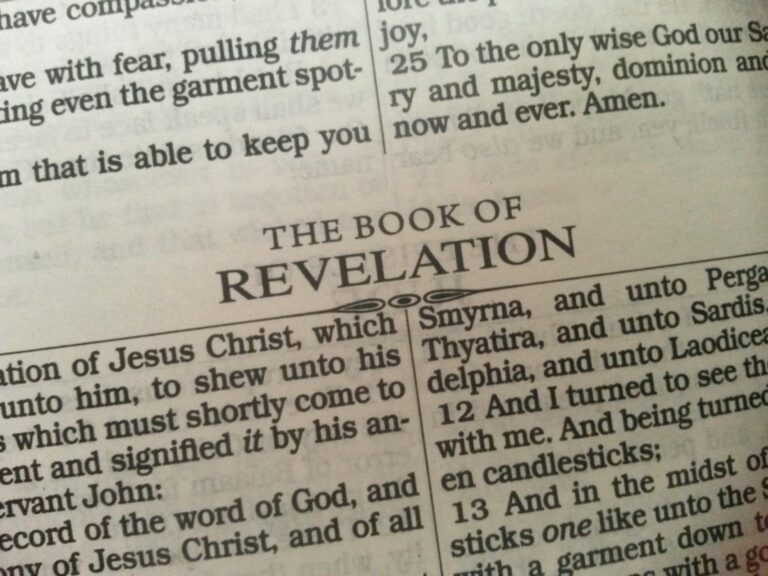
“The Revelation of Jesus Christ, which God gave unto him, to shew unto his servants things which must shortly come to pass; and he sent and signified it by his angel unto his servant John: Who bare record of the word of God, and of the testimony of Jesus Christ, and of all things that he saw. Blessed is he that readeth, and they that hear the words of this prophecy, and keep those things which are written therein: for the time is at hand.” Revelation 1:1-3, KJV, emphasis added.
The phrase “things which must shortly come to pass” in Revelation 1:1 has generated much debate. While modern schools of interpretation—dispensationalist, futurist, historicist, and preterist—offer differing views, the earliest Christian understanding was unified in seeing Revelation as both prophetic and symbolic, revealing Christ’s present reign and the unfolding of divine history.
Before Augustine, early Christian writers regarded Revelation as a sacred prophecy inspired by the Spirit, addressed to the Church undergoing persecution. They believed that “shortly come to pass” referred to events that were imminent in their own time but also foreshadowed the continuing struggles and final victory of Christ’s people. Appendix 1 has much more detail.
The First Message to the Church of Ephesus. Chapter 2, verses 1 through 7 of the Book of Revelation.
Ephesus, like the other six churches, is a real place with a Christian group of believers. John’s message was to the angel of this church. The message begins with the Lord’s commendation and then goes into a rebuke, “Nevertheless I have somewhat against thee, because thou hast left thy first love.” V. 4. They are told to repent or suffer the consequences.
This was a real city and a real congregation. Apparently, this was the trade route for all seven churches mentioned. Ephesus had a population of around 250,000. It was the largest and most important city in the Roman province of Asia. The city was devoted to the cult of Artemis (Greek) or Diana (Latin). The town had a temple to the goddess, once regarded as one of the seven wonders of the world. She was the goddess of wild animals, the hunt, vegetation, and of chastity and childbirth. She was the daughter of Zeus and Leto and the twin sister of Apollo. She was an idol, and the apostle Paul went to Ephesus to turn the people away from idolatry and toward serving the one true God.
There is much to comment on regarding this letter to the church in Ephesus and all the subsequent letters. What I want to draw attention to is how this letter, along with the others, has been explained in relation to Bible prophecy and the end times. This is where Steve Gregg’s book comes into play.
Mr. Gregg compares four views on the interpretation of the Book of Revelation. The following is a reminder.
- A preterist believes that the prophecies in this book of Revelation have already been fulfilled in the past, not long after John wrote this book. Some partial-preterists believe that a few later chapters of the Book of Revelation have yet to be fulfilled. In contrast, the others, known as full-preterists, believe that everything in the Book of Revelation has already been fulfilled. The destruction of Jerusalem by the Romans in 70 A.D. is the key date. The Book of Revelation is about this destruction and the return of Jesus in judgment of Jerusalem and the temple.
- The historicist sees the book of Revelation as being fulfilled over time, since the death of Christ.
- The futurist believes that most of the book refers to future events yet to come.
- The idealist sees this book as revealing important big picture truths in a great drama.
As I mentioned, my bias is toward those great men of God in the past. That would include the early church fathers and the Eastern Orthodox Church.
Most of these post-Reformation saints believed in the historicist interpretation of the Book of Revelation. However, it is not without its own shortcomings, like the other three views. This article will examine the historicist interpretation of the seven letters to the seven churches in more detail. After that, I will summarize the historicist view and present my observations and comments.
The message to Ephesus. The Historicist asserts that this message portrays the Christian Church from the death of Christ in AD 33 to AD 100.
This church, like most of the other churches (5), is commended and then rebuked. The reader is introduced to the false teachers called the Nicolaitans and reminded of Balaam, who advocated lawlessness, idolatry, and sexual immorality. This church body was doing well in several areas but had “left its first love.” Historicists and some Futurists say this church represents the apostolic era until the end of the first century, according to Mr. Gregg.
Let us not forget that the persecution of Christians started with the death of Jesus Christ and His followers. Persecution came first from the Jews and then the Romans. Then there was the persecution by Nero, a Roman Emperor, in AD 64. As you will read later, some commentators say that the message to the church is that Smyrna represents the persecution of Christians. That is why I brought this up now, because the message to the Church in Ephesus is supposedly representative of the church from the death of Jesus until the end of the first century. Persecution of Christians started immediately after Christ’s death and well before AD 100.
See Appendix 2 for a fuller treatment of how the early church fathers and the Eastern Orthodox Church interpreted this message.
The message to Smyrna. The Historicist claims that this letter depicts the church from AD 100 to AD 313.
Smyrna was the second-largest city in the province of Asia. This is the only city of the seven that still exists today. The reader is informed that the devil is about to throw some into prison, and they will experience tribulation. Smyrna housed the synagogue of Satan. It is said that this persecution or tribulation will last 10 days. Some commentators say this represents the 10 waves of persecution, and some say it is 10 Roman emperors who persecuted the Christians. Still others argue that this refers to the last 10 years of intense persecution, from 303 to AD 313. As I already mentioned, persecution of Christians started immediately after the death of Jesus Christ and is most definitely not limited to the church in Smyrna or Ephesus.
If Christians in Smyrna prevail through the persecution, they will receive the crown of life and be exempted from the second death. There is no call to repentance to this church. Only 2 of the seven churches had no call to repentance. Historicists argue that this church represents the church during the time of persecution under the Roman emperors, culminating in the tenth and final persecution under Diocletian, which lasted from 303 AD to 313 AD.
Constantine became the Roman Emperor and ended the persecution of Christians in A.D. 313. That peace lasted for a time. However, we all know that was not the end of the persecution of Christians, for the Roman Catholic Church started it up not long after the church and the Roman Empire started working together.
But what about the even greater persecution of Christians in the 19th and 20th centuries? Have you heard the claim that more Christians have been martyred in the 20th century than in all other centuries combined? What about Islam’s persecution of Christians all around the world today, and since it was founded in the 7th century? What about the persecution of Christians by the Roman Catholic Church, especially during the Dark Ages, 400s to 1,000s? (Some say the Dark Ages ended at a later date, such as 1400.) Then there is the persecution of Christians and others during the Crusades, from 1096 to 1291. Also, there was the Inquisition by the Roman Catholic Church from 1478 to 1834, when many Christians were persecuted and killed. Great persecution has applied to every generation of believers since the time of Christ. The message of this church is most definitely not limited to the period from AD 100 to AD 313. Therefore, the Historicist interpretation seems to fail. In other chapters of Revelation, the Historicist position appears to be more compelling than the others.
Message to Pergamos, AD 313- 606.
Some theologians say the word Pergamos means ‘married to power’. This church represents the Imperial Roman Church after Constantine legalized Christianity, marking the end of persecution. This city had the second-largest library in the world, exceeded only by the library in Alexandria, Egypt. This city was the first to erect temples to Caesar Augustus, to Zeus, and to the serpent-god Asclepius, the god of healing. Reference is made to Satan’s throne being in this location. This city was the Roman Capital. They are rebuked for tolerating the Nicolaitans. They were putting up with, and even advocating, such things as idolatry, sexual immorality, and compromise.
During these three centuries, the institution of the papacy came about. In AD 313, the Decree of Milan made Rome (where Satan’s throne is believed to be) the center of Christianity. During this period, through the rise of the papacy, idolatry was mingled with Christianity. “Married to power” is an apt expression of the marriage of the Christian Church to the godless pagan Roman state.
Around 313, Constantine ended the persecution of Christians, and Christians had some rest for a time before persecution started up again.
Why do some historicists stop at AD 606? This is the time when the Pope of Rome assumed universal headship of the Christian Church. Some say this is the period when we have the first real Pope, while Catholics assert that Peter was their first Pope. For our purposes, this marks the beginning of the Papal rule.
The message to Thyatira represents the papal church between AD 606 and 1517.
The word ‘Thyatira’ means ‘to be ruled by a woman’, according to Mr. Gregg. This church had a false prophetess named Jezebel, because her influence was similar to that of the real Biblical Jezebel. Apparently, she taught that idolatry was permissible. She encouraged fornication and so on. “It is possible that the prophetess was representing her insights as “the deep things of God” (comp. 1 Cor. 2:10), that is, as reflecting a superior enlightenment concerning the exercise of grace, as was the case (and still is) with many antinomians.” (cf. Rom. 6:15 and Jude 4). This is a direct quote from Gregg’s book, page 103. Antinomianism is the idea that Christians are no longer obligated to obey God’s laws. It is rampant in our day.
Notwithstanding these concerns, the church received commendations from Jesus for their works, love, service, faith, patience, and for the fact that their works were increasing, not decreasing. The church was rebuked for allowing Jezebel to seduce them. This woman caused them to worship the mother goddess Ashtoreth (also known as the Queen of heaven, as mentioned in Jer 44:17, 18, 25).
The Roman Catholic Church of the Middle Ages (12th century) introduced the veneration or worship of Mary, the Queen of Heaven. Mary, as the Queen of Heaven, dates back to the fourth century according to the Catholic website (Catholic.com). It may have started then, but over the centuries, the focus on Mary has evolved to its current state. Many Catholic leaders view her as co-redemptrix and co-redeemer. Today, she is the one who intercedes for us, and Jesus can’t deny her petitions.
‘To be ruled by a woman’ therefore appears to represent the time when the Roman Catholic Church exalted Mary.
Jesus threatens to kill her (Jezebel’s) children with death. “Some say that refers to the terrible plagues (including the Black Death beginning in 1347) that decimated the European population in the Middle Ages.” Page 105 of Gregg’s book.
The morning star is Jesus, the bright and morning star. Revelation 22:16.
The message to Sardis represents the church from 1517 through 1793.
This is the time of Martin Luther and other great reformers. In 1517, Martin Luther began to challenge the abuses of the Roman Catholic Church. This marked the beginning of the Reformation of the Church, which continued through the time of John Wesley, who died in the late 1700s.
The Reformation movement ended the Dark Ages and brought new life to the Christian Church. The Reformation was not a perfect work, and much remained unchanged. This church had a name that it was alive, but it was dead. Her works were not ideal or perfect. There were a few names in Sardis who were overcomers. To those, Christ said that He will not blot out their names from the book of life. Page 108 of Greg’s book.
I see a problem with associating this message with the Christian Church from 1517 through 1793. How is it that they have a name that suggests they are alive, but they are actually dead? This period included some of the greatest revivals. It makes no sense to me, but I may be missing something. ‘Having a name that they are alive but are dead’ would fit our current generation and the Dark Ages more appropriately than the time period 1517 to 1798. Am I missing something?
Luther and other Reformers attempted to reform the Catholic Church, but their efforts were largely unsuccessful. The Catholic Church excommunicated Martin Luther and others who dared to correct the infallible church. Other reformers attempted to return to biblical truth, but also fell short.
This time frame, from Martin Luther, includes such giants of the faith as John Wesley, George Whitefield, and Jonathan Edwards. These men were leaders of the First Great Awakening, which spanned the 1730s to the 1770s. To suggest that these great men of God and the work that they did, ‘had a name that they were alive but were dead’ seems absurd in the highest degree possible.
Why do these Historicists end this period in 1793? In June of 1793, the Reign of Terror began. Following the execution of the king, France went to war with various European powers. The Pope’s authority was gravely wounded. The new government announced that public worship was illegal. Catholic lands and buildings were taken. The state took over, and the clergy became state employees, and ties with Rome were severed. This was the beginning of the end of the Papal dominance of nation-states.
The message to Philadelphia represents the church from 1793 to the return of Christ.
As most of us know, the meaning of the word Philadelphia is ‘brotherly love’. Jesus is identified as the one who opens and closes doors. He set before them an open door. Jesus says He will keep them from the hour of trial, which shall come upon the whole world, to test those who dwell on the earth, V 10. Dispensationalists and Futurists see in this a promise of a Rapture, especially a pretribulation rapture.
This is the church of the Great Awakenings, specifically the Second Great Awakening, which spanned from 1790 to 1840. It includes Wesley, Whitefield, Edwards, Finney, and Moody (and many others), and the open door was to evangelize the lost, including Christian backsliders.
The description ‘Brotherly love’ could just as well belong to all of these seven churches. All are examples of brotherly love in my estimation. Obviously, some Christians in every generation are terrible examples of sisterly love.
The message to Laodicea represents the church from 1793 to the return of Christ. (The last two churches represent the same time frame.)
Historicists and some Futurists believe that this church represents the lukewarm body of believers within the greater Christian Church, according to Mr. Gregg.
Higher criticism of the Bible began in earnest in the 19th century, with much of it originating from Germany. Others, who were not theologians, also began to question the veracity of the Bible’s age of the earth. Darwin’s book on evolution was published in 1859. All this compromise is part of the Laodicean era of the church. Evolution exerted pressure on believers to change their views or face ostracism by academic leaders. Theologians began to reinterpret the Bible and to express doubts about it. To appear educated and intelligent, they began to compromise scripture. During this general time frame, a direct assault on the Bible itself began when Westcott and Hort sought to correct the KJV based on a few older, but very corrupt, manuscripts. These new translations of the Bible have not made it easier to read and understand, but have generally made it more confusing to the average Christian and have compromised the text in many places, according to theologians I respect. Not only did this occur with respect to theology and evolution, but also in other fields of science. All this has produced a Laodicean Church according to Historicists.
The letter to this church mentions that these believers became lukewarm because of their wealth and prosperity. They thought they were rich and needed nothing. They did not realize that they were miserable, poor, blind, and naked according to Jesus. Jesus said He wished they were either cold or hot, and because they were lukewarm, He would spit them out of His mouth.
Jesus advises them to buy from Him, among other things, eye salve so that their vision would be healed. The city of Laodicea was renowned for its ministry of healing eyes with salve. Jesus is pictured standing at the door of the church, knocking to gain entrance to a church that is supposedly worshiping Him. A church under persecution is not this picture. There are places in the world today where the church is clearly lukewarm, such as in the USA. In other parts of the world today, there is persecution of believers, and that is not a picture of a lukewarm church.
Mr. Gregg’s book did not cover every position or viewpoint. There are two more that I want to consider. The following is from the Amazing Discoveries videos, which present a Seventh-day Adventist (SDA) perspective on the three Chapters of the Book of Revelation.
I will try to limit my comments to anything new or different from the first Historicist perspective we just covered. SDA approaches this subject from a Historicist perspective, according to Mr. Gregg. Based on what I have seen and read, I think he is correct.
Ephesus from the death of Christ in AD 33 to AD 100.
The meaning of the word for Ephesus is ‘desirable’. The city was the seat of the goddess Diana, who is the ‘mother of the gods’. The Temple of Diana was built in 480 B.C. In A.D. 451, the Council of Ephesus gave the title ‘Mother of God ” to Mary.
They, the church in Ephesus, couldn’t bear with those who are evil. They tried the false apostles and found them wanting because they didn’t conform to the word of God. They found them liars. Yet you have left your first love, is the rebuke from the Lord. Jesus told them to repent and do their first works again. If they overcome, they will eat of the tree of life.
They did hate the deeds of the Nicolaitans, just as Jesus hates their deeds. Who were the Nicolaitans? They were a Gnostic sect that believed the law of God did not apply to man in the flesh. They taught and practiced the indulgences of lust. Nicolaitans are followers of Nicolas, one of the first seven ordained to the diaconate by the apostles, so they say. They led lives of unrestrained fleshly and sexual indulgence.
In Roman Catholic theology, Saint Nicholas is the patron saint of sailors, merchants, archers, repentant thieves, children, brewers, pawnbrokers, unmarried people, and students in various countries. St. Nicholas and Santa Claus are historically the same person, according to the SDA church. On the eve of or early in the morning of Dec. 25, he rides around in his sleigh and gives gifts.
Other gods born on Dec. 25 include Mithras, the sun god, known as the Son of God and the Light of the World. Dec. 25 is also the birthday of Osiris, Adonis, and Dionysus. Was Jesus born on Dec. 25? For many reasons, it is very doubtful that Jesus was born on December 25.
This SDA speaker brought out the god Poseidon, who was the god of the seas, storms, earthquakes, and horses. The Roman equivalent is Neptune. He enjoyed the pleasure of the flesh. Nicholas was a worshiper of Poseidon.
Smyrna AD 100 to 313.
The meaning of the word Smyrna is ‘sweet-smelling sacrifice’ from the word myrrh. This city had a shrine to the goddess Nemesis, the Greek goddess of retribution and indignation. Polycarp was their minister and was martyred there. The 10 days are in reference to the Diocletian period of intense persecution of Christians from A. D. 303-313. This assumes the formula of 1 day = 1 year. More on that later.
This Church was doing well in many ways, even though the city contained the Synagogue of Satan. Early Christians were called Jews. No reproof, only commendation. Be faithful and get a crown of life, and not be hurt by the second death.
Persecution separates the true from the false. If you only have the form of religion under persecution, you will most likely compromise. It is essential to know what you believe and why you believe it. Substance, not just form, is needed to carry one through persecution.
Refer back to my earlier comments about Christian persecution. Christians have been persecuted intensely for many years, besides this time period.
Pergamos AD 313 to 538. (Greg’s time frame was AD 313- AD 606.)
The word Pergamos means ‘elevation or height,’ according to this SDA speaker, but Greg quotes others who say it means ‘married to power.’ Keep reading to see how both meanings appear to be true.
Pergamos was the capital city of the Roman province of Asia. It housed the temple of Zeus, the serpent god, and Aesculapius, the god of medicine, depicted as a serpent, a healing serpent wrapped around a pole. This symbol is still used today for the practice of medicine. I believe that is still true.
The SDA speaker believes the Babylonian priesthood was established in this city’s area. Much of this pagan priesthood is now included in the Roman Catholic Church, according to the SDA church. These similarities include colorful vestments, the fish-head miter of the god Dagon worn by the pope, and the title Pontifex Maximus (PM), meaning “the supreme high priest.” As such, the pope is the bridge between the heights of heaven and the depths of earth. Julius Caesar became Pontifex Maximus in 63 BC.
The last pontiff, king of Pergamum, was Attalus the third and in 133 BC. He bequeathed the title to the Roman Empire. In AD 378, the Christian emperor, Gratian, refused the title, and it went to Damascus, the bishop of Rome. PM are the letters that are part of papal vestments and/or documents even today.
Prayers went up or were elevated because of the intercession of the Pope, his priests, and, of course, Mary’s intercession. Elevate or lift also conveys the idea of a self (man or woman) being lifted or elevated above God. Man’s way over God’s way in a marriage between church and state, according to the SDA church.
The Balaam doctrine is a problem for all churches. This is a doctrine and practice of compromise. It includes sinning and breaking God’s law. Constantine did that very thing, compromising the Christian faith and doctrine. He forced the Christian church to compromise with the other pagan religions. He had another, Eusebius, rewrite portions of the Bible and make 50 copies. In these copies, Jesus was made to be less than He is. He was demoted and made to look like the other pagan gods. Jesus decreased, and man’s ideas increased or were elevated above God’s word.
The year 538 was a turning point in the history of the Roman Empire, according to the SDA speaker. Much of the political, administrative, and economic levels were already in disarray when Justinian declared himself a theologian. From this year forward, he was no longer a soldier; he crossed the barrier of his mandate from the pagan Roman Empire to the Holy Roman Empire. The emperor destroyed the Vandals in 534 AD and crippled the power of the Ostrogoths in AD 538, thereby eliminating all the powers that had limited or restricted the Pope’s power and influence.
Thyatira AD 538 to AD 1517. (Gregg gives the time frame as AD 606 and 1517.)
According to this presenter, the meaning is ‘the castle of Thya.’ The word means ‘sacrifice’. An alternative meaning, ‘sacrifice offering’, has been suggested by others. Gregg quotes someone who says the meaning of this word is ‘to be ruled by a woman’. Note that there are various meanings proposed for this word, like many other Biblical words. Teachers often find alternative meanings of words to support the position they want to take.
The explanation for the AD 538 start date follows. The Justinian decree of 538 appointed the Bishop of Rome as the “corrector of heretics.” Enter the Dark Ages. From this point, the Word of God takes a back seat to the Bishop of Rome, the corrector of heretics. A man (pope) now tells other men what to believe and what to do. And this man has the power to force others to comply under pain of death. This is not nor has it ever been the way of the Lamb of God. Reject light (God) and you get darkness.
This city was known for its textile industry. Purple and crimson cloth was made from madder root. The colors of the Middle Ages were purple, which symbolized royalty, and crimson, which symbolized blood sacrifice. These colors figure prominently in the Catholic Church and the book of Revelation.
Ancient Jezebel, princess of Phoenicia, married Ahab and led Israel into sun worship or Baal worship. Israel served both male and female idols (1 Kings 18:4; 2 Kings 9:22). Pagan worship of gods involved the use of a round piece of bread symbolizing the sun god. Did that go into the Roman Church at that time?
Sardis AD 1517 to 1798. (Gregg has 1793, not 1798, as the end date.)
The word Sardis means renewal or reformation.The city was impregnable but was twice taken, without resistance, by Cyrus and Antiochus. Things dead must be restored to life. Doctrines and practices must come alive and be renewed. However, the Reformation was not complete; some critical matters remained unfinished.
The Roman Catholic Council of Trent went from 1545 to 1563. The Roman Church made its position on several critical Biblical doctrines clear. Protestants claimed that the Bible alone was the only authoritative standard, but Rome disagreed, including tradition. Rome won and the Reformation lost, because it stopped short of reforming the many errors of the Catholic Church. Those errors entered the reformed churches and persist today, according to the SDA church and others.
This SDA speaker said that Rome could prove that traditions superseded the word of God because Rome changed to Sunday worship from the sabbath day worship, among other doctrines, such as infant baptism. Protestant churches clung to these false doctrines.
Martin Luther did not finish reforming, so others came and found something missing, and a new denomination arose. And on and on it went until we have many Christian denominations, each one built on a distinctive aspect missed by others. Some churches said that because we did not see it first, we will not accept it now. This was his explanation for all the Christian denominations we have today. Interesting and a reasonable explanation.
Philadelphia, AD 1798 to 1844. (Gregg has 1793 to Christ’s return, not 1844).
This is the city of brotherly love, which is the meaning of the word. Jesus opened the door to worldwide missions during this time. For instance, Carey went to India in 1793; Morrison went to China in 1807; Moffet went to Africa in 1817; the British Bible Society was created in 1804; and the American Bible Society was started in 1816. The word went to the world. God opens a door, and no man can close it. (Refer back to prior comments in the first section about the Great Awakenings.)
Jesus said to this church that He would keep them from the hour of temptation that will come upon the whole world. He said, Hold fast that no man take thy crown.
Why is 1844 so important to the Seventh-day Adventist? It marks the year when William Miller, a Baptist preacher, predicted that Jesus Christ would return to earth. (Another false prophecy.) Miller’s prediction was based on his interpretation of the Bible and on calculations of the 2,300-day prophecy in the Book of Daniel. (We will explore the Book of Daniel in detail and how they arrived at this date.)
Miller initially predicted that Jesus would return in 1843, but after the date passed without Jesus’s return, he revised his prediction to October 24, 1844. When Jesus did not appear by that date, Miller and his followers were obviously disappointed. However, from that movement came the Seventh Day Adventists, who still believe that the 2,300-day prophecy refers to 2,300 years and that it was secretly fulfilled in 1844 in heaven.
The doctrine of the Investigative Judgment is central to Seventh-day Adventists’ theology. It holds that Jesus entered the final phase of His ministry in 1844 (when He went from the outer court into the inner court, or the holy of holies). It has been said that there would be no Seventh-day Adventist church without the doctrine of the Investigative Judgment. This judgment will reveal to heavenly beings, who among the dead are asleep in Christ and therefore, in Him, and are deemed worthy to have part in the first resurrection. (I find this explanation to be unbiblical. It is an apparent attempt to avoid repentance from a false prophecy. The lengths people will go to avoid admitting they were or are wrong.)
Another site says this, “the year 1844 is significant for Seventh Day Adventists because it marks the beginning of the most essential Second Advent movement in ecclesiastical history. Seventh-day Adventists believe that there is a sanctuary in heaven set up by God, where Christ ministers on our behalf. In 1844, at the end of a prophetic period of 2,300 days, Jesus entered the second phase of his atoning ministry. The first phase was when He ascended into heaven, and He became the High Priest of this sanctuary.
Ellen Gould Harmon White was one of the founders of the Seventh-day Adventist Church. Her prophecies and other guidance were central to that denomination’s early growth. She was 17 in 1844. She had 2,000-plus visions. She claimed her prophecies were divinely inspired. I have never conducted a detailed study of her prophecies, but I do know that some former SDAs deny that she was a prophet of God.
Some say this denomination (SDA Church) is a cult. It is beyond the scope of this article to get into a discussion of the doctrinal errors of this denomination. What the church did in 1844, when the prophecy failed to come to pass, is an apparent attempt to make a ‘word from God’ fit the reality of a failed prophecy. If the prophecy doesn’t occur in the physical, then it must have happened in the spiritual, in secret. Even today, those who call themselves prophets of God, seem to be doing something very similar with their failed predictions in dreams and visions.
Laodicea 1844 to Christ’s return. (Gregg’s book gives the reader the beginning date of 1793 to the return of Christ).
The word means, ’nation of judgment’. It may mean ‘justice of the people’. Antiochus built the city named after his wife, Laodicea. It was a health resort, and eye salve was made there. It was a wealthy city destroyed in A.D. 60 by an earthquake, but rebuilt with its own funds; no state funds were needed because of its wealth.
Hot springs piped hot water to the city a few miles away. When it reached the town, it was often lukewarm, making one sick when swallowed. No commendation, only rebuke in this book.
The problems I see with the SDA historicist approach to interpretation. 1) One day = one year is not consistently applied in scripture, and 2) the letters to the seven churches seem to be applicable at every age in the church and to individuals within a church. Christians today can be said to have left their first love, not just Christians in the first 100 years after Christ. Each letter is potentially applicable to Christians, no matter when they lived. And I am sure that there were many times in the history of the Church when Christians were wealthy and lukewarm.
We will now look at the final historicist perspective. This last one is coming from a dispensational foundation. I found Dr. William P. Grady’s work on the KJV of the Bible to be excellent.
According to Dr. William P. Grady, the following is true. (Dr. William P. Grady’s book, Given by Inspiration: A Multifaceted Study on the A. V. 1611 with Contemporary Analysis.The seven churches were actual churches at the time. I think almost everyone agrees with that statement.
The author Grady believes these seven churches represent a prophetic profile of the entire church age. He is a dispensationalist. Dispensationalists believe that Israel will have a functional role in the nations when Jesus rules the nations at His return to earth. Other things they think are that history is divided into multiple ages or dispensations in which God acts with His chosen people (Israel) in different ways. Dispensationalists believe there is a distinction between the Church and Israel and that the Mosaic Law does not bind Christians. The Church does not replace Israel. Also, they take a literal interpretation of many of the prophecies in the Book of Revelation. For instance, some of them believe that the Jews will rebuild the temple in Jerusalem and begin animal sacrifices again.
I am not a believer in dispensationalism as many of them understand it and teach it. For example, to claim that Christians are not under or obligated to obey the moral law contained in the 10 commandments of God is antinomianism and has been responsible for the decline in morality in churches and in our culture. They have given the world the idea of a Carnal Christian.
Ephesus, AD 33- AD 100.
According to Dr. Grady, the dates are not dogmatic but very flexible. This is the apostolic church ending with the death of the last apostle, John, at the close of the first century.
He says the “Nicolaitanes” were a first-century sect that anticipated the Roman Catholic priesthood by establishing a clergy/laity relationship among God’s people. The word Nicolaitan means “to conquer the people,” according to Dr. Grady.
Smyrna AD 100 to 313.
The word Smyrna means “myrrh,” an aromatic gum resin used to embalm the dead. This Church age is characterized by imperial Roman persecution. John told them to expect tribulation for 10 days. 10 is the number of the Gentile, according to Dr. Grady. And 10 major persecutions occurred: Nero in 67, Domitian in 81, Trajan in 108, Aurelius in 162, Severus in 192, Maximus in 235, Decius in 249, Valerian in 257, Aurelian in 274, and Diocletian in 303, according to Fox’s Books of Martyrs.
Also, this period was the start of planting the seeds of 1) the Roman Catholic priesthood and 2) replacement theology, where Christians replace Israel. Christians were asserting that they were spiritual Jews, thus heirs to Jewish promises.
During this time, Greek thinking replaced the precepts of Moses. There was a school in Alexandria, headed by Origen, the pioneer of textual criticism. The infamous codices, Vaticanus and Sinaiticus, were copied from copies that originated with Origen. The textual line of Alexandrian documents comes from this. Origen, self-emasculated himself, and laid down the seeds for disbelief in a physical resurrection and an eternal hell, according to Dr. Grady.
Pergamos A.D. 313 to 500. (SDA date for Pergamos A.D. 313 to 538. Greg’s time frame was A.D. 313- 606. All three Historicist dates start with A.D. 313, but all end at different dates: A.D. 500, A.D. 538, and A.D. 606. This is what happens when one attempts to make the Bible say something it doesn’t stipulate.)
The word Pergamos means “marriage and elevation.” Emperor Constantine stopped the persecution of Christians and merged Christianity and paganism in the Roman Empire. This marriage of church and state significantly elevated the organized church. He was the first “Christian” emperor. In return for safety and power, the Church needed to compromise with the state.
Nicolaitanes reappear in this letter, and the church is rebuked for allowing it. This place was the place where Satan’s seat is, V 13. Dr. Grady said, “Church leaders were so elated that the heat was off and the honor was on, they started preaching that the kingdom had arrived.” Page 9 of his book, Given by Inspiration, published by Grady Publications. Not long after this, the Visigoths attacked Rome and sacked it in AD 410. This is the time of Augustine, who believed God was finished with the Jews and Jerusalem, a view now called Replacement Theology. Dr. Grady rejects that idea because he is a dispensationalist.
Thyatira AD 500- 1500, the Dark Ages. (SDA dates for Thyatira, AD 538 to AD 1517.Greg gives the time frame AD 606- 1517).
The meaning of the word is “continual sacrifice,” which is either the Roman Catholic Church celebration of the Eucharist or the suffering of real Christians at the hands of Rome. Constantine left the church his title of Pontifex Maximus or Chief Priest of the pagan state religion. Every Pope wears this title on the miter. From this time, the Pope would speak ex cathedra, according to Dr. Grady.
Queen Jezebel is introduced in this letter. And Rome began its infatuation with the Queen of heaven —the ever-virgin Mother of God, according to Dr. Grady. Jezebel introduced Israel to idolatry. The Roman Catholic Church introduced paganism and idolatry to Christianity. They ate things sacrificed to idols, says the word. Makes one think of the Roman doctrine of transubstantiation. And she repented not.
The Roman Church persecuted the true church and attempted to eradicate it. They wanted it destroyed and would have done so if not prevented. “During the Dark Ages in Europe, 50% of the children died before their 13th birthday. Islam invaded, Vikings invaded, Holy wars ensued, the Black Death struck, which wiped out 1/3 of Europe’s population in the 14th century alone,” according to Dr. Grady. Despite all that, by 1380, John Wycliffe had produced the first handwritten English Bible. Remember that there were no printing presses at that time. John Wycliff became known as the “morning star of the Reformation.” The letter by John the apostle to the angel of the Church said, “And I will give him the morning star.” The darkness caused by the Roman Catholic Church was beginning to see light, and that light would change much but not everything.
Sardis from AD 1500 to 1611. (SDA date for this period is 1517 to 1798. Greg’s date is 1793, not 1611 or 1798.
The meaning of the word Sardis is “red ones” or “bloodied ones.” The other two say the meaning of the word concerns renewal or reformation. Words most often have multiple meanings, and it is essential to remember that when someone dogmatically claims a particular meaning. Context always determines the meaning of words, in my opinion.
Northern Europe decided to break away from the authority of the Pontifex Maximus. The seeds planted by John Wycliff had begun to bear fruit. 20 years after Wycliffe died, John Hus carried on the task. Martin Luther saw the light and started a reformation of the Roman Catholic Church. God provided Gutenberg and his movable type, and the automation of printing changed everything. “The Catholic Roland Phillips, frightfully remarked, “We must root out printing, or printing will root us out.” Page 13 of Dr. Grady’s book. This letter marks the end of the Dark Ages and the beginning of the Protestant Reformation.
Luther began this reformation in 1517, and it lasted over a century, ending in 1648 with the Peace of Westphalia. The dead on both sides numbered in the millions. Dr. Grady said the populations of Germany and Austria were reduced by 50%, and some say by 67%. The Reformers stopped way short of what was needed. They accepted infant baptism, transubstantiation, veneration of Mary, and many other evil and pagan practices. Baptists were persecuted by both Rome and the Protestants. Dr. Grady is a Baptist.
The Philadelphia Church Age began in AD 1611 and ended in 1901. (SDA dates this period AD 1798 to 1844, and Greg dates this period 1793 to Christ’s return, not 1844 or 1901.)
The meaning is brotherly love. Dr. Grady calls this period the most fruitful period in church history. He quickly adds, to be followed by the worst period. The AV, Authorized Version, is the King James version of the Bible. It was published in 1611. The close of this period coincides with the corrupt publication of the American Standard version of the Bible in 1901. The Smyrna Alexandrian manuscripts reappear.
America appears on the scene, giving humanity freedom of conscience, freedom from persecution, and freedom of religion. The Roman Catholic Church strongly opposed this. From this place, tremendous soul-winning ensued with some of the greatest names in evangelism the world has ever known. George Whitfield, John Wesley, D.L. Moody, Charles Finney, Jonathan Edwards, and the list goes on. As a result, Jehovah blessed this nation like none other. And God moved on some Jews to throw this nation the lifeline. Why should this nation stand with Israel? Because Jews were used by God to birth this nation. Dr. Grady talks about the benevolence of one Jew in particular whose financial support made all the difference.
Church of Laodicea, AD 1901 to Christ’s return. (SDA dates this period from 1844 to Christ’s return. Greg’s book gives the reader the beginning date of 1793 to the return of Christ.
The meaning is the “rights of the people” or “civil rights”, according to Dr. Grady. He believes this letter is about the unprecedented materialism of our age. “Thou sayest, I am rich, and increased with goods.” “Today we buy things we do not need, with money we do not have, to impress people we do know. And that breeds our current culture of entitlement and the rights of the people. This distraction with wealth and things produced a lukewarm body of professing Christians,” states Dr. Grady in his book. Neither hot nor cold, so that the Lord will vomit us out of His mouth. We can choose from a large variety of products to make us happy, as well as a large variety of Bibles and churches to make us feel good about ourselves. Materialism and apostasy are everywhere. Jesus is standing at the door of the Church seeking entrance into the service, but they are content to go on with the church service without His presence.
Summary of key points
Historicists suggest that each of the seven letters represents a time period in the Christian church from the death of Christ until the end of this age. Obviously, the suggested dates are interesting and make some sense, but they are subjective. Any number of important dates might be used with equal authority. There are literally thousands of significant dates to choose from. Yet some of their dates do correspond well with prophetic writings and are very important in the history of the Church of Jesus Christ.
There is overlap among these messages, and parts apply to every generation of Christians since Christ went up into heaven. For instance, it is not accurate to believe that only the Ephesian Church (AD 32 to AD 100) could be described as having lost its first love. That expression can and does often apply to every century and to particular churches and individuals since Christ left this earth.
Smyrna is a message of impending persecution that doesn’t just fit the time period indicated, to AD 313. Christians have been and are still being persecuted, in even greater numbers today, than when the Empire of Rome and the Roman Catholic Church persecuted Christians.
Pergamos, to AD 606, is a message that rebukes the Church for tolerating the doctrine of the Nicolaitans and of Balaam. Jesus hates these false teachings. These false teachings are indeed alive and well in our day, not just back then. Hard to believe that they were worse than we are today. Even today, there may be a few faithful churches here in America and around the world.
Thyatira, in AD 1517, is rebuked for tolerating the woman Jezebel, a false prophetess. She caused them to commit fornication. This was not just a problem in the Dark Ages, but is a problem in every generation. That includes the present day. And there might even be a few exceptions today.
Sardis, to A.D. 1793, ‘had a name that they were alive but were dead’. This designation fits better with the Dark Ages than it does this time period. This is the time when Martin Luther broke away from the Roman Catholic Church, exhibiting more life than death. Indeed, the reformation did not go far enough, but it went further than most thought possible. This time period also includes the first Great Awakening. That is the exact opposite of having ‘a name that they were alive but were dead.’ This is a time of life over death, not death over life, for many but not all.
Philadelphia, A.D. 1793 to the return of Christ. This is a message that Jesus has set before them an open door, and no man can shut it. He alone has the keys. They have little strength, but God is with them because they have kept His word and not denied His name. He will keep them from the hour of temptation, which will come upon all the world. Futurists and Dispensationalists take this to mean that the church will be raptured before all this happens. But the word says, they have kept the Word of God and not denied His name. But many so-called Christians today have not kept His word and have rejected His name by their sins, yet they still believe they will be raptured into heaven. What deception has blinded our minds and eyes?
Laodicea, AD 1793 to Jesus’s return. This message rebukes lukewarm Christians. Jesus would rather have them cold or hot, but because they are lukewarm, He will spit them out of His mouth. This is especially true of European and American Christianity, but it also accurately describes many other historical periods. Would this not be an apt description of Christianity in the Dark Ages as well? Or any time period in which prosperity was ample and truth was marginalized. Even today, some churches are exceptions, especially if one considers the persecuted Christian churches in other countries.
Closing comments
There are key dates and times in the history of the world and the Christian Church that are important to know and understand. Some, but by no means all of them, were included in this article. But insisting on assigning these seven letters to arbitrary time periods is neither helpful nor conducive to the messages they contain. Each of the seven messages should be read, understood, and applied, as applicable, by all Christians, at all times. That is not to say that key historical dates and events are not prophesied in the Book of Revelation. As you will see later, historicists offer some compelling evidence.
If the Book of Revelation speaks to the future (I think it does), then the past will help us understand what we can expect. The Bible is a history book of the universe and God’s dealings with His creation, including man. Throughout the Bible, the truth of God does battle with the enemy’s lies. The nation of Israel forgot the one true God and began to serve idols. Jesus Christ came down from heaven to atone for humanity’s sins. He came to find the lost, heal the sick, and save sinners. God revealed Himself to humanity in the person and work of Jesus Christ. In times past, God spoke through the prophets and Moses, but in these last days, He has spoken to us through His son. Around 1,600 years ago, the canon of the Holy Bible was finished, but some books of the Bible were recognized as authoritative as early as the first century.
It seems reasonable to believe that God would reveal the future after Christ ascended into heaven. Many Christians believe that the Book of Revelation is just that. If that is true, then our religious history is likely part of the end of days. One of the reasons I like the Historicist view is that they also see the importance of that history. The apostles were sent out into all the world, not just the Middle East. Christ’s church is in almost every nation on earth right now. The Roman Catholic Church also has worldwide influence.
The Roman Catholic Church claims to be the church founded by Jesus Christ, built on the Apostle Peter. According to many giants of the faith over the centuries, the apostate Roman Catholic Church is clearly visible in the Book of Revelation. At this stage in my investigation of end times, I agree with them. For 1,600 years, this Catholic Church has been a thorn in the side of true Christianity. This institution has persecuted untold millions of Bible-believing Christians over the centuries and blinded even more to salvation. I would expect to be able to identify this enemy from scripture. In Revelation chapters 17 and 18, we are introduced to the harlot, the mother of all harlots. She is the MYSTERY, BABYLON THE GREAT. Many have interpreted this to refer to the Roman Catholic Church. At this point, I, too, think this is the most likely prospect for that title. Historicists believe firmly that the Papacy is the Book of Revelation as the ‘man of sin.” (Much more on this later.)
Most of these churches in the first three chapters of Revelation were rebuked by Jesus, even though they received some praise. That is what we should be paying attention to. Do these messages have any particular end-time prophetic messages? I do not think so. All of these messages have historical and contemporary relevance for all Christians everywhere. (See Appendix 3 for confirmation.)
What about the other prophetic perspectives on these first three chapters, such as the Preterist view, the Futurist view, and the Idealist views, as they relate to the first three chapters of the book of Revelation? Historicists and some Futurists see things similarly regarding the messages of the seven churches and the nefarious nature of the Roman Catholic Church. Obviously, the Preterist believes that the book of Revelation was written before the destruction of Jerusalem in 70 A.D., and that Revelation describes that fall. Some Preterists see the last Chapters of the Book of Revelation as the end times.
Appendix 3 includes a ChatGPT review of the remaining six churches, how the early fathers of the Christian Church understood these messages, and their relevance to end times. It is informative. Perseverance in holiness is a constant theme, and attempting to predict end times dates and events was not a consideration. Is there a message in that for our generation that at times is absorbed in both speculative prophecy and date setting?
The following article will examine the Book of Daniel, as its interpretation shapes much of how the Book of Revelation is understood. We will eventually get back to the Book of Revelation.
