
November 17, 2025
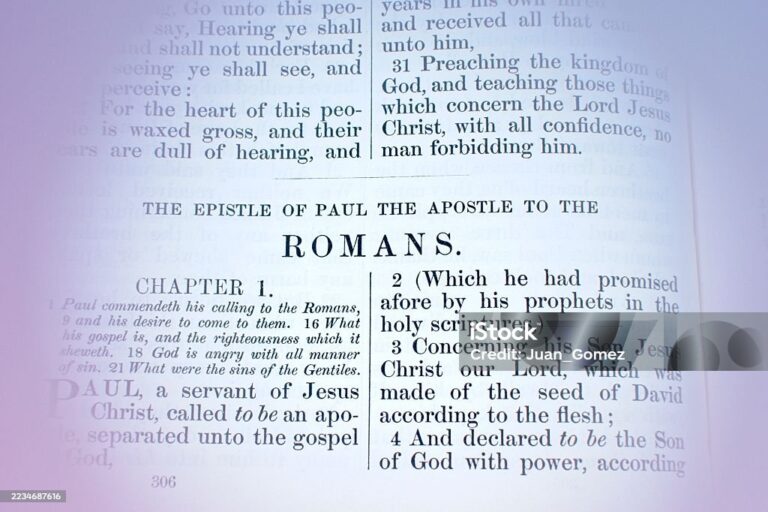
In my first article on Romans 7, I used the scriptures to refute the idea that the Apostle Paul was describing his or any other genuine Christian’s experience in this much-maligned passage. The broader context of Romans 6 and 8 clearly refutes the typical evangelical understanding. And more broadly, when considering what the entire Bible teaches, they incorrectly assume that Paul was describing the experience of every child of God. That is a deadly and false belief.
This second part will look more deeply into Chapter 7 of Romans. What follows is an excerpt from another article, “Eternal Security,” as taught by Allen Parr. (Refer to my website, seekgodintruth.com). He uses this passage to argue for eternal security, claiming that the Apostle Paul continued to sin throughout his life. The following excerpt begins with my question regarding salvation. It quickly moves into Romans 7 and what the author, Allen Parr, says about the Apostle Paul, often referred to as the chief of sinners.
“What must we do to be saved and go to heaven when we die?
“Let the wicked forsake his way, and the unrighteous man his thought: and let him return unto the Lord, and he will have mercy upon him; and to our God, for he will abundantly pardon.” Isaiah 55:7.
“He that covereth his sins shall not prosper: but whoso confesseth and forsaketh them shall have mercy.” Proverbs 28:13.
Those who espouse the doctrine of eternal security do not believe either of these two verses or any just like them, and there are many such passages. Generally speaking, they think the only condition for our salvation is to have faith in Jesus Christ, which includes acknowledging that we are sinners (confession). If a person does that, they are saved even if they never forsake any of their sins, and they most certainly will never forsake all of their sins, because they are taught that it is fanaticism and impossible, since all of us are born sinners.
Was the apostle Paul the ‘chief of sinners’ his entire life?
The author, Allen Parr, tells the reader that even the great apostle Paul struggled with sin (Romans 7:14-25). Paul even claimed he was the chief of sinners (1 Timothy 1:15). Parr wants us to know that Paul was describing his current situation, not the past. If we are saved, according to Parr, we are no longer happy and content to continue in our old, sinful lifestyles (although we often do). We don’t want to take advantage of God’s grace (but do it anyway!). And I quote the author: “That abundant grace is not a license to sin but an insurance policy. And we are grateful to have it in case we need it, but we would prefer not to use it.” I am trying to be charitable right now. If you believe any of this nonsense, there is little hope for you.
We are asked to believe that because a sinning Christian is not “happy” to continue in the old sinful lifestyle (but does it anyway), that means we are genuine Christians and are eternally secure. Can he really be serious? He then goes on to say that this abundant grace is not a license to sin, but just an insurance policy in case we need it, as if the insurance policy itself is not a license and invitation to sin with impunity? These comments are beneath the author’s integrity and are beyond pathetic.
Let us not forget that the Apostle Paul also said that he fought the good fight and his conscience was clear before God in all matters. Why doesn’t Mr. Parr quote any of these passages? Let me do the honor of mentioning those passages that absolutely refute the author’s position about the apostle Paul and Romans 7.
Many who believe in the doctrine of eternal security point to Paul’s statement in 1 Timothy 1:15 that he was the ‘chief of sinners’ as evidence that even the apostles remained in continual sin after salvation. However, a careful reading of Paul’s later writings reveals that this phrase reflected his humility and his remembrance of his former life as a persecutor of the Church, rather than a description of his ongoing condition. In multiple passages, Paul affirms his clean conscience, holy conduct, and readiness to meet the Lord. These verses demonstrate that Paul walked in righteousness, maintained a good conscience before God and men, and lived as one who had crucified the flesh and was led by the Spirit of Christ.
- 2 Timothy 4:6–8
“For I am now ready to be offered, and the time of my departure is at hand. I have fought a good fight, I have finished my course, I have kept the faith: Henceforth there is laid up for me a crown of righteousness, which the Lord, the righteous judge, shall give me at that day: and not to me only, but unto all them also that love his appearing”.
Paul’s words here show triumph and faithfulness, not a continual state of sin. There is no picture of Romans 7 in these words.
- Acts 23:1
“And Paul, earnestly beholding the council, said, Men and brethren, I have lived in all good conscience before God until this day”.
Paul publicly declares that his conscience is pure before God. Does that sound like he considered himself the chief of sinners?
- Acts 24:16
“And herein do I exercise myself, to have always a conscience void of offense toward God, and toward men”.
Paul actively maintains a clear conscience, demonstrating ongoing righteousness. To suggest that Paul considered himself to be a willful sinner or the chief of sinners is ridiculous.
- Philippians 3:12–14
“Not as though I had already attained, either were already perfect: but I follow after, if that I may apprehend that for which also I am apprehended of Christ Jesus. Brethren, I count not myself to have apprehended: but this one thing I do, forgetting those things which are behind, and reaching forth unto those things which are before, I press toward the mark for the prize of the high calling of God in Christ Jesus”.
Paul describes spiritual progress, not habitual sin.
- 1 Corinthians 9:27
“But I keep under my body, and bring it into subjection: lest that by any means, when I have preached to others, I myself should be a castaway”.
Paul lives in disciplined obedience to avoid disqualification. Paul was no hypocrite as Mr. Parr wants us to believe. Nothing in any of these verses resembles Romans 7.
- Philippians 1:21
“For to me to live is Christ, and to die is gain”.
Paul’s life is devoted entirely to Christ.
- 2 Corinthians 1:12
“For our rejoicing is this, the testimony of our conscience, that in simplicity and godly sincerity, not with fleshly wisdom, but by the grace of God, we have had our conversation in the world, and more abundantly to you-ward”.
Paul rejoices in his clean conscience and godly sincerity, which no chief of sinners could ever boast about.
- Galatians 2:20
“I am crucified with Christ: nevertheless I live; yet not I, but Christ liveth in me: and the life which I now live in the flesh I live by the faith of the Son of God, who loved me, and gave himself for me”.
Paul testifies that the old sinful self has been crucified; he now lives by the power of Christ. Is Christ the chief of sinners that Paul emulated? Please.
- 1 Thessalonians 2:10
“Ye are witnesses, and God also, how holily and justly and unblameably we behaved ourselves among you that believe”.
Paul calls God as a witness to his holy and blameless conduct. No chief of sinners would ever make such a claim.
- 2 Corinthians 7:2
“Receive us; we have wronged no man, we have corrupted no man, we have defrauded no man”.
Paul affirms his moral integrity and freedom from wrongdoing.
Now we understand why the author, Mr. Allen Parr, didn’t quote any of these ten passages: each undermines his argument that the Apostle Paul continued to live as the chief of sinners after becoming a Christian.
Romans 7 is not the experience of a genuine born-again Christian, especially not the apostle Paul.
Allen Parr’s comments about Romans 7 are entirely false, and I wrote an article proving that point. Please see my website and the Salvation page for the article titled “Romans 7.” Paul was not saying this about his current condition, contrary to what Mr. Parr stated. This passage is not about an honest, genuine Christian at all. For more detailed information, please refer to the article on Romans 7.
The True Grace of God
If you continue to sin and treat it casually, you must remember that Christ paid a high cost to free you from sin, and that purchasing your forgiveness wasn’t cheap, according to the author. And if you don’t and continue to treat sin casually, then remember you have an insurance policy called eternal security. Does Mr. Parr somehow believe that his comments will shake us out of our dependence on the insurance safety net of eternal security? Do you think any of this will convince the Christian sinner to stop sinning, which most proponents of eternal security flatly deny is even possible?
The tighter one holds to grace, the less attractive sin becomes, according to Allen Parr. But I think it is just the opposite: if you believe in the false and presumptuous grace that proponents of eternal security teach, it will lead you into more, not less, sin.
“For the grace of God that bringeth salvation hath appeared to all men, teaching us that, denying ungodliness and worldly lusts, we should live soberly, righteously, and godly, in this present world. Looking for that blessed hope, and the glorious appearing of the great God and our Savior Jesus Christ, who gave himself for us, that he might redeem us from all iniquity, and purify unto himself a peculiar people, zealous of good works”. Titus 2:11-14.
This grace —the true grace of God —is very different from the grace that Allen Parr and most adherents of eternal security teach. Their grace is a license to sin with eternal impunity. It is that false grace he describes as an insurance policy. The grace that Titus talks about is the sin-purging grace of the one true God. That grace turns sinners into saints who walk not after the flesh but according to the Spirit. Those who experience the true grace of God stop sinning and live godly, righteous lives. I do not believe that proponents of eternal security believe what Titus proclaimed. They teach something much different than this.
Christians who continue to sin care nothing about God’s sacrifice and His grace unless that grace allows them to continue to sin as they will. And that is what Mr. Allen Parr is offering them. God offers them freedom from sin, not freedom to sin, as Parr advocates, as do all those who peddle the lie of eternal security.” (end of excerpt)
The Apostle Paul did not teach or believe what Mr. Parr and many others believe. Next, we examine additional evidence to support a correct understanding of this passage of scripture. What did the earliest leaders/fathers of the Christian Church believe?
Patristic Quotations on Romans 7:14–25
This document provides an expanded list of early church father citations (before Augustine) on Romans 7:14-25. Quotations are kept within permissible limits (≤25 words) and include notes and references to public-domain sources. (Per ChatGPT).
Origen
• “Who shall deliver me from the body of this death?” — used to portray the soul under bondage before complete deliverance. Origen links Paul’s cry to the human condition’s need for divine healing and salvation.
Tertullian
• “Sin, taking occasion by the commandment, deceived me.” Tertullian emphasizes the Law’s inability to save those who have broken it. He reads the struggle as the pre-Christian state confronted by the Law.
Irenaeus
• “The good is not from us, but from God.” Irenaeus uses Romans 7 to show dependence on divine grace. Paul’s “wretched man” displays the weakness of humanity without the Spirit. Genuine Christians have been born again by the Holy Ghost.
Clement of Alexandria
• Clement cites the lament to show the humiliation of the soul under the passions. He interprets the struggle as pedagogical, driving us toward the Logos for deliverance.
Methodius
• “Another law… warring against the law of my mind.” Methodius describes the attack of passions on the soul. He reads Paul’s language as the drama of spiritual warfare.
John Chrysostom
• “The Law has not been able.” Chrysostom argues that Paul proves the Law’s impotence without Christ. He interprets “wretched man” as humanity under the tyranny of death and sin, and that does not apply to Christians.
Additional Early Witnesses
• Many early writers cite Romans 7 in catena traditions, applying it to the fallen condition or ascetic struggle. The emphasis remains on deliverance through Christ, not a license to sin or an excuse to continue sinning.
This next batch of quotes expands the list of pre-Augustinian and early patristic witnesses, including lesser‑cited fathers, early commentators, and additional explanatory notes.
Hippolytus of Rome (c. 170–235)
• Hippolytus’s comments on Romans emphasize humanity’s bondage to corruption and death. He uses Paul’s ‘wretched man’ language to highlight Adamic mortality and the need for Christ.
Cyprian of Carthage (c. 200–258)
• Cyprian cites Romans 7 when stressing human weakness apart from divine grace. For him, the struggle Paul describes reveals the soul’s need for continual repentance and discipline. Christians have been born again by the grace and truth of God.
Athanasius of Alexandria (c. 296–373)
• Although he does not comment verse‑by‑verse on Romans 7, Athanasius frequently quotes Paul’s struggle to illustrate the effect of the fallen body on the mind. He treats Romans 7 as evidence for the Incarnation’s healing work.
Basil the Great (c. 330–379)
• Basil uses Romans 7 to discuss the warfare between flesh and spirit. He sees Paul’s description as the ascetic’s daily combat with passions, not permission to sin, unlike many evangelicals today who quote Paul in Romans 7 as evidence that real Christians never stop sinning in this life.
Gregory of Nyssa (c. 335–395)
• Gregory reads Paul’s inner conflict as the soul’s upward progress through purification. He interprets ‘another law in my members’ as residual passions not yet fully healed.
Didymus the Blind (c. 313–398)
• Didymus comments that the ‘law of sin’ is the darkening of the intellect. He treats Romans 7 as a psychological‑spiritual analysis of the fallen state, which is not the state of one who has been regenerated.
Ambrosiaster (4th century)
• Ambrosiaster’s commentary on Romans is the earliest full Latin commentary available. He argues that Paul speaks as a representative of humanity under the Law, yet even believers must remain vigilant against their passions.
Theodoret of Cyrus (c. 393–457. Early enough to still reflect pre‑Augustinian Greek tradition)
• Theodoret interprets the passage as the frustration of the unredeemed mind confronting the law’s demands. He emphasizes that deliverance begins in Christ and continues through spiritual growth.
Anonymous Greek Catenae (various 3rd–5th c. excerpts)
• Catena fragments repeatedly see Romans 7 as describing humanity before illumination or salvation. Many note the contrast between ‘the law of the mind’ and the passionate impulses of the flesh.
The following batch expands the list further by adding additional early writers, Syriac fathers, lesser-known commentators, and broader patristic notes relevant to Romans 7:14-25.
Eusebius of Caesarea (c. 260–340)
• Eusebius alludes to Romans 7 in discussions of humanity’s inherited weakness from Adam. He treats Paul’s lament as evidence that salvation requires divine intervention, not human effort alone. Note that he doesn’t exclude human cooperation as being necessary, as many Christians today believe.
Epiphanius of Salamis (c. 310–403)
• Epiphanius uses Paul’s inner conflict to refute heresies that denied the reality of the human struggle. He stresses that Paul describes the universal battle with passions, not an excuse to sin. Today, this passage is often used as an excuse to sin. Is that not true? After all, if Saint Paul continued to sin, what hope do we ordinary Christians have?
Macarius the Great (4th century Desert Father)
• Macarius compares Paul’s ‘law of sin’ to the tyranny of passions warring in the heart. He teaches that the cry “O wretched man” leads the soul to compunction and purification.
Aphrahat the Persian Sage (c. 270–345, Syriac)
• Aphrahat interprets inner conflict as the warfare between the ‘inner man’ and the ‘outer man’. His Syriac perspective highlights the healing work of the Spirit overcoming the ‘law of the members’. The old man must be crucified so that the new man may live.
St. Ephrem the Syrian (c. 306–373)
• Ephrem comments that the war within the soul reveals the sickness of human nature. He views Romans 7 as the cry of the soul yearning for Christ the Physician. This is a picture of the soul before salvation.
Diodore of Tarsus (d. 390)
• Diodore treats the passage as a representation of Israel under the Law. He emphasizes that Paul is showing the weakness of the Law apart from Christ.
Marius Victorinus (4th-century Latin convert and commentator)
• Victorinus’ early Latin commentary reads the conflict as an interior psychological struggle. He notes that grace enables victory, but does not immediately erase the war. Christians will still face temptation.
Theophilus of Antioch (2nd century)
• While not commenting directly, Theophilus references the mind–flesh conflict in Pauline teaching. He supports the idea that the struggle points to humanity’s need for spiritual rebirth.
Anonymous Early Latin Commentary (Pseudo-Pelagius / 4th–5th century)
• This commentator argues Paul uses the first person to speak for humanity under the Law, not about himself. Others agree. He insists Christians should not use Romans 7 to justify ongoing sin. But that is precisely what evangelicals today do. They often use this passage to tell other Christians that the great saint Paul struggled with sin throughout his life; therefore, they, too, should not be surprised that they can’t overcome sin in their own lives.
Cyril of Jerusalem (c. 313–386)
• Cyril teaches catechumens that the passions war against the soul, echoing Paul’s imagery. He connects Romans 7 with the necessity of baptismal deliverance.
The following batch continues to expand on the patristic material on Romans 7:14-25. Here, the focus is on pre-Nicene writers, early exegetes, and public-domain-sourced comments, all of which are kept within quotation marks as per ChatGPT.
Justin Martyr (c. 100–165)
• Justin speaks of humanity’s bondage to evil powers, resonating with Paul’s ‘captivity’ language. He teaches that the Logos frees the soul from the war within. This is the struggle of a convicted but not saved person.
Athenagoras of Athens (2nd century)
• Athenagoras describes the soul as drawn by opposing impulses. He mirrors Paul’s imagery of the mind desiring good while the flesh resists.
The Epistle to Diognetus (2nd century)
• The author describes human nature as enslaved until divine intervention descends. This reflects the same anthropology behind Paul’s ‘wretched man’ cry. All sinners know the bondage to sinful lusts and passions, but Christians have crucified the flesh.
Melito of Sardis (2nd century)
• Melito emphasizes humanity’s bondage to death, similar to Paul’s ‘body of death’. He connects deliverance to the Paschal sacrifice of Christ.
The Shepherd of Hermas (2nd century)
• Hermas speaks extensively of the battle between the two inclinations. He sees moral struggle as usual but expects victory through repentance and discipline. But this victory is not what contemporary commentators teach.
Novatian (3rd century)
• Novatian uses Romans 7 to explain human guilt and dependence on Christ. He sees the inner conflict as evidence that the law cannot heal the heart.
Lactantius (c. 250–325)
• Lactantius describes sinful impulses as a law warring within the human person. He echoes Paul’s language directly when teaching moral philosophy.
Victorinus of Pettau (d. c. 304)
• Victorinus alludes to Paul when describing the war between flesh and spirit. He emphasizes that resurrection overcomes the ‘body of death’.
Eusebius of Emesa (4th century)
• Eusebius interprets Paul’s struggle as the conflict of the rational soul with bodily impulses. He stresses that grace gradually subdues the passions (temptations to sin).
Desert Sayings (Apophthegmata, 4th century)
• Many sayings reflect Paul’s language: the monk ‘does what he hates’ when passions rise. They treat Romans 7 as the universal battle of ascetic life.
The following provides:
1) Longer quotations from public‑domain Church Fathers.
2) Verse‑by‑verse patristic notes.
3) Additional Eastern Orthodox interpretation.
Romans 7:14
John Chrysostom (NPNF):
“He does not accuse the Law, but shows that the weakness is of the flesh… he proves that the Law, though spiritual, does not free from sin.”
Origen (ANF):
“The Law is spiritual, but the soul, unless aided by grace, remains carnal and sold under sin.” Many evangelicals today do not believe that Christians, even with the grace of God, can overcome sin in this life to the point where sin is a rare exception and not the rule.
Romans 7:15
Ambrosiaster (Commentary on Romans):
“Paul speaks in the person of one who knows the good but lacks the power to accomplish it without Christ.” No one is arguing that we do not need Christ and His grace to overcome sin. The problem is when Christians say that even with the grace of God and in the indwelling of the Holy Ghost, Christians can’t stop sinning.
Methodius:
“The war within the soul shows the passions striving against the better judgment of the mind.”
Romans 7:16–17
Irenaeus:
“Paul shows that sin dwells in man, not as nature created by God, but as corruption inherited… man needs healing.” Note what he said. He does not propose Original Sin and being born with a sinful nature. The Eastern Orthodox Church believes in ancestral sin, not Original Sin or that sin resides in the flesh of mankind.
Clement of Alexandria:
“When a man acknowledges the good but cannot do it, the cause is the untrained passions which assault the soul.” Untrained passions are much different from inbred sin and original sin.
Romans 7:18
Chrysostom:
“The willingness is present, he says, but not the ability—showing that the Law teaches but does not empower.” Again, this doesn’t say we are born guilty of Adam’s sin and inherit a sinful nature. Long practice in indulging the flesh brings bondage to the passions and lusts of the flesh.
Tertullian:
“The flesh is weak, not the will; the apostle distinguishes the two to show the need for the Spirit.”
Romans 7:19–20
Origen:
“This is the divided man—mind and flesh struggling like two adversaries, the one desiring virtue, the other enslaved.” Let us remember that Jesus said, “No man can serve two masters.” Jesus also said that a good tree can’t bear evil fruit, and an evil tree can’t bear good fruit.
Macarius the Great:
“Often a man hates sin yet does it, for another power tyrannizes him; but grace can overthrow this tyrant.” If only Christians today actually believed that was possible and lived accordingly.
Romans 7:21–22
Chrysostom:
“The apostle delights in the Law of God—this belongs to the inner man renewed in knowledge.”
Gregory of Nyssa:
“The inner man rejoices in the divine law, yet passions cling like chains until purified through ascent.”
Romans 7:23
Didymus the Blind:
“Another law’ is the darkening of the mind, arising from passions rooted in the body’s corruption.”
Diodore of Tarsus:
“The conflict appears within all who are instructed by the Law but not yet strengthened by grace.”
Romans 7:24–25
Chrysostom:
“The cry ‘O wretched man’ is not an accusation against nature but a longing for liberation from death’s body.” In other words, this is not about the false teaching of Original Sin and a sinful nature.
Athanasius:
“Christ delivers from corruption; for this cause He took flesh—that by His death He might destroy the body of death.”
Eastern Orthodox Interpretation
• The Orthodox tradition reads Romans 7 and 8 together: chapter 7 describes the human condition under death and passions; chapter 8, the healing by the Spirit.
• Chrysostom is the principal exegetical voice: Paul speaks as one showing the Law’s inability to save sinners, not excusing ongoing sin in Christians.
• Passions (pathē) are wounds of the soul. Romans 7 is a clinical diagnosis; the Church’s ascetic life is the therapy.
• The ‘inner man’ is the restored image of God; the ‘law of sin’ is the inherited corruption and passionate impulses.
• Salvation is therapeutic and synergistic—the believer struggles actively but depends entirely on divine energy (grace).
The following contains only long, public-domain quotations from Eastern Orthodox and revered fathers on Romans 7:14-25, or passages that directly address the same themes.
John Chrysostom — Homily on Romans 7
Chrysostom:
“For what he saith is to this effect, The Law is indeed good and profitable, but I am carnal… The Law does not deliver me from the tyranny of sin. For it merely exposes my wounds, but does not bring the remedy.”
Chrysostom:
“He shows that the Law made sin to appear more exceedingly sinful… The Law teaches, but it does not supply strength. Grace alone gives power to shake off the domination of sin.”
Chrysostom:
“The cry, ‘O wretched man that I am,’ is not an accusation against the Law, but against the tyranny of death which reigns in the mortal body. Wherefore he adds, ‘Who shall deliver me from the body of this death?’ showing that the deliverance is not of the Law but of Christ.”
St. Gregory of Nyssa — On the Christian Profession
Gregory of Nyssa:
“The Apostle describes the struggle within us, how the mind delights in the Law of God, yet the law in the members opposes it, dragging it toward the passions. This conflict ceases only when the earthly body is purified and made subject to the spirit.” In other words, when a person becomes a new creation in Christ Jesus.
Gregory of Nyssa:
“The soul, weighed down by the passions, cries with Paul that it is wretched, for it sees the good, but is hindered by the impulses of the flesh. Purification comes through the grace of Him Who renews the inner man.”
St. Basil the Great — Homily on Psalm 1; Ascetical Works
Basil the Great:
“The flesh lusts against the spirit, and the spirit against the flesh: so also the Apostle says, ‘What I would, that I do not; but what I hate, that I do.’ This is the condition of those who have not yet been fully strengthened by the Spirit’s power to overcome the passions.”
Basil the Great:
“When the Apostle speaks of another law warring in his members, he teaches us of the tyranny of the passions which strive to bring the mind into captivity. But the soul trained in virtue puts these passions to death.” However, the soul must first believe that this is possible, and most Christians today do not believe it is possible, expected, or required.
St. Athanasius — On the Incarnation; Against the Heathen
Athanasius:
“The body, being corrupted, drags the soul to its own desires; thus the Apostle cries out concerning ‘the body of death.’ But the Savior took a body like ours, that He might abolish death, and make men free from corruption.”
Athanasius:
“Sin, which dwells in the flesh, made the soul its slave; therefore, Paul lamented the miserable condition of man. But when the Word took flesh, He destroyed the dominion which death exercised through the body.”
St. Ephrem the Syrian — Hymns & Commentary Fragments
Ephrem the Syrian:
“The Apostle groans because the law of sin wars against the law of the mind. So the soul cries out for the Physician Who alone heals the inner wound that lies hidden from men.”
Ephrem the Syrian:
“The inner man delights in God’s law, but the outer man is weak and easily moved. Blessed is He Who came to renew the inner man and to subdue the impulses of the flesh.”
St. Cyril of Jerusalem — Catechetical Lectures
Cyril of Jerusalem:
“Paul speaks of the law in the members warring against the law of the mind. Such is the conflict of those preparing for baptism, for the devil seeks to hold captive those who draw near to Christ.”
Cyril of Jerusalem:
“The soul desires the good, but the passions cling to it like chains. Baptism breaks these bonds, and the Spirit strengthens the will to do the good it desires.”
Theophylact of Ohrid (Greek patristic commentary)
Theophylact:
“When Paul says, ‘I am carnal, sold under sin,’ he speaks as one representing human nature, which, ever since Adam’s transgression, has been enslaved under corruption. The law of sin is the tyrannical passion ruling in the members.” Even this statement doesn’t imply that we are guilty of Adam’s sin and that we inherit a sinful nature from Adam, one that is only capable of sinning.
Theophylact:
“The Apostle’s lament shows the weakness of man without the indwelling of Christ. For the Law could expose sin, but only the grace of the Spirit frees from its dominion.”
Romans 7:14-25 King James Version Passag
“14. For we know that the law is spiritual: but I am carnal, sold under sin.
15. For that which I do I allow not: for what I would, that do I not; but what I hate, that do I.
16. If then I do that which I would not, I consent unto the law that it is good.
17. Now then it is no more I that do it, but sin that dwelleth in me.
18. For I know that in me (that is, in my flesh,) dwelleth no good thing: for to will is present with me; but how to perform that which is good I find not.
19. For the good that I would I do not: but the evil which I would not, that I do.
20. Now if I do that I would not, it is no more I that do it, but sin that dwelleth in me.
21. I find then a law, that, when I would do good, evil is present with me.
22. For I delight in the law of God after the inward man:
23. But I see another law in my members, warring against the law of my mind, and bringing me into captivity to the law of sin which is in my members.
24. O wretched man that I am! who shall deliver me from the body of this death?
25. I thank God through Jesus Christ our Lord. So then with the mind I myself serve the law of God; but with the flesh the law of sin”.
St. John Chrysostom: Full Extended Passages from Homily XIII on Romans
“For he does not say the Law is sinful, but ‘I am carnal,’ showing that the weakness is not of the Law but of the man… ‘For what I would, that do I not,’ he cries, revealing the war that is within, the contest of the mind that desires the good, and the tyranny of the passions that drag downward. Yet this he says, not as one still enslaved, but as describing the condition of man before the coming of grace, that the greatness of the gift might be shown.” Did you understand his comment? Romans 7 does not describe Paul the saint of God or any other saint of God. It represents the person who does not yet know God.
“‘O wretched man that I am!’ This cry is not against nature, but against the corruption that entered by sin. For the body was not made for death, nor the soul for corruption. But when sin entered, it subjected the body to death, and through the body brought the soul into bondage. Hence, the Apostle longs for the Redeemer, saying, ‘Who shall deliver me from the body of this death?’ See how he despairs of the Law, for the Law condemned but did not save; but he flees to Christ as the only Deliverer.”
St. Gregory of Nyssa — From On the Soul and Resurrection
“The mind, which is the likeness of God, delights in the Law which is spiritual; yet the flesh, being weighed down with corruption, sets itself against the soul and makes war upon it. Hence, the Apostle speaks of another law in his members, opposing the law of the mind. This is not to be understood as two souls or two minds, but as the single human nature torn within itself by contrary impulses.” If only modern evangelical Christians understood and believed this. Today, it is common to be taught that Christians have two natures: the Adamic nature, which is absolutely bent on sin, and the new nature we receive when we are born anew. These two natures are in a constant battle, and the old sinful nature is always victorious.
“When Paul laments and cries, ‘O wretched man that I am,’ he speaks not as one abandoned, but as one recognizing the infirmity of human nature and seeking the true Physician. For the body of death is dissolved only by Him Who destroyed death, and the captivity of the soul is undone by Him Who leads captivity captive.”
St. Basil the Great — Longer Ascetical Texts
“The Apostle shows us the double motion within man: the law of the mind, which is the love of virtue, and the law of the flesh, which is the impulse toward passion. The struggle continues until the soul is fully established in the Spirit, for it is only by the Spirit that the impulses of the flesh are mortified. Until this happens, the man often does not do the good he desires, but performs the evil he hates.”
Thus, he cries for deliverance, knowing that human effort alone is insufficient but necessary just the same. The grace of Christ does not abolish the Law, but grants strength to fulfill it, healing the weakness of the flesh and restoring freedom to the will.” Most evangelicals today flatly deny this comment.
St. Cyril of Jerusalem — Catechetical Lectures, Extended Passages
“The Apostle teaches that the soul, though it delights in the Law of God, is hindered by the passions which cling to it. These passions are like robbers who lay hold of a traveler, dragging him away from the path. Thus, he speaks of being brought into captivity by the law of sin. But baptism destroys these robbers, and the Spirit empowers the soul to walk freely in the commandments of Christ.”
“Paul’s cry, ‘Who shall deliver me?’ is the cry of every catechumen who has come to see the greatness of the struggle. But the answer is already given: ‘I thank God through Jesus Christ,’ for He alone looses the bonds of sin, and by the Spirit makes the soul able to do the good which it wills.” This speaks of victory, not continual defeat, as taught by most evangelicals today.
Theophylact of Ohrid — Extended Greek Commentary
“When Paul says, ‘I am carnal,’ he speaks in the person of fallen human nature. For it was not thus from the beginning, but became carnal after Adam’s transgression, being sold under sin as a slave is sold under a tyrant. Thus, the law of sin is the tyrannical passion which found its habitation in the members.”
“The Apostle does not say these things as excuses for those who continue in sin, but to show the misery of man before grace. For the Law taught, but did not give strength; it revealed sin, but did not heal. Christ, however, heals and strengthens, so that the man who was once captive may now, through the Spirit, serve the Law of God with a free mind.” Again, this speaks of victory over sin, not continual defeat in sin.
Because some of these quotes may be misunderstood, the following section will clarify that these early fathers of the church did not believe that the flesh of man was inherently sinful, as in the concept of Original Sin and the sinful nature, which is only capable of sinning, as taught by Augustine and almost all Christians today.
Comparison: Pre-Augustine, Augustine, Eastern Orthodox
Pre-Augustine (Greek Fathers)
“The body is good, for God created it. Sin is not in the substance of the flesh, but in the will which misuses the good creation.” — Basil the Great. Could that be any clearer?
Augustine (Later Teaching)
“The sin of Adam is transmitted through concupiscence… The flesh has in it the law of sin. All men, even infants, bear guilt.” — Augustine, Against Julian. You see in this quote that Augustine interpreted scripture to teach that our flesh, after Adam’s sin, is depraved and sinful, which is the opposite of the quote above and all the others.
Eastern Orthodox (Patristic Consensus)
“Sin is not substance, nor is the flesh evil. We inherit corruption and death, not guilt. Grace heals the wounded nature and restores freedom.” — Chrysostom, Theophylact.
Romans 7 in Light of Anti-Gnostic Patristic Teaching
Public-domain quotations illustrating how early Fathers interpreted Romans 7 in opposition to Gnostic dualism. Gnostic dualism is a concept associated with the doctrine of Original Sin as taught by Augustine and most Christians today.
Chrysostom, Homily on Romans 7
“Paul does not accuse the body; far from it! He accuses the evil choice. When he says ‘I am carnal,’ he means the weakness which came through death, not that the flesh is evil.”
Gregory of Nyssa, On the Soul and Resurrection
“When the Apostle speaks of another law in the members, he does not mean that the body is evil, but that the passions war against the soul.”
Theophylact of Ohrid
“Paul says these things not to excuse sin nor to blame the flesh, but to show the misery of man before grace. The flesh is not evil; the passions are.”
All three of these quotes above teach the opposite of inbred sin, a sinful nature, and Original Sin.
Patristic Condemnations of Gnostic and Manichean Teachings About the Flesh
Below are extended, public-domain patristic quotations rejecting Gnostic and Manichean claims that matter, the body, or the flesh is inherently evil. That is what the dogma of Original Sin claims.
Irenaeus, Against Heresies
“The flesh is not in itself sinful, nor is matter evil, for God created both. Those who say that the flesh is the work of darkness speak falsely, and know not the handiwork of God.” Beautifully said.
Athanasius, Against the Heathen
“If the body were evil, the Word would not have taken flesh. But He took flesh to destroy death, showing that the body is good, being the work of God.” Amen.
Basil the Great, On the Holy Spirit
“The body is not evil, nor is matter to be blamed; evil is the misuse of what is good.” Exactly.
Gregory of Nyssa, On the Making of Man
“The body is not the prison of the soul, as the Greeks say, but its instrument. God made nothing evil.” But most of Christianity today does not believe this, for they believe we are born sinners who can do nothing but sin until God regenerates us.
Chrysostom, Homily on 1 Timothy
“They lie who say the body is the cause of sin. For if the body were evil, how would the Lord have taken it?” Why is it that professing Christians do not understand this? Jesus was a real man in every sense of the word. Was he born with a sinful nature? Of course not, and neither are we.
Every one of these quotes is a direct refutation of the dogma of Original Sin, a sin nature, and inbred sin. The flesh is not evil, nor is the nature God gave us evil.
Mega Patristic Document — Romans 7, Anti-Gnostic Theology, Expanded Quotations, Including Syriac Sources
St. John Chrysostom — Homilies on Romans (extended public domain passages)
“For he does not say that the Law is evil, but that ‘I am carnal,’ showing that the fault is in the man, not in the Law…
The Law teaches, reproves, and reveals the wound, but it does not supply strength. This, he says, is to show the need for grace.
So when he exclaims, ‘O wretched man that I am!’ he blames not the body, but sin which entered by disobedience.
The body is the servant; it is the soul that commands. If the soul chooses evil, the body becomes its instrument.
Therefore, he does not accuse the flesh but the evil choice, and he flees to Christ as the only Deliverer.”
St. Gregory of Nyssa — On the Soul and Resurrection (extended)
“The Apostle, in describing the struggle within us, speaks not of two natures nor of two opposing substances, as the heretics suppose, but of the warfare of the soul against the passions.
The flesh is not evil, but the corruptible condition into which it has fallen through sin makes it an ally of the passions. Thus he cries, ‘Who shall deliver me from the body of this death?’ not because the body is evil, but because corruption draws the soul downward. Deliverance comes by Christ, who destroys death and restores nature.” He says heretics believe in two natures, and that makes most of evangelical Christianity today heretical, according to St. Gregory of Nyssa.
St. Basil the Great — Ascetical Works (extended)
“The flesh is not the cause of sin. God made it, and all that God made is good. Sin arises from the free choice of the rational soul. When the Apostle speaks of another law in the members, he refers to the passions and impulses which, having become habitual, war against the mind. The body is the instrument of the soul; if the soul turns to virtue, the body becomes its servant in righteousness.” Excellent comment.
St. Athanasius — Against the Heathen & On the Incarnation (extended)
“The Word did not take an evil body; for if the body were evil, He would not have taken it.
He took that which was ours, that by offering His own body He might abolish death.
Corruption had seized the body and, through the body, enslaved the soul.
Therefore, the Apostle laments the ‘body of this death,’ not meaning the body as created,
But the corruption which has attached itself to it through sin.” Is that not well said and most reasonable?
St. Ephrem the Syrian — Hymns and Commentaries (extended)
“The Apostle groans because the law of sin wars against the law of the mind. Not that the body is evil, for it is the creation of God, but because sin has made its home in the mortal flesh. The inner man delights in the law of God, yet the impulses of the flesh are strong. Blessed is He who came to renew the inner man and subdue the impulses that rise from weakness.”
Aphrahat the Persian Sage — Demonstrations (extended Syriac source)
“God created Adam with a good nature and placed in him freedom to choose good or evil. The body which God formed was pure and without blame; but when Adam transgressed, death entered, and with death the passions. Therefore, Paul says that another law wars in his members. It is not the body that sins, but the will; yet the body suffers the consequences of the will.”
Yet many Calvinists today disagree with these comments, for they actually believe that God effectually and meticulously decrees whatsoever comes to pass.
St. Isaac of Nineveh (Syriac Father, extended)
“The struggle which Paul describes is the struggle of every man who seeks purity. The body is not the enemy; it is weak and subject to corruption, but it is not evil.
The true warfare is in the thoughts, for sin begins in the mind. Thus, the Apostle cries out in distress, longing for deliverance from corruption, which Christ grants through the renewal of the inner man.”
Theophylact of Ohrid — Extended Greek Commentary
“Paul does not say these things to excuse sin, nor does he blame the flesh, for the flesh is the creation of God. He speaks in the person of fallen human nature, which has become enslaved by corruption.
The law of sin is the tyranny of the passions, which found their lodging in the members after Adam’s transgression. The Law showed the sickness, but only Christ heals and strengthens.”
Patristic Refutations of Augustine’s Doctrines on Original Guilt, Sinful Nature, and Manichean Cosmology
Introduction
This document compiles extended public‑domain quotations from Greek and Syriac Fathers that explicitly or implicitly refute Augustine’s doctrines of inherited guilt, inherited sinful nature, and any notion that matter or flesh is inherently wicked, evil, or immoral. The Fathers included lived before Augustine, or outside his influence, and many directly contradict ideas that he later canonized in Western theology. Additional sections include quotes from Fathers who criticized Augustine by name, a large Syriac section, and a comparison table (Patristic View vs. Augustine vs. Eastern Orthodox).
St. John Chrysostom — Refutation of Inherited Guilt
“When he speaks of Adam and says that through him death passed to all men, he does not say that they sinned because of him. For how could a man be held accountable for what he did not do? But he speaks of death only. The sin was Adam’s alone, and it was not imputed to those who came after him.”
“But because he became mortal through sin, and because mortal nature was transmitted to his offspring, they also became liable to death. It is the death that spreads, not the guilt.”
— Homily on Ezekiel 18
If I am not mistaken, it was Augustine who brought the idea that we are guilty of Adam’s sin into the Western Christian world. This early saint refuted that false idea, with objections still relevant today. We are held accountable for what we do, as the Bible and reason attest. Imputed guilt and imputed obedience, too, are creations of man, not of God.
St. Gregory of Nyssa — Infants Have No Guilt
“The infant has done nothing. It has no evil deed, no wickedness, no inclination toward vice. How then could it be condemned for what it has not done? Sin is not born with a man, nor does it come into being with him. Each man becomes a sinner by his own choice.”
— On Infants’ Early Deaths
Could this be any clearer? Yet today Calvinists and most evangelicals have no problem whatsoever believing the myth of Original Sin and a sinful nature that all of us are born with. Dr. James White, R. C. Sproul, and many others believe God has decreed that there are non-elect infants who suffer the same fate as non-elect adults. And that is hell, so that they glorify God by their damnation.
St. Cyril of Alexandria — Adam’s Guilt Not Transmitted
“We became sinners through Adam, not because we share in his guilt, but because we share in his death. For his nature became corruptible after the transgression, and this corruptibility spread to all.
But no one is judged for the sin of Adam; each man is judged for his own deeds.”
— Fragments on Romans 5
Another direct refutation of the claims of Original Sin and imputed guilt.
St. Athanasius — No Inherited Sin, Only Corruption
“Adam’s sin was his own. His guilt was not transmitted to us, nor could it be, for each man is accountable for his own transgression. But since his nature became subject to corruption, and we have inherited that nature, we inherit corruption and mortality, but not guilt. Christ took that corrupted nature and abolished death by His death.”
— Against the Arians, II.47
The very idea that we can inherit another’s guilt is foreign to the early church and common sense.
St. Basil the Great — Nature Is Good, Sin From the Will
“The body is not the cause of sin. The cause of sin is the will. For the nature of man remains good, as created by God. When the Apostle speaks of another law in the members, he does not accuse the nature of the body but the passions that arise from misuse of freedom.”
— Homily on Psalm 33
St. Irenaeus of Lyons — Flesh Not Evil
“The flesh is not by nature sinful, nor is matter evil, for God made both. If the flesh were evil, the Word would not have become flesh. But the flesh is capable of glory, and it is the instrument of righteousness when governed by a virtuous soul.” Perfect.
— Against Heresies, IV.37
St. Ephrem the Syrian — Body Good, Sin From Choice
“Blessed is the body, for it became the garment of the Word. If the body were evil, the Word would not have put it on. The Apostle groans because the law of sin wars with the law of the mind, but he does not accuse the body, for the body is God’s creation. He accuses the will that submits to the impulses of the flesh.” The truth will set us free.
— Hymns on the Nativity
Aphrahat the Persian Sage — Sin Not Inherited
“Adam sinned, and his sin was his own. We became mortal through his transgression, but not sinners on account of him, for each man is judged by his own works. God is just, and He does not condemn a man for the sin of another.” How the truth is a delight to the soul and how the lies of Augustinian Calvinism pollute the mind.
— Demonstrations 8
St. Isaac of Nineveh — Sin in the Will, Not Nature
“The soul sins not because its nature is evil, but because it consents to evil thoughts. The body is weak and subject to corruption, but it is not evil. The struggle Paul describes is the struggle of every man who seeks purity, not a battle of two natures, but of the will against corruption.”
— Ascetical Homilies
Theophylact of Ohrid — Anti‑Manichean Commentary on Romans 7
“Paul does not say the flesh is sin. He says sin dwells in me, that is, in the condition of mortality that came through Adam. He speaks in the person of human nature fallen into corruption. The law of sin is the tyranny of the passions, not the substance of the body. For the body is good as made by God.”
— Commentary on Romans
Fathers Who Contradict Augustine by Name (Public‑Domain Sources)
St. John Cassian explicitly rebukes Augustine’s doctrine of predestination and inherited sin: “Some assert that the will of man is not free but subject to the will of God alone. If this were true, God would be unjust in rewarding or punishing. We are not born good or evil; we are born with the capacity for both, and we become what we choose…They do wrong who say that man cannot choose good without irresistible grace.” Well said. Why is it that so few professing Christians today believe this? — Conferences 13.12
| Comparison Table: | |||
| Doctrine | Early Patristic View | Augustine’s View | Eastern O. view |
| Inherited Guilt | Denied: each man judged for his own sins | Affirmed: all guilty in Adam | Denied |
| Inherited Sinful Nature | Nature is good; corruption is accidental | Nature corrupted, guilt-transmitting | Nature is good; corruption, but not guilt |
| Matter / Flesh | Good, created by God | Suspicion about flesh due to Manichean background | Good; flesh redeemed in Incarnation |
In Conclusion
Romans 7 is not the picture of the apostle Paul or any genuine child of God.
In part 1, we examined what the Bible teaches about Romans chapter 7. That included what the Apostle Paul taught in the Book of Romans, chapters 6 and 8, which refute the idea propounded by many today that Christians remain slaves to sin and the flesh until they die. In addition, I highlighted several other New Testament passages that describe the victory over sin that genuine Christians experience in this life, as taught by the Apostle Paul and others. No one born of the Spirit of God lives in sin. Do not be deceived, the unrighteous will not inherit the kingdom of God and Christ. And that most assuredly includes professing Christians.
In part 2, we considered whether or not the Apostle Paul remained the chief of sinners all his life. I used ten passages that teach the opposite of Paul remaining the chief of sinners for his entire life.
In part 2, we consider a variety of early church leaders (fathers) who did not believe in the Gnostic falsehoods of sinful nature or substance and inherited guilt as taught by Augustine. They flatly rejected the very idea of Original Sin, which almost all Christians today accept.
Romans 7 doesn’t stand alone and must be interpreted within the text of the entire book of Romans, especially chapters 6 and 8. It must also align with the rest of the New Testament and, by extension, the whole Bible.
