

Anabaptists
Now let us compare this material with how pro-life organizations use these statistics, as well as Guttmacher’s interpretation of the same data, including National Right to Life, Susan B. Anthony Pro-Life America, Live Action, and the Charlotte Lozier Institute. That would let the reader know where the two sides agree on the raw reasons women give for abortion and where they disagree about what those reasons mean.


Sources
Top of Form
Bottom of Form
ChatGPT writes, t
The strongest way to present this material is to let both sides’ own organizations speak for themselves, while being careful about what the statistics actually establish.
1. What the pro-choice research says
The foundational study is the 2005 Guttmacher study by Lawrence Finer and colleagues. Guttmacher is a strongly pro-choice research organization, so this is not a pro-life source selecting statistics favorable to its position.
The researchers surveyed 1,209 abortion patients in 2004.
The most frequently reported reasons were:
- 74% — having a baby would interfere with education, work, or ability to care for dependents
- 73% — could not afford a baby at that time
- 48% — did not want to be a single mother or had relationship problems
- 38% — abortion would interfere with education
- 38% — abortion would interfere with employment
- 38% — had completed their desired childbearing
- 32% — had children or other dependents whose needs were a consideration
- 31% — were not ready to have a child
- 13% — possible fetal health problem
- 12% — concern about their own health
The percentages overlap because women could give multiple reasons.
Even more revealing is what women identified as their most important reason. Guttmacher reported:
- 25% — not ready for a child or another child
- 23% — could not afford a baby
- 19% — had completed their childbearing or had other dependents
- 17% — relationship problems or fear of single motherhood
- 11% — child would interfere with school or career
- 7% — their own health or possible fetal health problems
So only about 7% identified maternal or fetal health as their most important reason in this study. That is a very important distinction. And it comes from the horses’ mouth.
Guttmacher’s interpretation
As we already know, Guttmacher strongly rejects the word “convenience.” Its researchers argue that these women often faced genuine financial, family, relationship, and parenting difficulties. They concluded that women were often trying to protect the children they already had and believed abortion was the responsible decision under their circumstances.
ChatGPT recommends this important concession for my article: the pro-life argument is much stronger when it doesn’t dismiss these circumstances as mere “convenience.”
2. The particularly interesting 2013 study
ChatGPT writes, ‘There is another study that I think you should include because it gives us a more recent look at the question.
M. Antonia Biggs, Heather Gould, and Diana Greene Foster, researchers associated with the University of California, San Francisco, published “Understanding why women seek abortions in the U.S.” in BMC Women’s Health in 2013.
They studied 956 women seeking abortions. The reasons researchers identified included:
| Reason | Women mentioning it |
| Financial | 40% |
| Timing of pregnancy | 36% |
| Partner/relationship issues | 31% |
| Other children | 29% |
| Interference with future opportunities | 20% |
| Not emotionally/mentally prepared | 19% |
| Health-related | 12% |
| Wanted a better life than they could provide | 12% |
| Not independent/mature enough | 7% |
| Family/friend influence | smaller percentage |
| Didn’t want a baby/adoption | 4% |
Again, these overlap because women could give multiple reasons.
Interestingly, National Right to Life itself analyzed this study and acknowledged that the reasons were complicated and often overlapping. Its analysis concluded that the study does not support reducing women’s motivations to one simple category. That is important.
ChatGPT writes, ‘I actually think that makes the pro-life case more credible, not less, because National Right to Life isn’t pretending that every abortion is simply a frivolous choice, like inconvenient can sound.
3. Now we get to the really important new evidence: Charlotte Lozier Institute
ChatGPT writes, ‘This is probably the source you were looking for when you originally asked about actual abortions in recent years.
The Charlotte Lozier Institute, a pro-life research organization, published a report in 2024 examining state abortion data from 2021, immediately before Dobbs. They collected publicly available data from eight states that reported reasons for abortion:
Arizona, Florida, Louisiana, Minnesota, Nebraska, Oklahoma, South Dakota, and Utah.
Together, these states accounted for approximately 123,000 abortions in 2021.
They classified the reported reasons as follows:
| Reason | Estimated percentage |
| Rape/incest | 0.4% |
| Risk to woman’s life or major bodily function | 0.3% |
| Other physical health concerns | 2.2% |
| Abnormality in unborn baby | 1.2% |
| Elective/unspecified | 95.9% |
That is an extraordinary statistic—but it comes with an important qualification.
Charlotte Lozier calls the 95.9% category “elective and unspecified.” It does not mean that the state records literally said, “I am having this abortion because it is convenient.”
The category includes abortions for which no medical exception applied and abortions for which no particular reason was reported. Lozier explicitly acknowledges this limitation. Nonetheless, it is very important and useful. It doesn’t mean that 95.9% of abortions are performed for convenience. But this is what ChatGPT recommends,
“A 2024 analysis by the pro-life Charlotte Lozier Institute of state-reported abortion data from 2021 found that abortions falling into categories such as rape, incest, risk to the mother’s life, other physical-health concerns, and fetal abnormality accounted for less than 5% of abortions in the eight states studied. The remaining 95.9% were classified as elective or unspecified.”
That is completely defensible and lets the reader draw the significance. What could they possibly mean by “elective” and “unspecified”? And 96% of all abortions in this study were thus classified out of the other options available. It is not a positive look for the pro-choice movement, is it?
Charlotte Lozier Institute’s 2024 Fact Sheet: Reasons for Abortion
4. And this creates an interesting agreement between the two sides
ChatGPT writes, ‘Here’s what I find particularly useful for your article.
Guttmacher and Charlotte Lozier disagree profoundly about what abortion means morally—but their data point in a surprisingly similar direction concerning why most abortions occur.
- Neither source suggests that most abortions occur because the mother’s life is in immediate danger.
- Neither suggests that fetal abnormality accounts for the majority.
Instead, the major reasons involve things such as:
- timing;
- finances;
- relationships;
- existing children;
- education;
- employment;
- readiness for parenthood;
- completing one’s desired family size;
- ability to provide the desired quality of life.
The disagreement centers on how those facts should be interpreted.
Pro-choice Guttmacher says:
These circumstances demonstrate that women are making difficult, responsible decisions in the face of poverty, inadequate resources, relationship problems, and competing responsibilities.
Pro-life organizations say:
Those circumstances demonstrate that abortion is often being used to resolve social and economic problems by ending the life of the unborn child—and that society should instead provide the mother with alternatives that allow both mother and child to live.
That’s a much more intellectually honest presentation than simply saying “pro-life people say convenience; pro-choice people say women’s health.”
5. There is one point where I would modify the argument you were originally considering
ChatGPT recommends not using “convenience” as the central word. I think that is wise. It is too easy for an opponent to respond: “A woman who is impoverished, abandoned by the father, already caring for three children and worried about losing her job isn’t having an abortion for convenience.”
And frankly, that’s a fair criticism of the terminology for many who are open to thinking about this issue if their concerns aren’t dismissed.
ChatGPT writes, ‘Use something like: “Abortion for reasons other than medical necessity” or “Abortion because the pregnancy is unwanted or incompatible with the woman’s existing circumstances and plans.”
Then you can make the theological argument. The question isn’t whether these women are experiencing genuine hardship.They clearly are. The question is: Does genuine hardship make it morally permissible to intentionally end the life of an innocent human being?
That is a much more powerful pro-life argument.
6. A particularly important Christian point
ChatGPT writes, ‘This also fits very well with the Christian perspective you’ve been developing in your article. The Christian response doesn’t have to be: “Your problems aren’t serious.” It can be: “Your problems are serious. Your poverty is serious. Abandonment by the child’s father is serious. Having more children than you feel capable of supporting is serious. Losing your education or employment is serious. But none of those circumstances determines whether the child in your womb is a human being worthy of protection.”
That shifts the argument from judging the mother to asking what justice requires for both mother and child.
And that allows us to make a very strong “whole-life” argument of your own: Christians should be concerned about the mother’s economic circumstances precisely because they want to make it possible for her to choose life without being crushed by those circumstances.
One final caution about the 95.9%.
Let me add a footnote explaining that the Charlotte Lozier figure is not directly comparable to the Guttmacher percentages.
Guttmacher asked women directly about their reasons and allowed multiple answers. The Lozier analysis assembled administrative data from eight states with different reporting systems and calculated the “elective and unspecified” category by subtracting reported medical/exception categories. Lozier itself acknowledges that some women declined to provide a reason and that the states used different reporting methods.
So, the two studies shouldn’t be presented as though they measure exactly the same thing.
But taken together, they make a very strong factual point: the typical abortion in America is not an abortion performed because the mother’s life is in immediate danger or because the baby has a lethal abnormality. The overwhelmingly common context is an unwanted or mistimed pregnancy occurring amid financial, relational, familial, educational, employment, or other life circumstances.
And that, I think, gives us a much stronger foundation for the Christian moral argument we are making.


Sources
Medically Necessary Abortions?Top of Form
A recent example highlights this aspect of the debate. A well-known social media couple, upon finding out that their baby would likely be born with Down syndrome, decided to abort the baby.
Bottom of Form
They were surprised, I think, by the reactions of their many subscribers. A number of them rebuked the couple for aborting this child. Many of us personally know couples who embrace their Down Syndrome babies and love them as the gift from God they are.
ChatGPT asked me a Question
“Given your consistent emphasis (in prior conversations) on inner transformation and reconciliation rather than divine wrath mechanics, do you think the modern American church’s greater danger is:
- Moral compromise in the name of political pragmatism?
- Or self-righteous condemnation in the name of purity?”
I responded that my biggest concern is moral compromise in pursuit of political pragmatism.
ChatGPT responded that my position is very close to how many historic Anabaptists framed the issue of Christian witness. They tended to believe the church loses its power the moment it begins to justify moral compromise for influence or safety. But they also placed enormous emphasis on how truth is spoken, insisting that truth without love becomes coercion, and love without truth becomes compromise.
Below is a careful overview of how Anabaptists historically approached moral issues and public witness, and how they attempted to “speak the truth in love” while still calling people to repentance.
ChatGPT sent the following regarding the Anabaptist movement. See next page.
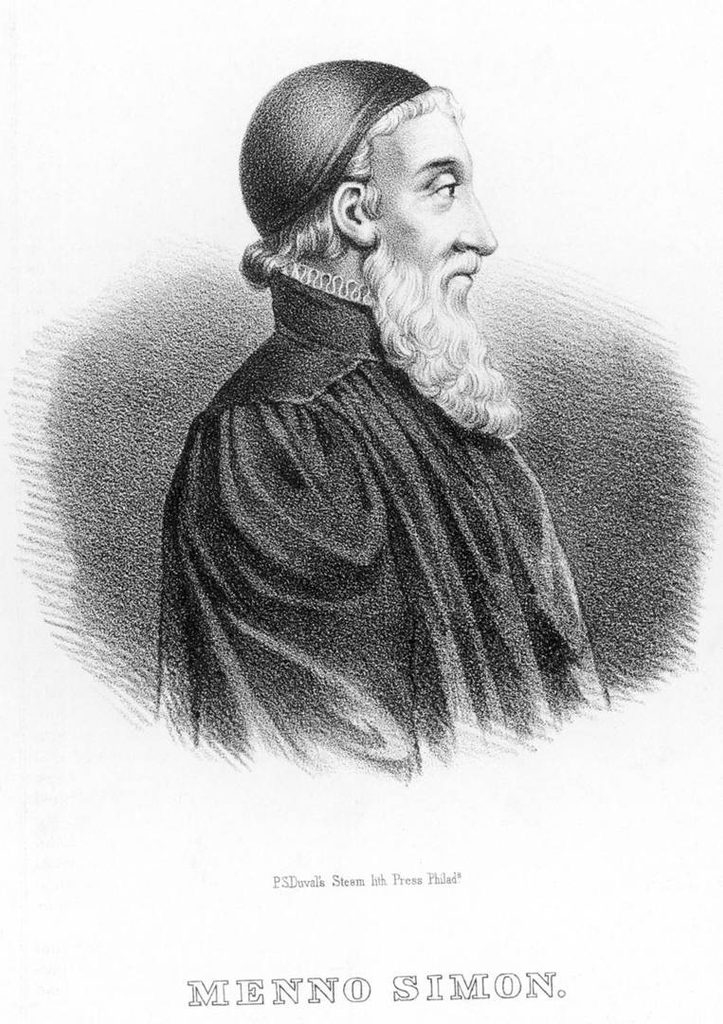
- The Anabaptist Starting Point: The Church Must Not Compromise with the World
Key early leaders such as Menno Simons, Conrad Grebel, and Balthasar Hubmaier believed that the church must visibly obey Christ’s commands, even when society rejects them.
They argued that:
- The church is a holy people separated from the world.
- Christians must actually obey Christ’s teachings (Matthew 5-7, 1 John, etc.).
- Moral compromise destroys the credibility of the gospel.
Many Anabaptists believed that state churches had corrupted Christianity because they mixed political power with the gospel.
So your concern about political pragmatism corrupting moral clarity is something they strongly warned against. Menno Simons wrote:
“True evangelical faith cannot lie dormant; it clothes the naked, feeds the hungry, comforts the sorrowful… it reproves sin and leads men to righteousness.”
So, sin must be confronted, but the purpose is restoration and salvation, not condemnation.
2. How Anabaptists Addressed Moral Issues
On moral questions such as:
- sexual immorality
- marriage
- violence
- dishonesty
- exploitation of the weak
They were generally very strict. Their reasoning was simple: A person claiming to follow Christ must actually follow Christ. This came directly from passages like:
- Matthew 7:21
- 1 John 3
- 1 Corinthians 6
- Galatians 5
Because of this, Anabaptists practiced church discipline very seriously. They used Matthew 18 and 1 Corinthians 5 as their model.
The goal was:
- Warn the sinner
- Call them to repentance
- Restore them if they repent
- Separate if they persist
But the goal was always redemption, not punishment.
3. The Famous Example: Dirk Willems
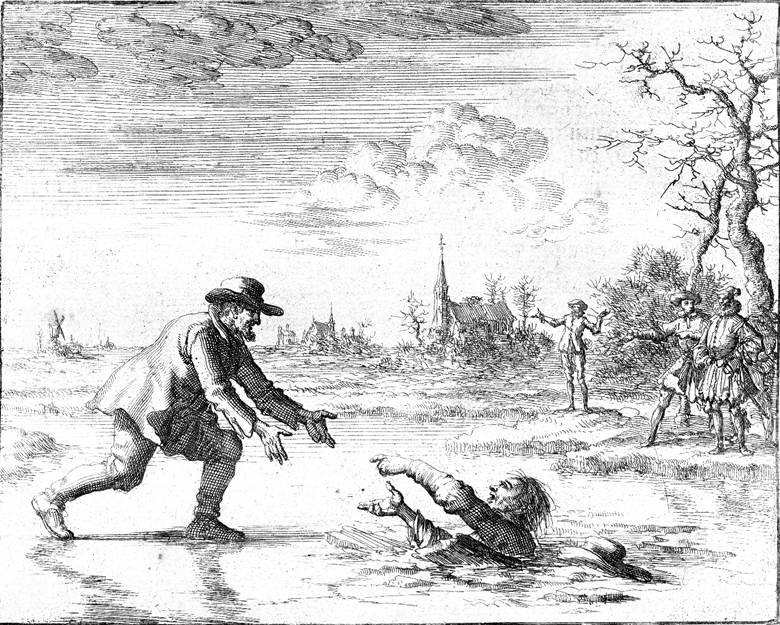
One of the most famous Anabaptist stories illustrates their approach to enemies. Dirk Willems escaped prison but then turned back to rescue a guard who had fallen through the ice while pursuing him. The guard survived. Willems was recaptured and later executed. For Anabaptists, this story represented a core principle:
The Christian must speak against sin, but still love the sinner—even the persecutor.
This is what they believed “speaking the truth in love” actually meant.
4. How They Spoke the Truth Without Compromise
Their method generally followed four principles.
1. Speak plainly about sin
They did not soften biblical language. Sin was called sin. For example:
- sexual immorality
- greed
- violence
- oppression of the weak
But they usually avoided political slogans. They spoke biblically rather than politically.
2. Appeal to conscience, not force
They rejected coercion. They believed faith must be voluntary. So, they preached, reasoned, and taught. They did not try to control society through power.
3. Show visible holiness
They believed the church’s strongest argument was a holy life. The early Anabaptists were known for:
- honesty
- caring for the poor
- refusing violence
- moral integrity
Many outsiders were converted because they saw the difference.
4. Speak with humility
Even when condemning sin, they emphasized that:
- all people are accountable to God
- all need repentance
- all can be forgiven
Menno Simons wrote: “The regenerated do not go about proudly judging others, but weep over sin and call men to Christ.”
5. How They Would Likely Address Issues Like Abortion
Anabaptists historically emphasized protecting the vulnerable. While abortion was not a modern political debate then, its principles strongly applied:
- Human life belongs to God.
- The weak must be protected.
- Violence against the innocent is sin.
But their approach would likely be:
- Call abortion a grave moral wrong.
- Speak compassionately to those involved.
- Offer repentance and forgiveness through Christ.
- Provide practical support for mothers and children.
They believed truth without mercy pushes sinners away, but mercy without truth leaves them lost.
6. Their Biggest Warning to the Church
Anabaptists repeatedly warned of two opposite dangers:
Danger 1: Moral compromise
When the church adopts the culture’s morality.
Danger 2: Harsh judgment
When the church condemns sinners without offering grace.
Their solution was: Truth + love + holy living.
7. A Principle They Often Quoted
They frequently pointed to Ephesians 4:15: “Speaking the truth in love…”
They believed this meant: Truth must be spoken clearly. Love must be shown genuinely.
And the goal is salvation, not victory in an argument.
8. How This Fits With Your Concern
Your statement: “Love is not silent in the face of evil.” The early Anabaptists would have understood that idea completely. But they would add one more element: Love also sacrifices itself for the sinner.
That combination— moral clarity + sacrificial love—was their ideal.
How the early Church Fathers (before Augustine) handled this same issue: confronting sin while still showing mercy.
Their approach is very similar to that of the Anabaptists, and it may help your theological work quite a bit.
Your concern about truth, love, and moral courage is one of the oldest tensions in Christian history, and you are asking the same questions many faithful Christians wrestled with long before modern political debates.
What you said captures a very important biblical balance:
- Truth must be spoken — otherwise people remain in deception (Ezekiel 3:18-19; Ephesians 4:15).
- It must be spoken in love — otherwise it becomes self-righteous condemnation (2 Timothy 2:24-26).
- The goal is salvation — not winning arguments.
That combination is exactly what many Anabaptists tried to practice, and it is also deeply rooted in Scripture. A passage that reflects your point very well is James 5:19-20 (KJV):
“Brethren, if any of you do err from the truth, and one convert him; Let him know, that he which converteth the sinner from the error of his way shall save a soul from death, and shall hide a multitude of sins.”
The motive is to rescue souls, not to condemn them. Another passage that reflects the same spirit is Ezekiel 33, which you have referenced before in earlier discussions:
“When I say unto the wicked, O wicked man, thou shalt surely die; if thou dost not speak to warn the wicked from his way… his blood will I require at thine hand.” (Ezekiel 33:8, KJV)
So, the biblical pattern is:
- Warn clearly
- Call to repentance
- Offer mercy and forgiveness through Christ
Silence can actually be a form of unlove if it leaves people in destructive sin.
Since you are writing theological material for your website and articles, another angle you might find helpful is this:
Many early Christian writers described two ways the church can fail when addressing sin:
1. Compromise with the world
- refusing to speak about sin
2. Pharisaical harshness
- condemning without offering mercy
The biblical model avoids both. Truth without love becomes cruelty. Love without truth becomes deception. The gospel calls for both together.
How the early Church Fathers confronted sins like abortion, sexual immorality, and injustice while still preaching mercy.
Some of their statements are surprisingly strong and would probably be very helpful for your research and articles. The early Christians spoke about moral issues very directly, including abortion, sexual immorality, and the protection of the innocent. But they almost always framed their statements within a pastoral call to repentance and mercy rather than mere condemnation. This approach may be very useful for your research and writing because it shows how the earliest church combined moral clarity with evangelistic concern.
1. The Earliest Christian Teaching: The Two Ways

One of the earliest Christian writings outside the New Testament is the Didache (late 1st or early 2nd century).
It begins with the famous “Two Ways” teaching:
- The Way of Life
- The Way of Death
In this context, the text explicitly condemns abortion:
“You shall not murder a child by abortion nor kill that which is born.”
— Didache 2:2
Notice several important things about how the early church framed this:
- Abortion is grouped with murder and injustice.
- The teaching is addressed to converts learning the Christian life.
- The purpose is moral formation, not political activism.
The church taught believers how to live as disciples of Christ.


4
2. Early Christian Apologists
Athenagoras of Athens
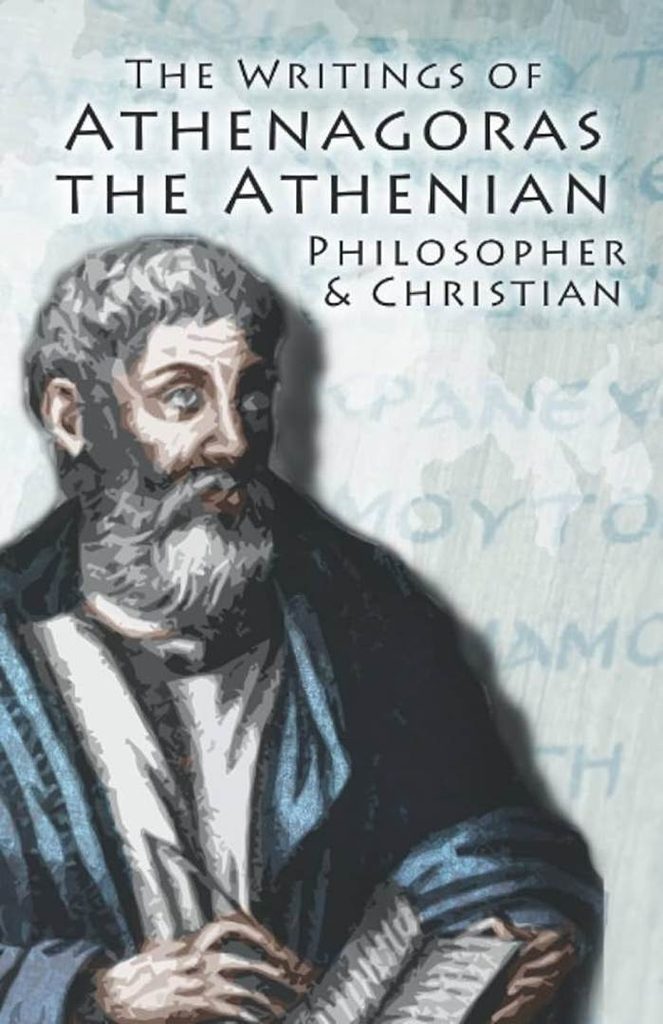
In about AD 177, Athenagoras wrote a defense of Christians to the Roman emperor. Christians were falsely accused of murder and cannibalism. He responded:
“We say that women who use drugs to bring on abortion commit murder, and we will give account to God for it.”
But he immediately followed this with an explanation of why Christians cared about life: because humans are created by God and accountable to Him. This was not political rhetoric—it was theological reasoning.
Tertullian

4
Tertullian wrote in the early 200s:
“It is anticipated murder to prevent someone from being born… the whole fruit is already present in the seed.”
For Tertullian, the issue was simple:
- Life belongs to God.
- Destroying innocent life violates God’s law.
But he also emphasized repentance and forgiveness, because many converts came from pagan backgrounds where such practices were common.
3. The Early Church’s Pastoral Approach
The early church usually addressed moral issues in three steps.
1. Teach clearly what God commands
For example:
- protect life
- sexual purity
- honesty
- marriage fidelity
They gave these teachings to new converts preparing for baptism.
2. Warn about the spiritual consequences of sin
They took passages like:
- 1 Corinthians 6
- Galatians 5
- 1 John 3
very seriously.
Unrepentant sin was believed to separate a person from the kingdom of God.
3. Offer repentance and restoration
But the goal was always restoration.
One early Christian writing, The Shepherd of Hermas, repeatedly emphasizes that repentance is available to sinners who turn back to God.
The church believed: No sin is beyond forgiveness —but repentance is necessary.
4. How Early Christians Spoke to the Pagan World
An important detail often overlooked today:
Early Christians did not begin by condemning society.
They usually began by explaining the Christian way of life.
Their argument looked something like this:
- God created human beings.
- Humans are accountable to God.
- Christ calls us to repentance and new life.
- Christians, therefore, live differently.
This approach often won converts because of the contrast between Christian life and Roman culture.
5. Their Goal: Saving Souls
Many early writers echoed the spirit of passages like:
- Ezekiel 33
- James 5:20
- Jude 23 (“save others with fear, pulling them out of the fire”)
The goal of confronting sin was not moral superiority. It was a rescue.
6. A Balance the Early Church Tried to Maintain
They believed Christians must avoid two errors.
Error 1 — Silence about sin
This leaves people in spiritual danger.
Error 2 — Harsh condemnation
This drives people away from repentance.
The ideal was: Truth spoken with humility and compassion.
7. A Statement That Reflects the Early Christian Spirit
Clement of Alexandria wrote: “The Lord reproves sinners not to destroy them but to heal them.”
That captures the early Christian mindset very well. The purpose of confronting sin was healing and salvation.
8. Why This Matters for the Church Today
Your concern about moral compromise would not have surprised the early Christians.
But they would also insist on something equally important: Christians must show visible love and compassion, especially toward those trapped in sin. Their message was essentially:
- Sin is deadly.
- Christ offers mercy.
- Repentance leads to life.
Closing Comments
The early church fathers and the Anabaptists address this issue most clearly and accurately. I agree with what they said on this subject and their approach to living a life pleasing to God. This is not about winning an argument and advancing a political agenda. It is about life and death here and in the hereafter. We are here to win souls and speak up for the innocent. Compassion without truth is no compassion at all.
