
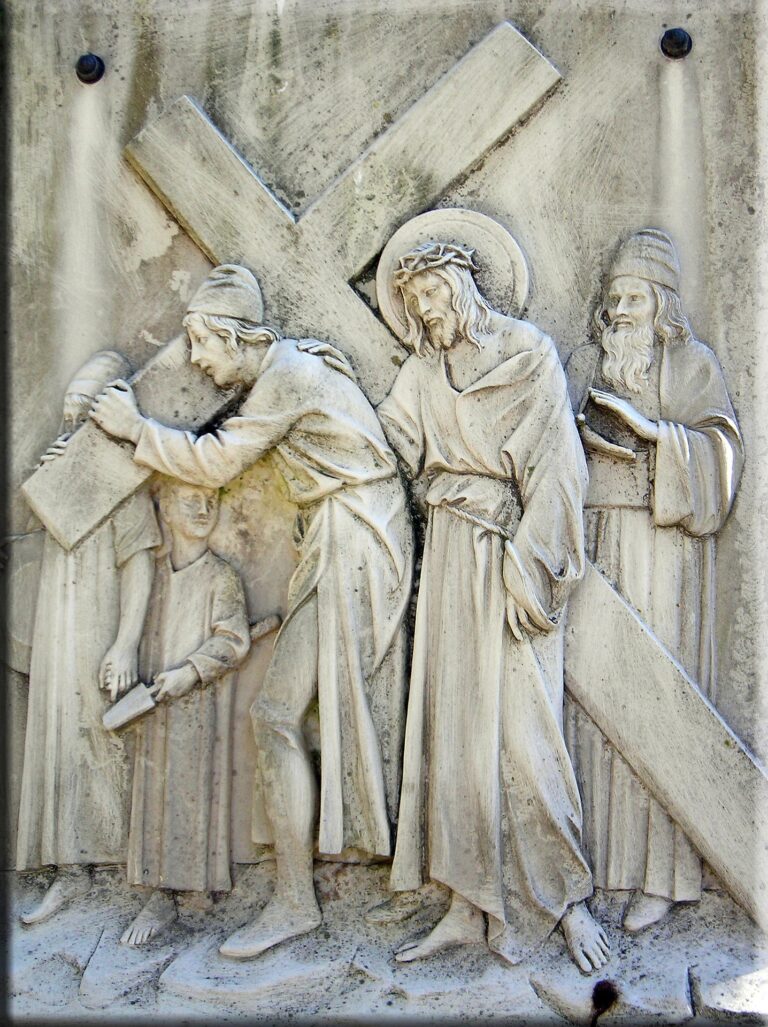
(Penal Substitutionary Atonement)
A common definition of atonement is providing restitution for an offense or crime. All theories are referred to as atonement theories or models, but not every explanation of why Jesus had to come and die includes the idea that restitution is being made. This is confusing because we refer to all these explanations as atonement theories or models, and the word atonement, by definition, seems to mean restitution. Let us explore this further.
Some wrongly assumed that natural law could never reveal what God’s revelation actually states. Finney believes this is a mistake, as the nature and character of God clearly show His desire and willingness to pardon and reconcile sinners. Reason assumes, from the benevolence of the creator God, that His government favors mercy rather than retribution. But that extension of mercy must be accompanied by satisfaction of public justice (not retributive justice), or else its influence will be harmful. This is what the gospel proclaims to the world. This plan will be more effective in securing the public’s highest good and vital interests than the enforcement of retributive justice. Since God has always been inclined toward mercy, an atonement was necessary that would:
- promote the glory and influence of God
- present overpowering motives to repentance by sinners or by law breakers
- send the clear message that pardon is not a wink at sin or connivance of sin
- manifest the sincerity of God, as the governor of the universe, in securing public justice, public safety, and public peace
- make it safe to present the offer and promise of pardon to repentant sinners
Some theologians define atonement as compensation for a wrong or injury. Western and Eastern Christians apparently differ on atonement, though they all consider the same information regarding the life, death, and resurrection of Christ. Why did Christ need to die? Most see this as atonement or repayment for a wrong or injury. But why? Not everyone believes it is because of sin, or to pay for our sins. Pelagius thought that Christ’s birth, life, death, and resurrection serve as a moral example (see Christus Victor theory). In contrast, others interpret it through the lens of the Restored Icon Model, among other perspectives. These theories don’t see it as paying restitution for sin, and I agree. However, some of these theories do not explain the need for satisfaction with public justice, which I believe is a crucial aspect.
Paul Vandreti’s preferred atonement theory, the Restored Icon Model
Why did Christ have to die? Paul calls it the Restored Icon model from Gregory of Nazianzus, 4th century. Gregory’s atonement statement is about healing mankind, not about restitution or satisfying God’s wrath. God became a man to heal the human condition. Humans are an icon of God, created in His image. The Septuagint is the Greek translation of the Hebrew Bible, also known as the Old Testament. In Genesis 1:26, the word ‘eikona’ in English is Icon. Man is an icon of God. Mankind is created in the image of God, and Satan has smashed this image. Jesus reassembles all these broken images and pieces, restoring them to form the Restored Icon Image. It is the incarnation, life, death, and resurrection of Jesus, not just His death, that heals mankind. Christ was like us in every respect, so that He could heal every part of man, Hebrews 2:14. Christ defeats the devil by His life, death, and resurrection, and that is the Restored Icon model. My model of the theory of atonement (Return to Eden) is about restoring mankind’s trust, confidence, and faith in God, which is another way of stating what Paul and Gregory of Nazianzus meant with the Restored Icon Model. I think mine is more specific, and the other is more general.
The PSA theory states that only the death of Christ is essential, unlike the Restored Icon Model and other models. Most Christians are familiar with the PSA model. It began with Augustine in the 5th century, who developed ideas like Original Sin, Total Depravity, and Infant Depravity. Around 1100 AD, Anselm added further concepts to the teachings of Augustine for the church. Centuries later, the Protestant Reformers included nine additional claims, according to Paul. Later, the penal substitutionary atonement and the satisfaction atonement theories emerged. Currently, there are 17 claims that, according to Mr. Vandreti, are part of the PSA theory. Charles Hodge (1797-1873) formalized this in 1871 with the PSA model. It is a relatively recent development in church history and does not cover all aspects of Christ’s life and death.
Again, why did Christ need to die? The language barrier makes it difficult to answer that question. Even in Eastern Orthodox Christianity, the concept of atonement doesn’t exist according to Paul. Atonement isn’t part of their explanation for why Jesus needed to die. However, some Eastern Christians are shifting toward PSA, according to Paul V.
Paul was very fond of Walter Martin, author of The Kingdom of the Cults. Martin said words must be defined first. In my book, When Lies Become Truth, the Augustinian crowd has deliberately and deceptively redefined the concept of free will. Their newly defined free will is a non-free form of free will. They hesitate to admit the truth of their position, so they conceal it by redefining free will. This is inexcusable. Definitions are critically important. The word of God uses the word propitiation to describe the death of Christ.
What is the Definition of Propitiation?
Propitiation is to make someone favorably inclined towards you. Finney and others do not believe that this explains the reason for the atonement because God has always been favorably inclined to save mankind. God needed no inducement from us; His love for humanity was always enough motivation for Him to act. The Easton’s Bible Dictionary defines propitiation as that by which God is made propitious, meaning it becomes consistent with His character and government to pardon and bless the sinner. The propitiation does not earn God’s love nor make Him loving; it simply makes it consistent for Him to exercise His love and mercy toward sinners. This is what Finney taught and believed, as far as I can tell. I agree. It seems most of the other non-PSA theories overlook this aspect of Christ’s death, which I believe is a mistake. That is why I have included it.
The KJV uses the word “propitiation” to describe what Christ did. Romans 3:25, Hebrews 9:5, Exodus 25:17, Exodus 25:21, and 30:6. See also 1 John 2:2, 4:10, Hebrews 2:17. The KJV Dictionary definition of “propitiation” is “the covering, atoning sacrifice,” referencing 1 John 2:1 and Isaiah 2:1-2. Finney’s definition of “propitiation” is “to meet the righteous demands of a broken moral law, making it possible for God, as the moral governor or sovereign in the universe, to forgive: to appease.” He cites Romans 3:26, “That he might be just and the justifier of him that believes in Jesus Christ.” In other words, propitiation doesn’t procure God’s love; it only makes it consistent for Him to exercise His love towards sinners and show them mercy in a pardon while at the same time upholding the spirit of the law.
Why did Jesus Christ become man and die on the cross?
These two men answer that question in a video series. Idol Killer video features Warren McGrew with Paul Vendreti, a teacher of the Atonement, in a seven-part series about this false PSA belief system, its origins, and how it came to dominate Western Christianity. I recommend it. It is now even gaining a foothold in Eastern or Orthodox Christianity. As previously mentioned, there are 17 PSA claims. Augustine introduced the first three around the year 400, and around 1100, Anselm provided more, all of which were built on Augustine’s foundation. The Reformed tradition, also known as five-point Calvinism, is most closely associated with PSA. If you’ve read my other articles on the errors of Augustinian Calvinism, you already have a good idea why I (and a growing number of Christians) reject the PSA theory of the atonement.
17 PSA distinctives:
- Original Sin
Augustine (350-430 AD) not only influenced Western Christianity, including both Roman Catholic and Protestant traditions, but he is also highly admired by non-Christian scholars in higher education. His persona remains massive and revered, even 1600 years after his death. The earliest references to Augustine come from his writings. He is considered a father of both the Roman Catholic Church and the Protestant Reformation churches.
Augustine based this idea on paganism, not the Bible. Adam is the federal head of all humanity. Therefore, Adam’s Original Sin is ours at the same time. The idea is that all humanity was in Adam when he sinned. Consequently, we sinned in Adam and share his guilt. However, this is false; see the following passages. Ezekiel 18:20 states, “the soul that sins shall die.” Jeremiah 31:30 and Deuteronomy 24:16 also refute this. Augustine and Anselm taught this error, yet the Bible clearly contradicts it in these three passages. But where did this Augustinian idea originate? The church of the 2nd, 3rd, and 4th centuries did not believe that we are born sinners, nor that babies are born sinners.
In his book On Merit, Augustine uses Romans 5:12 to support the concept of Original Sin. It should be easy enough to refute Augustine’s error regarding Romans 5, but Original Sin is like a wild blackberry, which is very hard to eradicate. The three verses just mentioned most certainly refute it. Additionally, Romans 5:18 is essential because it also states that Adam’s sin is not ours any more than Christ’s sinlessness is ours by imputation. Augustine also used the Latin version rather than the Greek, as he was not fluent in Greek. In Latin, this verse can mean “in whom all sinned,” not “because all sinned.” Augustine chose the wrong understanding and translation that is permissible in Latin. However, the rest of this section, from verse 12 through 21, makes it clear that we are not all dead in sin because of Adam’s first sin any more than all of us are saved and going to heaven because of the second Adam’s (Jesus Christ) perfection.
Augustine’s pagan training influences his interpretation of Romans 5 and nearly every other scripture passage. For more details, please refer to my articles on Augustine. The concept of Original Sin is rooted in Manicheism and Gnosticism. Also, refer to Appendix Two in my book, When Lies Become Truth. This appendix discusses Original Sin. Or refer to my article called Original Sin.
Paul and Warren mentioned this in their video, and I include it because it’s relevant. Isn’t it interesting that Black Lives Matter (BLM) claims all whites are guilty of slavery because their ancestors were? Then there was the George Floyd incident. BLM is actually teaching a kind of Original Sin—white people are born racist sinners. Right? Why do many talented and hardworking Chinese kids not get into Ivy League schools? Is it because their parents have a poor ESG score? Many Christians and conservatives despise these liberal, progressive ideas. Hopefully, thoughtful people realize that it is unjust. Our God hates unfair weights and measures. And many Calvinists, like political progressives, argue that only liberal Christians question Augustine’s teachings, or they claim only a Pelagian criticizes Augustine. Is it possible that truly born-again conservative Christians do not believe the Bible actually teaches anything close to Augustinian Calvinism, the PSA theory, or progressive ideology?
- Total Depravity, Total Inability
This idea originates from Augustine, who lived over 1,000 years before John Calvin. In the 12th century, Anselm incorporated Augustine’s ideas into his model. Why is this here, and what is it based on? Proponents cite Psalm 51:5, which says that “in sin did my mother conceive me.” Augustine interpreted this to mean that we are full of sin before birth. Romans 2 states that the Gentiles, who do not have the law, do by nature the things contained in the law, demonstrating that the law is written on their hearts. How is this possible if we are born sinners, totally depraved, and unable to obey God? How can the law of God be written on our depraved hearts? It doesn’t make sense. Romans 2 teaches about natural law, which is also referenced in our Declaration of Independence. William Lane Craig cites natural law to counter atheists.
Psalm 51, read naturally, does suggest that David’s mother, rather than David himself, is being referenced here. The focus appears to be on David’s mother. Was David conceived illegitimately? Augustine introduced this incorrect interpretation of the passage. Was David the son of a prostitute? Why did his brothers tell him to go away, and even his father seems to have had little regard for David? Why? In any case, this Psalm does not support the doctrine of Original Sin. If David was writing this about himself, do you honestly believe that David and all babies are born as children of the devil and headed for hell? Augustine believed so.
- Infant Depravity
This is the final of three claims made by Augustine. Even infants who are not guilty of actual sin are considered guilty because of Adam’s sin and are destined for hell. Preachers such as Voddie Baucham, R. C. Sproul, James White, Jeff Durbin, John Piper, and many others hold such beliefs. Some even say that babies are “vipers and diapers.” Paul wondered why these men oppose abortion if they believe these babies are vipers in diapers. Abortion might seem like a solution if you truly believe these children are the children of the devil.
This idea stems from Augustine’s pagan background and Gnostic Manichaeism, and that is how Augustine integrated it into Christianity. The area where Augustine lived practiced infant baptism, believing that infants must be baptized to wash away their sins. Since infants are thought not to have actual sin, Augustine reasoned they must have inherited sin. All three of these beliefs originate from Augustine. Next are contributions from Anselm in the 11th century.
- Infinite offense
The following three claims originate from Anselm in 1100 AD, and he is generally considered a significant figure in the development of PSA. God is infinite, so any sin against Him is infinite in consequence. Modern thinkers, such as R. C. Sproul, argue that even the most minor sin constitutes active rebellion and is akin to cosmic treason against the Lord God. Finney also appears to agree that all sin against an infinite God requires infinite punishment unless it is repented of.
Paul V. notes that in Leviticus 19:15, we find a word that instructs us to be impartial. “Ye shall do no unrighteousness in judgment: thou shalt not respect the person of the poor, nor honor the person of the mighty: but in righteousness shalt thou judge thy neighbor.” In other words, all people are created equal. That is all people deserve: equal justice under the law and natural law. All Christians will probably agree with that in theory. However, how can this be true in Calvinism?
Where did Anselm of Canterbury (1033/4 to 1109) get the idea that some people deserve greater damnation, even for minor sins? During Anselm’s time, the Great Schism (1054) split eastern and western Christianity. Key issues in the Great Schism included papal authority, which the East rejected, and a change in the Nicene Creed where the West added “and the Son” to the phrase about the Holy Spirit’s procession. The last issue was over differences in language (Latin versus Greek), liturgical practices, and growing rivalry between Rome and Constantinople. The concept of the Great Chain of Being was influential. The wars of this period included the Battle of Hastings in 1066. During these times, there were efforts to protect peasants, who were at the bottom of the great chain of being. The Great Chain of Being (feudalism) places the royal family at the top, followed by dukes, counts, barons, then knights and warriors, tradesmen, peasants, and finally slaves/serfs. It was an unjust caste system.
Anselm’s congregation mainly consisted of peasants. The peasants had no protection. If a peasant might harm or offend someone higher up, even to the point of death, they could be liable. Some people were considered more valuable than others. This led to the idea that the severity of sin depended on the status of the one offended, according to Anselm. A sin against the royal family was a capital offense, while the same offense against a peasant was not seen as serious. In this environment, Anselm developed his theory of the Atonement. Sin against God (dishonoring Him, stealing His glory) became an infinite sin because God is the greatest of all beings. There is some truth to this, as sin against God is considered more severe than sin against a person. I believe that is true.
Is this really how God views sin? Are our ideas about the severity of specific sins similar to God’s perspective? My problem with this idea is that God told Adam and Eve they would die the day they sinned. What was their unforgivable sin? Did they murder their children? Eating the fruit from the tree of the knowledge of good and evil was their terrible sin. That sin may not seem as serious as murder, but apparently God considered it severe. Does this view of atonement truly reflect unequal weights and measures by God? That is Warren’s and Paul’s claim, and I am not sure their argument is solid.
- Sin is a debt to God
Sin is a debt we owe to God for our offenses against His honor and glory, Malachi 3:8-9. According to verse 9, God is being robbed by sinners through tithes and offerings. A literal reading of this passage suggests that we can, in fact, rob God. But how does that align with the Augustinian Calvinistic view that God is the unmoved mover and is unchangeable?
In verse 6, it is written that, “I the Lord change not.” If you can rob God, then has God changed? And can God, who owns everything, be stolen from? People can’t see the inconsistency here. The God of Calvinism can’t be robbed of anything by definition, can He? Warren and Paul say no because that means God changes. And Calvinists are adamant about God’s immutability, because they are Platonists.
But is that really the case? Doesn’t God deserve our glory, honor, praise, gratitude, and obedience? Yes, He does. To rob Him simply means we do not give Him the praise and obedience He deserves. It causes no change in His essence but brings Him grief.
What does it mean when we say we rob God of His honor and glory? Can we harm God? Yes, we can offend Him and do offend Him when we sin and refuse to repent. We can never harm God in His essence, but we can give Him less of our devotion, obedience, and gratitude, which are due to Him. This is what we rob God of—not material things, as Paul states, since God owns everything. In a sense, we can’t actually steal from God, who owns it all. But we are not talking about physical possessions. God deserves much better treatment than He receives from mankind. I believe we can and do rob God of the glory, honor, praise, and obedience that we owe Him. In a sense, sin is a debt we owe to God. But how can that debt be paid? Only by returning to trust, believe, and obey God can we allow Him to wash away our sins. The debt can never fully be paid, but it can be forgiven. I am not yet convinced these two men are accurate on this point.
- Infants owe God this debt
Like claim number 3, infants have robbed God of His honor. See Jeremiah 32:18, where God rewards the iniquity of the fathers to the third generation of children if they continue in their father’s sins. Jeremiah 31:30 clearly teaches that everyone dies for their iniquity. Are these contradictions? No. Only the ramifications, some consequences, or byproducts of the father’s sin are passed on, not the guilt itself. I agree with them that infants owe no debt to God for the sin of being born and coming into existence. It is ridiculous, yet necessary, if one starts with the false doctrine of Original Sin.
- Animal Sacrifice (shedding of blood) Demanded by God
Animal sacrifice is the next addition by Protestant Reformers to the PSA theory. Mani, the founder of Manicheism, hated the Old Testament and the God of the O.T. Augustine doesn’t address animal sacrifices. Neither does Anselm.
Sin is a debt we owe to God, and infants, as sinners, need to settle this debt. But how? Blood must be shed to atone for sin, Leviticus 17:11. The life of the flesh is in the blood, Hebrews 9:22, and without the shedding of blood, there is no remission of sin.
But there are examples in Scripture where atonement did not require the shedding of animal blood. Sometimes, atonement doesn’t require blood at all. In Exodus 30:15-16, the payment could be in the form of money, fine flour, or oil. The scapegoat was not killed in certain rituals. Liturgical ceremonies, and when Aaron offers incense, atonement is made. In Daniel 4:7-9, King Nebuchadnezzar atones for sins by helping the poor. Animal sacrifice is not the only way to atone for sins or to cleanse oneself.
And the New Testament tells us that the shedding of animal blood could never atone for sins.
Did Christ fulfill all the sacrifices in the Old Testament? Christ is called the Passover lamb but is never called the (non-bloody) scapegoat. Why is that?
This idea comes from more modern schools of Christianity, not Augustine. In Hebrews 9:22, we are told that without the shedding of blood, there is no remission of sin. Paul V. believes that the Golden Calf incident led to more laws for the Jewish people. Prior to this incident, the sacrifices were intended as offerings to worship Egyptian gods, such as sheep and bulls. See Exodus 32:12. After the sin of the golden calf, the ongoing sacrifices are viewed by Paul V. as a punishment for the Jews. He has other interesting thoughts about why God commanded these bloody sacrifices. In the New Testament, we are told that it is impossible for the blood of bulls and goats to remove sin.
Paul also reminds us that the Priests made atonement for more than just moral wrongs. In the Old Testament, atonement actually means cleansing, rather than reparation or payment of a debt for wrongdoing. Flour, money, oil, and the scapegoat all serve to make atonement. Therefore, the PSA belief that animal sacrifices are demanded by God to make atonement for sin is incorrect.
- God couldn’t cancel the debt owed to Him simply by willing it
Paul states that the following three claims, which are all built on the prior claims, are attributed to Anselm.
“The LORD does whatever pleases him, in the heavens and on the earth, in the seas and all their depths.” Psalm 135:6. Advocates of Augustinian Calvinism use this passage as a proof text for their beliefs, including the PSA theory. In PSA, all that matters is the shedding of the blood of Jesus, which must be shed to pay for our sin. Other atonement theories have a different focus and believe that Jesus’s life, not just His death, healed all of mankind’s body, mind, and spirit.
What is the meaning of what Christ did? That is the question. All agree that Jesus Christ died on the cross. Warren and Paul know how valuable the blood of Jesus is, but is the shedding of blood necessary for God to forgive sin? PSA believes that God must punish sinners before He forgives them. And sin must be paid for by an alternative, Jesus.
Claims 8 and 9 are connected. If sin is a debt that must be paid, it doesn’t involve forgiveness because the debt is paid in full. And if sinners must be punished before they can be forgiven, then Jesus’ death on the cross for us eliminates the need for God’s forgiveness. If the debt is paid, it no longer needs to be forgiven. The story of the prodigal son is a good example. If Anselm’s idea is correct, then the father must demand that the prodigal son pay back all the money before he takes his son back. Right?
Consider the parable of the unforgiving servant who was heavily in debt. He asks the Lord for mercy because he cannot repay the debt. The Lord shows mercy, forgives the debt, and does not require repayment. However, this same servant then demands payment from someone who owes him a small amount of money, and he refuses to forgive that debt. The Lord cancels his debt, but because of his unforgiveness toward another, God reimposes the debt when the man refuses to forgive a small debt owed to him. If Anslem is right, then the Lord would not have canceled the debt as an act of mercy. He would have demanded repayment.
In Ezekiel 18 and 33, God doesn’t require atonement for forgiveness. Instead, God’s requirement is to stop sinning, and then sin is forgiven. When the wicked cease from their wickedness and begin to practice righteousness, they are saved. No repayment is needed.
- Death must be painful
These three points (8, 9, and 10) all come from Anselm. He believed that Christ’s death as payment for our sins must be painful. It must be the opposite of what happened in the Garden of Eden. The fall was easy and painless. Therefore, Christ’s death must be as painful as possible. Is the cross that Christ died on parallel with eating from the tree of the knowledge of good and evil? According to Paul V., both Catholic and Protestant ideas regarding atonement are full of violence and blood. How does eating a piece of forbidden fruit parallel the violence of the scourging and the violence of Jesus’ crucifixion? asks Paul V. Very strange. Anselm is the only one that Paul V. believes taught this doctrine. The idea that violence is necessary is much harder to accept than Jesus dying without all the violence to save us. For that reason, Paul and Warren reject it. That is understandable, but the fact that Jesus Christ suffered and died for us the way He did could not have been overlooked by God the Father. He must have permitted it or set it with a purpose in mind.
But the idea that violence is foreign to scripture or the God of the universe is not accurate. In Noah’s day, God destroyed all of humanity except Noah and his family. Afterward, God destroyed the inhabitants of Sodom and Gomorrah. Then He destroyed Israel many times for their wickedness, for example, in 721 BC, 586 BC, and AD 70. It was all very violent and bloody. In the future, God will destroy the earth and its remaining life with fire. I’m not sure I can fully agree with Paul V. and Warren on their objection to this point.
- Propitiation.
This is the last contribution from Anselm. Only the blood of Jesus Christ is worthy enough to satisfy God’s offended honor, and that is the blood of a God/man. Blood must be shed to make God favorable, to turn His heart toward mercy. But as we have discussed, God did not need the blood death of His Son Jesus to be made favorable. He was already inclined that way. He needed a way to uphold the honor and importance of the law while also extending mercy and forgiveness.
It is written in Romans 3:25, “Whom God hath set forth to be as propitiation through faith in his blood, to declare his righteousness for the remission of sins that are past, through the forbearance of God.” See also 1 John 2:2 and 4:10. To propitiate someone is to take someone who is not inclined toward you and to make him well disposed toward you through atonement. That is what propitiation means to many of these folks.
But God did not require the shed blood of Jesus to be inclined to save sinners. God was already naturally inclined to show mercy. In this case, propitiation (the death of Christ) is more about making the pardon of sinners acceptable and wise to God and the universe of moral beings. For God will be just and the justifier of those who believe in Him.
Paul V. disputes the KJV translation of this word as propitiation. Perhaps the correct interpretation is mercy seat or expiation (cleansing or purging of sin), as Paul suggests. God has always freely pardoned the repentant based on the conditions of confessing and forsaking their sins. Is this mercy or payment? It is mercy. God wants mercy, forgiveness, and healing.
- Substitution
Jesus Christ became a man so that he could suffer and die as our substitute. The Son of God becomes human in the incarnation. The proof text is I Peter 3:18, “For Christ also hath once suffered for sins, the just for the unjust, that he might bring us to God, being put to death in the flesh, but quickened by the Spirit.” Problems with this are the following. Hugh Ross says that an interpretation of a passage is wrong if it causes another verse to be misunderstood. “And be ye kind to one another, tenderhearted, forgiving one another, even as God for Christ’s sake hath forgiven you.” KJV. Paul V. says that PSA states that God must torture/beat His son to provide an atonement so that He can provide forgiveness, which is absurd according to Paul V.
Is Hugh Ross right? According to Sproul and those like-minded, it was God the Father inflicting all the pain and suffering on Christ. An unbeliever who watched the Mel Gibson film and all the violence put on Jesus by God the Father, this is a big problem. Torture Jesus to save us, and like it, and be glad it happened. Are people to cheer on the Romans to torture Christ so that we might be saved? Can human nature pay an infinite debt? Is Jesus an infinite person who can suffer infinitely? How does that work? Makes no sense. That is why PSA guys appeal to mystery and avoid dealing with absurdities, conflicts, and inconsistencies.
Finney says the death of Christ is to satisfy Public Justice, not Retributive Justice. Sinless Christ could suffer as our substitute, making it wise for the Father to forgive our sins. In this way, Jesus is our substitute.
No one will perish for believing in the PSA model or the Restored Icon model. But which one fits the record more accurately?
- Christ as a Ransom
The Father pours out His wrath on Christ, who becomes sin for us and takes Christ’s righteousness, imbuing that righteousness in us. This is referred to as double imputation or double predestination. Consider Isaiah 53:4-6; this passage does seem to suggest double imputation. But is that really the case? Not according to Paul and Warren. One rule of biblical interpretation, hermeneutics, is that when two passages on the same topic differ, the clearer passage takes precedence. In Proverbs 17:15, we read, “He that justifieth the wicked, and he that condemneth the just, even they both are abomination to the LORD.” Which holds more weight—Isaiah 53:4-6 or Proverbs 17:15, 18? Also see Proverbs 24:24. These three passages present this theme. The idea of double imputation must therefore be incorrect.
Another principle of hermeneutics states that the Old Testament must be understood in light of the New Testament. In the New Testament, Isaiah 5 is referenced in Matthew 8:14-17, which describes the story of Peter’s mother-in-law falling ill. Jesus healed her. There are also others who came to Jesus for healing, and He cast out demons from them. Jesus healed all who were sick. He interprets this as an answer to Isaiah 53, “He Himself took our infirmities and bare our sicknesses.” This is how Jesus understood Isaiah 53:4-6, not when He was killed and suffered, but when He healed people. With His stripes, we are healed. If PSA is accurate, we would expect to hear that with His stripes, we are saved from wrath or that God’s justice is satisfied. Paul V. states that at least three Eastern church fathers all claim that Isaiah 53 is about Jesus carrying away our sins and healing us.
A second New Testament example is 1 Peter 2: 19-25, “For this is thankworthy, if a man for conscience toward God endures grief, suffering wrongfully. For what glory is it, if, when ye be buffeted for your faults, ye shall take it patiently? But if, when ye do well, and suffer for it, ye take it patiently, this is acceptable to God. For even hereunto were ye called: because Christ also suffered for us, leaving us an example, that ye should follow his steps. Who did no sin, neither was guile found in his mouth; who, when he was reviled, reviled not again, when he suffered, he threatened not; but committed himself to him the judgeth righteously; who his own self bare our sins in his own body on the tree, that we, being dead to sins, should live unto righteousness; by whose stripes ye were healed. For ye were as sheep going astray; but are now returned unto the Shepherd and Bishop of your souls”, emphasis added.
Christ, who knew no sin, suffered and died for us, who practiced sin. As followers of Christ, we will suffer unjustly and rejoice. Paul V. mentioned that Pelagius taught a moral exemplar model of atonement, and this is also true in this passage, as well as in the restored icon model. However, this aspect of Christ being our example is not present in the PSA model.
- Christ becomes a Literal Curse.
Calvinists believe that on the cross, Jesus becomes a literal curse for us. That is true according to PSA. However, the scripture states the opposite, that Jesus was perfect and without sin. The Bible claims Jesus was holy, harmless, and undefiled. This PSA claim is unfounded and not accurate.
Proof text is Galatians 3:13, which reads, “Christ hath redeemed us from the curse of the law being made a curse for us for it is written, Cursed is every one that hangeth on a tree.” That sounds like PSA might be right. However, in Hebrews 7:8, the passage states, “Jesus Christ the same yesterday, and today and forever.” Can Jesus be sin yesterday, today, and forever? Is that not blasphemous? And what do we do with 2 Corinthians 5:21, which reads, “For he hath made him to be sin for us, who knew no sin, that we might become the righteousness of God in him.”
In verse 19 of the same book, we read, “To wit, that God was in Christ, reconciling the world unto himself, not imputing their trespasses unto them, and hath committed unto us the word of reconciliation.” PSA states that this reconciliation occurred on the cross; however, this verse indicates that God the Father was in Christ during the reconciliation, thereby making God the Father a curse as well. But no one believes that, do they? Was the Holy Ghost the only uncursed member of the triune God? Makes no sense.
Philosophically, this claim is nonsensical. R.C. Sproul states that Christ is a literal curse on the cross. And others do the same. Sproul says God cuts Jesus off the moment Jesus becomes a curse for us. Jesus, by taking all of our sins, becomes the ugliest, obscene, grotesque mass of concentrated sin in the world that history has ever known. God can’t even look at Jesus, and He turns His back on Jesus and cuts His son off. God forsakes Him because Jesus became sin for us. To be cursed is to be under the wrath of God. Why hast thou forsaken me? God couldn’t even look at Jesus. (Paul had six audio clips of R.C. Sproul saying this, and Calvinists will deny it. Unreal.) God turns His back on Jesus Christ, who has become this curse for us. And we become the perfection of Jesus by this false imputation—sick stuff. Jesus becomes sin, and we become perfect. Do not trust in man, only Jesus.
Do not forget the passage that states that no one by the Holy Ghost ever says that Jesus Christ is accursed. “Therefore, I give you to understand that no man speaking by the Spirit of God calleth Jesus accursed (anathema), and that no man can say the Jesus is the Lord, except by the Holy Ghost.” 1 Corinthians 12:3.
If you believe the Bible, then what should we think about this tenet of the PSA theory and the doctrines of Augustinian Calvinism? What spirit do they base themselves on? Not the Holy Spirit, that’s for sure.
- Father turns His back on the crucified Christ
This idea originates from modern atonement schools. The PSA proof text for this is Matthew 27:46, which reads, “And about the ninth hour Jesus cried out with a loud voice, saying, Eli, Eli, Lema Sabachthani? That is, My God, My God, why hast thou forsaken me.” It appears to suggest that the Father has forsaken Jesus, as PSA proponents claim.
But there are four gospels, so we should look at the other three. In Luke 23:46, it is written, “And when Jesus had cried with a loud voice, he said, Father, into thy hands I commend my spirit, and having said thus, he gave up the ghost.” Just before He died, Jesus said this, so how can He say this if He was forsaken by the Father? His very last words are these in Luke.
Paul V. quotes the earliest consolidation of the four gospels by Tatian 120-180), the work called the Diatessaron. The author states that Jesus’ very last words are recorded in Luke’s Gospel. Even John McArthur agrees that these are the very last words of Jesus Christ. John M. is a member in good standing of the PSA school. How can Christ put Himself into the hands of the Father if the Father has turned His back on Jesus? Impossible.
Why did Jesus say, “My God, why hast thou forsaken me?” In Psalm 22:24, it is written, “for he hath not despised the affliction of the afflicted.” But this chapter starts with the words, “Why hast thou forsaken me?” Jesus quoted this first verse, but we must understand it in the full context of the chapter. To do so, they would refer the listener to the very first verse of this passage.
It is sure that Jesus was innocent. It is also certain that God the Father approved of His beloved Son in what He did. It is clear that Jesus had done nothing wrong to be forsaken by God. Jesus was still loved by God throughout His time on earth. It is equally sure that this period was the devil’s time and that Jesus suffered greatly. The PSA theory is flawed both in its face and in all its implications. It falsely makes Christ a curse, which could never be true.
- Did God require animal sacrifices to provide forgiveness?
Why did God become a man? Why did Jesus die? Was the Old Testament sacrificial system really necessary for the forgiveness of sin and atonement? Christ is depicted as the perfect, unblemished lamb. Christ fulfills the entire Old Testament sacrificial system. Most of Christendom shares this belief, including the Roman Catholic Church, Protestantism, and Eastern Orthodoxy.
PSA has 17 claims. The first set of three reveals the anthropological claims. Anselm then provided nine soteriological claims, and later the atonement school added five claims, totaling 17. This 16 was not part of Anselm’s atonement theory. It was mentioned by Thomas Aquinas, who had a weak argument with it but did not elaborate on or settle it. Is there systematic consistency in this system?
This is one issue with the PSA theory. It was claimed that the death of Christ should be as long and painful as possible, but animals were killed quickly and without pain. Is there a disconnect? Another problem is that the PSA model says Christ becomes a literal sin and curse for us. God cuts Jesus off and turns His back on Him. If that’s true, then how can Jesus be an unblemished sacrifice, as required for the Passover and all animal sacrifices? Again, there’s no consistency in this system.
PSA proof text is 1 Corinthians 5:7, “Clear out the old leaven so that you may be a new lump, just as you are unleavened. For Christ our Passover also has been sacrificed.” McArthur and Sproul state that Christ is our scapegoat sacrifice; however, Paul V. argues that this is not the case. Passover is not Yom Kippur, the day of atonement, and sheep are not goats. The Passover required a sheep, not a goat, to be killed. The scapegoat was needed on the day of atonement, along with a sacrificial goat. One goat was killed, and the other was sent off into the wilderness to symbolize the removal of sins. Why have the architects of PSA missed this obvious error? The scapegoat (goat, not sheep) is released on the day of atonement, not the Passover. Paul laments and says, “And these are the greatest minds of all time?” He also states that these seminary elites have never been on a farm, apparently to understand that goats are different from sheep. We are supposedly not understanding how Christ is the scapegoat because he is the Lamb of God. Say what? City people know nothing about animals. Paul claims that Jesus fulfilled the Passover lamb sacrifice, but he doesn’t fulfill the sacrifices that came after the Exodus 32 incident and the golden calf. 1 Corinthians 5:7 says that Christ fulfills only the Passover, not the other animal sacrifice laws. Most PSA advocates claim that Christ fulfills all animal sacrifices. That doesn’t seem to be true.
Another issue that needs to be considered is that Jesus is not from the clan of Levi, nor from Aaron and his family, who were responsible for animal sacrifices and offerings. Jesus is from the tribe of Judah, not Levi, and not from the Aaronic priesthood. Instead, Jesus is a priest after the order of Melchizedek. Melchizedek offered bread and wine, not animal sacrifices. At the Last Supper, Jesus also provided bread and wine, just as Melchizedek did. Therefore, Jesus is a priest in the order of Melchizedek, not the Aaronic priesthood led by Aaron.
As you may recall, Jesus had a low opinion of the Sadducees, a particular branch of the priesthood. This is demonstrated in the story of the seven brothers, who all had the same wife after their father’s death. Jesus rebuked the Sadducees, saying that they know nothing about the kingdom, as shown by their question. He also implies that they lack priestly anointing. The Sadducees worked in the temple built by Herod the Great. Jesus told his disciples that all this temple’s grandeur would be destroyed. Would Jesus have said something like that? When Jesus was in the temple, what did He do? He cleansed the temple, driving out oxen, sheep, and doves, and pouring out the money of the money changers. Jews living outside of the territory brought coins from all over the country, many of which bore images of false gods. Therefore, these coins could never enter the temple of Jehovah. The money changers exchanged currency for the temple, and they also sold animals for sacrifices, as required by law. Jesus drove out all the animals and money changers. He may have done this repeatedly over the course of three years, making it challenging to conduct sacrifices in the temple. If Jesus is symbolized by these animals, why would He do this? Why would He stop animal sacrifices years before His death? Paul’s position is not without precedent, even though it is a minority view.
- Ransom. Does the death of Christ ransom us from the wrath of God?
This is the important one to consider. And PSA has a stronger claim on this than the others. The PSA proof text is Mark 10:45, “For even the Son of Man came not to be served, but to serve, and to give his life a ransom for many.” The same passage is recorded in Matthew 20:28. Additionally, 1 Timothy 2:5-6 reads, “For there is one God, and one mediator between God and men, the man Christ Jesus, who gave himself a ransom for all, to be testified in due time.” No doubt, Jesus came to ransom us. But what does the word ransom mean?
Ransom is a Greek word used in the New Testament, specifically in the Gospel of Mark and the Epistle of 1 Timothy. All three of these passages translate the term as ‘ransom.’ Is this interpretation correct? Most likely, the translators misunderstood this, according to Paul V. He asked a Greek Orthodox priest to clarify the meaning of the word ‘ransom’. The priest said it means ‘price’ or ‘ransom.’ The dictionary defines ransom as the act of paying a price to free someone. For example, when a child is kidnapped, the kidnapper demands payment before releasing the child. The ransom is the price paid for the child’s liberation. Once the payment is made, the child is released.
But in the gospel story about Christ, who is the hostage taker? Church fathers disagreed on this. It could be a ransom or price paid to death, the devil, or to deity. The PSA states that it is a ransom paid to God the Father by Jesus Christ, the Son. Basil of Caesarea, in the 4th century, states that it is a ransom paid for death. Gregory of Nyssa, born in 335 AD and died in 394 AD, said it is a ransom paid to Satan. Other church fathers disagreed. Cyril of Jerusalem said it is a ransom paid to God. And Gregory of Nazianzus, 329-390 AD, said it is none of these ideas. It is none of the above. Ransom is being used to mean rescue and not a payment. Does the word ransom mean payment to someone to liberate another? Or can it mean release or rescue without any payment? God ransomed the Jews from Egypt. No payment was made by the Jews to the Egyptians.
Paul V. believes that Gregory of Nazianzus was correct. He uses this story to demonstrate it. In Exodus 6:6, God tells Moses that He will bring them into the land that He promised to Abraham, Isaac, and Jacob. He will therefore bring them out from under the Egyptians. God intends to redeem Israel from Egypt based on a promise made to their forefathers. In the Greek Septuagint, this translates to redemption. The meaning here is to “rescue,” according to Paul V. Normally, ransom refers to liberating or rescuing a hostage by paying a price. But God did not pay Egypt anything to rescue or ransom the Jews. Egypt actually paid the Jews to get the heck out of town. Rescue is a better word than ransom, which typically implies a payment of some amount. I agree, that is an excellent point.
Some PSA advocates refer to chapters 7 or 8 of the epistles of Dionysius, a second-century book. They use this book to support the 17 claims of PSA. This chapter discusses the Mystery of the Incarnation. Jesus took our sins upon himself. He is a ransom, an exchange, and this is substitution. The suffering and death of Jesus are more like a rescue mission, not motivated by wrath and anger. Apparently, the second-century Greek person thought of ransom as rescue, not as a price to be paid to free someone, according to Paul. Other passages in chapters 7 or 8 suggest that the death of Jesus stemmed from God’s love, not from a need for retributive justice. God does not need to be propitiated or appeased because He is already willing to save us if we return to obedience. This is a rescue mission, not a ransom payment. Mercy always triumphs over wrath.
What did ‘ransom’ mean to KJV translators? Did the father need to torture and kill Jesus to save us from sin and forgive us? A simple AI search suggests that they likely viewed it as a substitutionary payment to rescue or free others, especially from bondage, captivity, or sin. This idea also involves the concept of rescue. The story of the Exodus tells us that God ransomed Israel, and no payment was made to the Egyptians.
Conclusion of all 17 points of the PSA theory.
I neglected to include the last point or combine it with the previous one, and I will leave it at that. I trust the reader can see why this theory (PSA) is not Biblically accurate and why other theories of the atonement are more God-honoring and reasonable. There are different models of rescue and redemption that better explain why Christ had to come and die than the PSA theory.
The PSA theory began with Augustine around 430 AD. Anselm, around 1100 AD, added to that foundation. Then, around 1871, a theologian named Charles Hodge issued a formal statement for PSA. According to Paul V. and Warren M., these ideas are too late to be considered solid theories. The early church fathers, before Augustine, did not believe in this PSA material. The PSA theory is quite similar to many other pagan religions, where the angry idol god must be given sacrifices to be appeased, or else this god will send wrath or withhold blessings. People would sacrifice their goods, animals, and sometimes even their children to pacify the angry and offended pagan god of the sun, moon, weather, or whatever. Our God never required human sacrifice. Yet, He sent His own Son to die for us. Have we turned God into Molech? Remember, Jesus volunteered to die, unlike infant babies being offered to Molech.
We spent a lot of time on this theory because it is the most well-known and widely accepted explanation for the necessity of the atonement. Additionally, it is the worst of the options. In the next part, three, we will consider the PCA theory (Penal Cancellation Atonement) and make some concluding comments.
