
October 22, 2025
“Having a form of godliness, but denying the power thereof: from such turn away”. 2 Timothy 3:5, KJV.
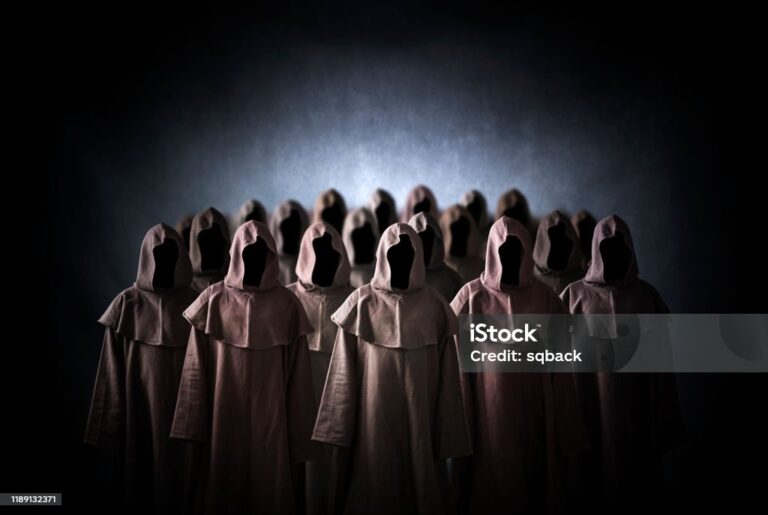
The Apostle Paul warns Timothy about perilous times in the last days (2 Timothy 3:1-9). He lists many who will outwardly appear religious and spiritual but lack the inward reality of godly transformation. Does that sound like the evangelical church today? The ‘form’ refers to external religion —its appearance, profession, and ceremony —while the ‘power’ refers to the inner workings of the Holy Spirit that produce holiness, true faith, and obedience from the heart. Does that not make sense?
We have many professing Christians today who attend church, serve the church by volunteering, give financially to the church, and even participate in community charitable work, yet do not live righteous lives. They live in sin and refuse to repent.
Calvinist commentators, such as John Calvin, Matthew Henry, and Charles Hodge, interpret ‘having a form of godliness’ as referring to nominal Christians, those who profess faith but are not regenerated by God’s sovereign grace. Only the elect, whom God regenerates by irresistible grace, experience the transforming ‘power of godliness.’ Calvin wrote, ‘They retain some outward appearance, but are destitute of the reality. They hold the shadow of godliness while rejecting its substance.’ (Commentary on 2 Timothy 3:5). And I agree with Calvin’s comment.
Thus, the passage warns against empty profession within the visible Church. Outward religion, detached from the inward renewal of the Holy Spirit, is hypocrisy and spiritual death. That, of course, makes lots of sense except when you consider the fact that most Calvinists and evangelicals believe that Christians sin every day in thought, word, and deed. How is this contradiction to be reconciled? Out of one side of the Calvinist’s mouth, we hear about an empty, hypocritical, and outward religion that will end in spiritual death, and at the same time, out of the other side of the Calvinist’s mouth, we are told to expect to sin daily. If that is not the very definition of an outward religion leading to spiritual death, then I do not know what it is.
Arminian interpreters such as John Wesley and Adam Clarke view this passage as a warning against self-deception. God’s grace is offered to all, but many deny its power by refusing to yield to the Spirit. Wesley wrote: ‘They have the outward profession, the name of Christian, the ordinances and form of religion, but deny that divine influence which alone can make them holy.’ (Explanatory Notes on the New Testament, 2 Timothy 3:5).
For Arminians, ‘denying the power’ is failing to allow grace to transform one’s life through obedience and faith. True godliness comes by cooperating with grace, not merely professing it. The danger is apostasy, the falling away from genuine faith into hollow religiosity. That makes perfect sense except for the fact that most holiness-oriented churches believe much the same as Calvinists about Christians continuing to sin because of the sin nature they inherit from Adam.
The Eastern Orthodox Church interprets this verse in light of its theology of theosis, which involves participation in the divine life. The ‘form of godliness’ denotes external religiosity without inner purification and illumination. ‘Denying the power’ means rejecting the transformative energy of the Holy Spirit. St. John Chrysostom explains, ‘They display an image of virtue but have no zeal for the divine life; they flee from the struggle, and thus from the Spirit.’ (Homily on 2 Timothy 3:5).
Orthodox teaching emphasizes that true godliness is not mere outward conformity but inner transformation through repentance, prayer, fasting, and the sacraments, whereby the believer is united to God’s grace.
Early Church Fathers such as Irenaeus, Tertullian, and Clement of Alexandria applied this verse to hypocrites and heretics who professed Christianity but denied its spiritual and moral reality. Irenaeus wrote against the Gnostics: ‘They pretend to confess Christ but deny Him by their works; having the name of godliness yet refusing the power which is from the cross.’ (Against Heresies, 4.33.3). Tertullian associated it with those who ‘make a show of religion while opposing apostolic truth,’ and Clement saw it as a warning against substituting speculative philosophy for holiness. The Fathers emphasized that outward piety without inner transformation is a form of spiritual deception. Amen to that.
I repeat myself as I close this short article. We have many professing Christians today who attend church, serve the church by volunteering, give financially to the church, and even participate in community charitable work, yet do not live righteous lives. They live in sin and refuse to repent. They constantly disgrace the name of Christ by their ungodliness. They have a form of godliness but deny its power.
I wrote another article that addresses this issue, titled “Form Over Substance.” Please check it out on my website, seekgodintruth.com.
