
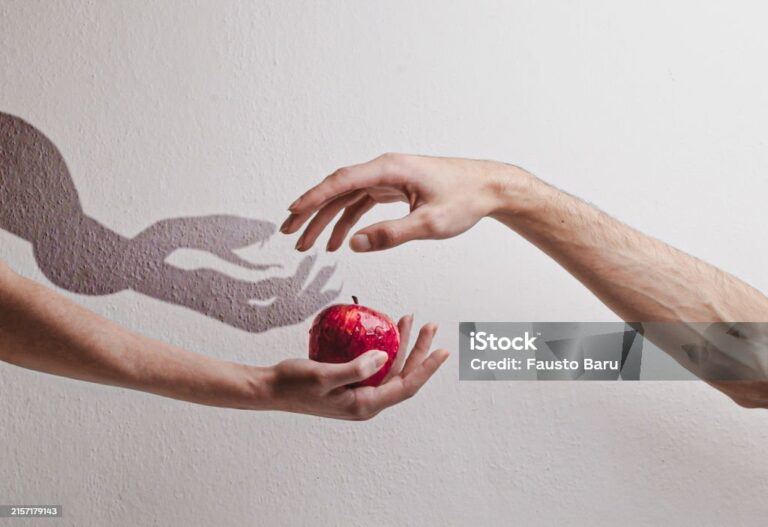
I asked ChatGPT to go even deeper. A really helpful next step would be:
- tracing how this develops into semi-Pelagianism, and
- comparing Augustine with later thinkers like Thomas Aquinas and the Reformers.
📘 1. Semi-Pelagianism — The “middle position.”
After Augustine, some Western theologians felt his view went too far in emphasizing human inability. They tried to preserve both:
- the necessity of grace (But is this grace really grace or is it justice?)
- and a meaningful human role at the beginning of salvation
Key figures:
- John Cassian
- Vincent of Lérins
🔹 What Semi-Pelagianism teaches
1. The first move toward God can come from us.
Humans can initiate faith (e.g., desire God, seek Him)
Then, God responds with grace to help and complete salvation.
2. Grace is necessary—but not for the beginning
Grace is required for:
- growth
- perseverance
- salvation
But not strictly for the first step of faith.
3. Free will is weakened—but not bound
Human nature is:
- damaged
- but still capable of turning toward God
🔹 Example (John Cassian)
From his Conferences:
“The beginning of goodwill is sometimes due to ourselves… but its completion belongs to God.”
🔹 Why Augustine opposed this
Augustine’s response would be:
Even the beginning of faith must be a gift of grace. (Again, this is not a gift of grace but justice.)
Otherwise:
- grace becomes reactive (God responds to us)
- rather than initiating (God acts first)
🔹 Official resolution
At the Second Council of Orange (529):
- Semi-Pelagianism is rejected
- But Augustine is also softened slightly
Key canon: “Even the beginning of faith… is a gift of grace.” (This is not grace. It is justice.)
BUT:
- The council avoids strong predestination language that Augustine championed
- It preserves human cooperation after grace begins or initiates salvation
📘 2. Development after Augustine
Now we move forward into medieval and Reformation theology.
🏛️ A. Thomas Aquinas (13th century)
Aquinas tries to synthesize Augustine with a more balanced anthropology (man’s nature and role in salvation)
🔹 Aquinas’s key ideas
1. Grace perfects nature (doesn’t destroy it)
“Grace does not destroy nature, but perfects it.”
Meaning: Human nature is fallen, but still real and functional
- Grace heals and elevates it
(It is said that grace heals and elevates nature, but ability is still real even though it is fallen and weakened. But what does that mean? It means that we are born with an inclination to sin, but we can still say no to sin. Is that not a form of inability? Did Jesus have this inclination to sin? If not, how then does Jesus know what it is like to be tempted as we are? How is it true that Jesus took on our nature?)
2. God moves the will—but not coercively
God causes us to will the good, but in a way that preserves real freedom
(What in heaven’s name does that mean? “God causes us to will the good.” If that is true, then we are unable to do it ourselves. How does that preserve real freedom? It doesn’t. It should read that God encourages and persuades us (not causes us) to will the good and that will preserve real freedom.)
3. Cooperation (synergy)
Humans truly cooperate with grace:
- but only because grace enabled that cooperation first
(We have here the false idea that grace enables our cooperation but that mistakes justice for grace.)
🔹 Summary of Aquinas
- Closer to Augustine than Pelagius
- But avoids the harsh determinism of Augustine
- Ends up somewhat closer to the Eastern “synergy” model, philosophically
✝️ B. The Reformers (16th century)
Figures like:
- Martin Luther
- John Calvin
They return strongly to Augustine, often going even further.
🔹 Luther (Bondage of the Will)
Against Desiderius Erasmus:
“Free will is a mere name… without the grace of God it can do nothing.”
Key idea:
- The will is bound by sin
(Mankind doesn’t have free will if we are born sinners, who can do nothing but sin.)
- Salvation is entirely God’s work
(At least Luther was honest enough to admit the obvious: man doesn’t have free will. But he also claims that justice is grace, and it is not. In justice, not grace, God gives us the ability to respond to Him under Luther’s false Augustinian foundation.)
🔹 Calvin
1. Total depravity and total inability.
Human nature is:
- not just weak
- but radically corrupted, totally depraved, and totally unable
2. Unconditional election
God chooses who will be saved:
- not based on foreseen merit or decision
3. Irresistible grace
When God gives saving grace, but only to the few who are elect:
- It effectively brings about faith
(There is no grace in Calvinism and only a little justice. See my other articles on this subject.)
🔹 Summary of Reformers
| Theme | Augustine | Luther/Calvin |
| Human ability | Cannot do good without grace | Even stronger inability |
| Grace | Necessary for all good | Absolutely decisive |
| Free will | Real but bound | Often minimized further |
| Predestination | Present | Strongly emphasized |
⚖️ Big Historical Arc
Here’s the simplest way to see the trajectory:
Early Church (esp. East)
➡️ Strong free will + cooperation
Augustine
➡️ Strong grace + weakened will
(I do not believe it. Augustine’s view was not just that our will is weakened, but it is bound and enslaved to sin.)
Semi-Pelagianism
➡️ Tries to rebalance toward human initiative
Orange (529)
➡️ Affirms: grace begins everything
Aquinas
➡️ Harmonizes: grace + real cooperation
Reformers
➡️ Return to (and intensify) Augustine’s non-free, free will, and determinism
🧭 Final clarity
(That is an interesting word choice by ChatGPT. Clarity is near non-existent in Augustinian Calvinism and its necessary entailments.)
At the heart of all these debates is one question:
Who makes the first move in salvation—God or man?
- Pelagius → Man
- Semi-Pelagians → Man (first step), then God
- Augustine → God
- Aquinas → God first, then real cooperation
- Reformers → God alone, decisively
Final Comments
It is amazing the lengths people will go to excuse man from his responsibility to obey God. Augustine taught that we are born sinners, incapable of doing good and able only to sin. Yet, according to Augustine, we are still responsible for our disobedience.
But every honest person knows that a just God will not condemn anyone for failing to do what they are incapable of doing. Augustine’s new theology actually turned out to be a great excuse for ongoing sin in the life of the believer, justifying man’s irresponsibility toward God.
In that is Augustinian Calvinism doing the work of God or the work of the devil?
