
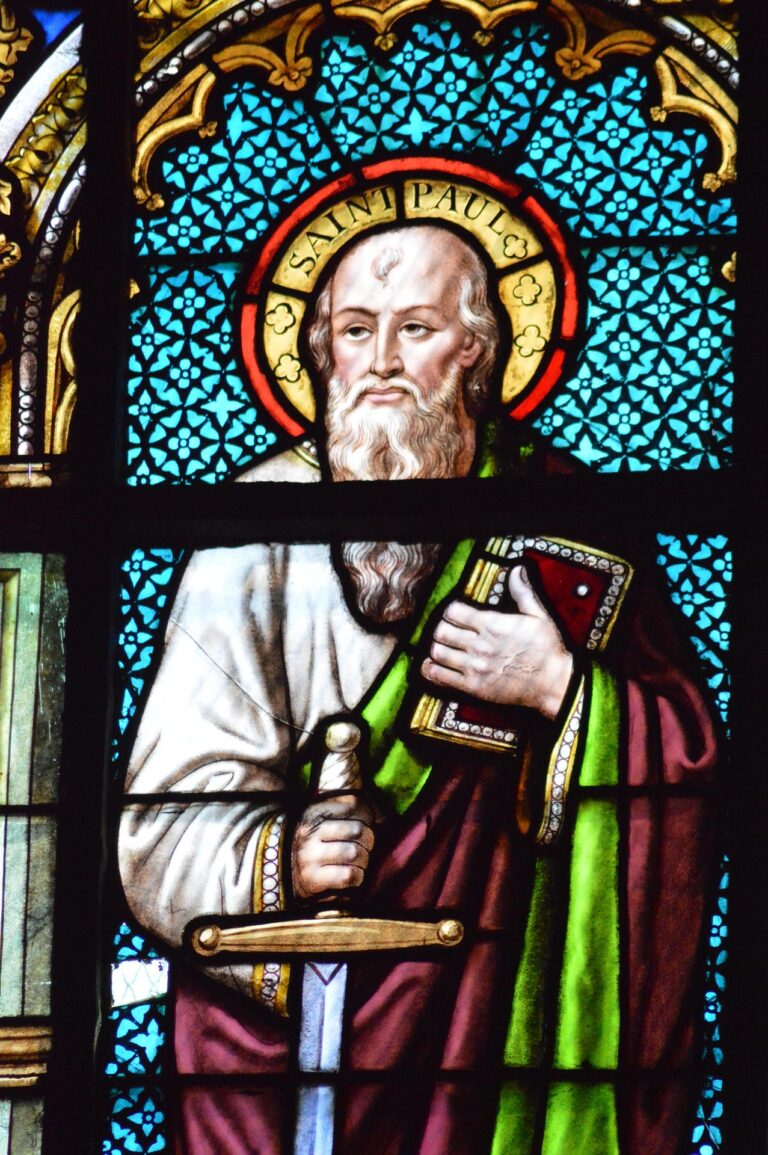
December 10, 2025
Epicureans, Stoics, and the ‘Unknown God’
Key Passage (Acts 17:22–31, KJV Excerpt)
“Ye men of Athens, I perceive that in all things ye are too superstitious… For as I passed by, and beheld your devotions, I found an altar with this inscription, TO THE UNKNOWN GOD. Whom therefore ye ignorantly worship, him declare I unto you…” emphasis added.
In Acts 17, the Apostle Paul arrives in Athens and encounters a city filled with idols. He begins reasoning in the synagogue and marketplace, where he meets philosophers, specifically Epicureans and Stoics, who bring him to the Areopagus to explain his teaching. There, he delivers one of the most famous speeches in the New Testament, introducing the Athenians to the true God whom they acknowledged indirectly as ‘the unknown God.’
In the first century, Athens was a symbolic center of learning, rhetoric, and religious plurality. While no longer politically dominant, it remained intellectually prestigious. Its citizens and visitors engaged in constant discussion of religion, ethics, and metaphysics. Acts 17:21 notes that the Athenians “spent their time in nothing else, but either to tell, or to hear some new thing.” (I wrote an article about this titled, “To hear or tell something new”. How many Christians attend church for this very reason?) Paul entered this environment as a Jewish Christian teacher proclaiming a resurrection and a personal God, ideas that challenged both mainstream Greek philosophical schools.
Who Were the Epicureans?
Epicureanism, founded by Epicurus (341–270 BC), held that the gods existed but were completely uninvolved in human affairs (akin to deism today). The philosophy emphasized the pursuit of a peaceful, pleasant life free from disturbance, fear, and pain. Materialistic in worldview, Epicureans denied an afterlife, believing that the soul perished with the body. Happiness consisted of simple pleasures, friendship, and the avoidance of unnecessary desires or anxieties.
Epicureans believed that the universe consisted of atoms moving randomly through the void. The gods existed but were entirely detached from human affairs, living in perfect tranquility. Therefore, according to Epicurus, humans should not fear divine judgment. He said:
“Death is nothing to us; for that which is dissolved is without sensation, and that which lacks sensation is nothing to us.”
How many evangelical Christians today have a very similar philosophy? We have evangelicals who do not believe there is a hell. Also, we have those who think that hell is annihilation and no eternal punishment, which is basically the same Epicurean sentiment as “death is nothing to us: for that which is dissolved is without sensation…”
Moreover, almost all evangelicals also teach as did the Epicureans, “humans should not fear divine judgment.” For all those carnal evangelicals who believe they are going to heaven no matter how sinful they remain, there is no fear of God or His divine judgment.
Epicureans rejected supernatural intervention, denied immortality of the soul (don’t many Christians also deny this?), and viewed pleasure as freedom from pain and disturbance, as the highest good. Paul’s message of resurrection and divine judgment directly contradicted the view that “eat, drink, and be merry, for tomorrow we die.”
Who Were the Stoics?
Stoicism, founded by Zeno of Citium (c. 300 BC), taught that the universe was governed by divine reason or ‘logos.’ Stoics sought virtue, self-discipline, and alignment with nature. They viewed God as an impersonal rational force permeating everything (a kind of pantheism). Stoicism emphasized moral duty, the acceptance of fate, and emotional restraint. Unlike the Epicureans, Stoics held that the divine was near and active, yet impersonal, much like a force.
Stoicism held a more spiritual worldview. They believed in the ‘logos,’ the rational principle permeating the universe. In their pantheistic worldview, God was the soul of the world. A famous Stoic, Cleanthes, wrote in his Hymn to Zeus:
“Most glorious of immortals… all beings are in thee, and we all partake of thee.”
Stoics valued moral virtue, self-discipline, and acceptance of fate (which sounds much like Calvinism’s ideas about God’s sovereignty and providence). They believed the soul survived after death but was eventually absorbed back into the universal divine fire. Paul’s proclamation of a personal Creator, resurrection, and a definitive “day of judgment” contradicted Stoic pantheism and eternal cycles.
This makes me think of those today who do not believe we have free will; the Reformed and Calvinists believe God ‘fated’ everything by His decrees. They strongly disagree that they deny free will, but it is true nonetheless. See my book, When Lies Become Truth, Chapter 2 on Free Will.
What Paul Encountered in Athens
Paul encountered a pluralistic, highly philosophical culture filled with temples, idols, and altars. Athenians were known for curiosity and debate. When Paul preached Jesus and the resurrection, some thought he promoted foreign gods. Intrigued, they brought him to the Areopagus, a formal place for philosophical and religious discussion.
The Altar ‘To the Unknown God’
Among the many altars of Athens was one inscribed: ‘TO THE UNKNOWN GOD.’ This altar reflected both Athenian religious caution and their admission that there might be divine realities they did not fully know. They sound more teachable than your average evangelical. Too bad evangelical Christians do not understand that there may be truth about God and salvation beyond what they have heard from their pastor or their denomination.
Paul used this as a point of connection. He declared that the God they worshipped, unknowingly, was the actual Creator of all things, transcendent, personal, sovereign, and not confined to temples or crafted images (idols).
Summary of Paul’s Message at the Areopagus
- God made the world and everything in it.
- God does not dwell in temples made with hands.
- God gives life and breath to all humanity.
- God created all nations from one blood.
- God desires that all people seek Him.
- God is not an idol shaped by art or imagination.
- God now commands all people to repent of their sins against God and man.
- God has appointed a day of judgment, confirmed by raising Jesus from the dead.
Reaction of the Epicureans and Stoics
The philosophers’ reactions were mixed. Some mocked Paul, especially at the mention of resurrection, a concept both Epicureans and Stoics struggled with for different reasons. Others were curious and wanted to hear more. A few, such as Dionysius the Areopagite and Damaris, believed.
Additional Scriptural References Related to Paul’s Message
Acts 14:15-17. Paul teaches that the living God made heaven and earth, contrasting Him with idols.
Isaiah 44:9-20. A strong critique of idolatry, aligning with Paul’s message in Athens.
Romans 1:18-25. Paul’s theology of natural revelation and idolatry parallels the Areopagus sermon.
Psalm 19:1-4. Declares creation as a witness to God, central to Paul’s argument.
1 Corinthians 1:18-25. Paul contrasts God’s wisdom with Greek philosophy.
Colossians 2:8. A warning not to be taken captive by “philosophy and vain deceit.”
Early Christian Commentary on Acts 17 and Greek Philosophy
Early Christian writers often reflected on Paul’s encounter in Athens as an example of engaging pagan thought without compromising the gospel. Too bad that has been lost in our day of the seeker-sensitive and entertainment-oriented church services, where the truth is optional and the hard things in the gospel may seldom, if ever, be talked about. We have churches that do not mention with any degree of seriousness such things as hell, sin, and repentance from all sin.
Justin Martyr (2nd century)
Justin, a philosopher who converted to Christianity, argued that Greek philosophers had partial glimpses of truth but lacked the fullness found in Christ. He wrote:
“Whatever things were rightly said among all men are the property of us Christians.” (Second Apology 13)
Justin believed Paul appealed to the Athenians’ search for truth and redirected it to the true God.
Clement of Alexandria (late 2nd century)
Clement saw philosophy as a preparation for the gospel, stating:
“Philosophy was given to the Greeks as a covenant, a foundation for the philosophy of Christ.” (Stromata 1.5)
He regarded Paul’s sermon at the Areopagus as the perfect example of affirming truth wherever it was found while correcting error. But is that correct?
Tertullian (late 2nd – early 3rd century)
Tertullian took the opposite stance, famously asking:
“What indeed has Athens to do with Jerusalem?” (Prescription Against Heresies 7)
He saw Greek philosophy as the root of heresies, suggesting that Paul’s discourse was corrective rather than conciliatory. I agree with him, not Clement. Please see my articles on Theism, especially Classical Theism. Platonic ideas about the nature of God permeate our theology of God today, for the worse and not the better.
Origen (3rd century)
Origen considered Paul’s sermon a model of evangelizing intellectuals. He wrote that Paul used the altar to the unknown God as a strategic bridge to proclaim revelation beyond human reason.
John Chrysostom (4th century)
Chrysostom, in his Homilies on Acts, emphasized Paul’s boldness:
“He stood in the midst of the Areopagus, not intimidated, and proclaimed the God whom they knew not, bringing the Athenians from their manifold errors to the knowledge of the truth.”
Paul demonstrated the courage of a true man of God. Courage is in very short supply these days of religious political correctness, progressivism, and compromised Christianity.
The Significance of the ‘Unknown God’
Ancient sources attest to the existence of altars to unknown gods in Athens. These altars acknowledged the Athenians’ belief that divine powers might exist beyond their knowledge. Paul used this admission to reveal the true God: transcendent, personal, Creator, Judge, and Resurrector of the dead.
Theological Contrast Summary
- Epicureans denied divine involvement. Paul revealed God as Creator and Judge.
- Stoics believed in pantheistic divine reason. Paul proclaimed a personal God.
- Athenians worshiped many gods. Paul proclaimed the one true God.
- Greeks saw resurrection as foolish. Paul preached it as the foundation of judgment and hope.
Patristic Comparison Table
The following provides a structured comparison of early Christian writers, their interpretations of Acts 17, and their differing attitudes toward Greek philosophy. It includes a consolidated table, expanded thematic analysis, and key quotations.
Patristic Views on Acts 17 and Greek Philosophy
| Church Father | View of Greek Philosophy | Interpretation of Paul in Athens | Representative Quote |
| Justin Martyr (2nd c.) | Positive: saw philosophy as preparation for Christ | Paul builds on partial truths among the Greeks to reveal Christ fully | “Whatever things were rightly said among all men are the property of us Christians.” |
| Clement of Alexandria (late 2nd c.) | Very positive: philosophy as a covenant for Greeks | Paul uses the Athenians’ search for truth to point beyond paganism | “Philosophy was given to the Greeks as a foundation for the philosophy of Christ.” |
| Tertullian (late 2nd–early 3rd c.) | Negative: philosophy as the root of heresy | Paul corrects the error rather than embracing philosophy | “What has Athens to do with Jerusalem?” |
| Origen (3rd c.) | Moderately positive: Philosophy helps develop reason | Paul uses natural theology as a rational groundwork for revelation | “Paul used the altar to the unknown God as a bridge to higher truth.” |
| John Chrysostom (4th c.) | Neutral to mildly negative | Paul boldly denounces idolatry and philosophical confusion | “He proclaimed the God whom they knew not, bringing them to the truth.” |
| Augustine (late 4th–early 5th c.) | Mixed: admired Platonists but critiqued others | Paul demonstrates the insufficiency of human wisdom without grace | “Some truths the Platonists saw, but they knew not the way: Christ.” |
Augustine drew on pagan philosophies to develop his new orthodoxy, which became the foundation of Augustinian Calvinism, or Reformed theology. He deliberately changed Christian orthodoxy not for the better but for the worse. See my articles on Augustine and Calvinism.
Themes in Early Christian Interpretation of Acts 17
Natural Revelation and Philosophical Insight
Not a few Fathers saw Paul’s sermon as affirming that the Greeks had partial access to divine truth through creation. This aligns with Romans 1:19-20 and Psalm 19:1-4, which teach that the natural world reveals the truth of God, thereby affirming what God gave us in our rational and moral nature. Justin, Clement, and Origen emphasized this theme in particular.
Idolatry as Philosophical Error
Paul’s critique of idols in Acts 17:24-29 echoed Old Testament teachings (Isaiah 44; Psalm 115). Chrysostom stressed that Paul attacked both idol worship and the philosophical assumptions supporting it. Tertullian likewise argued that philosophy played a role in leading people into idolatrous systems. That is sound thinking as far as I am concerned.
The Resurrection as the Turning Point
Stoics and Epicureans both rejected bodily resurrection. Stoics, due to their cycles of cosmic dissolution; Epicureans, because they denied an afterlife altogether. Early Christian writers noted that the Athenians’ mockery of Paul’s preaching revealed the limits of philosophical reasoning in the absence of divine revelation.
Paul’s Use of Greek Poetry
In Acts 17:28, Paul quotes Aratus (“For we are also his offspring”). Early Christian writers saw this as evidence that Paul could use pagan sources as stepping stones for truth, a method embraced by Justin and Clement but viewed with suspicion by Tertullian. Both are correct. Using the unbeliever’s language or ideas can bring them to the light of truth, but it can also be misunderstood as affirming false ideas. Consider what happened to Augustine in his later years, when he affirmed pagan ideas and incorporated them into Christian theology.
Additional Patristic Quotations
Justin Martyr
“We have been taught that Christ is the firstborn of God, and we have declared that He is the Logos of which every race of men were partakers.” (First Apology 46)
Clement of Alexandria
“Thus philosophy prepared the way for perfection in Christ, as the law for the Jews.” (Stromata 1.5)
Origen
“Paul’s teaching at Athens shows that through creation and conscience God has never left Himself without witness.” (Commentary on John)
Chrysostom
“Observe how he leads them by degrees, showing that the Creator of all is not contained in temples.” (Homilies on Acts)
Augustine
“The Platonists saw that the Word was with God; but that the Word was made flesh, this they did not see.” (City of God 10.29)
Summary of Differences Among the Fathers
- Justin & Clement: very positive toward Greek philosophy; saw Paul as building on Greek insights.
- Tertullian: highly critical; saw philosophy as harmful and misleading.
- Origen: balanced: valued reason but insisted that revelation is superior.
- Chrysostom: focused on Paul’s boldness and correction of error.
- Augustine: admired Platonists and incorporated some of their ideas into Christianity. Yet he still affirmed the need for divine revelation.
Note: I used ChatGPT for the general information, references, and quotes.
Conclusion
We see that the early church fathers held differing views on the use of pagan philosophies. I find it interesting to note that in evangelical Christianity today, we see some of this paganism, as already mentioned. Early church fathers such as Origen and Tertullian pointed out the risks, and Augustine provided the quintessential example validating their concerns. To Augustine’s discredit, Western Christianity has been greatly corrupted because he “admired Platonists” and other pagan philosophies, thinking there was truth in these ideas. Thus, he distorted the interpretation of the holy scriptures to conform to pagan ideas rather than to the Word of God. Augustine and his followers brought to us the false and ruinous ideas of inherited guilt because of Adam’s sin, a sinful nature, irresistible grace, non-free / free will, and the false notion that God determined whatsoever comes to pass, both good and evil.
