
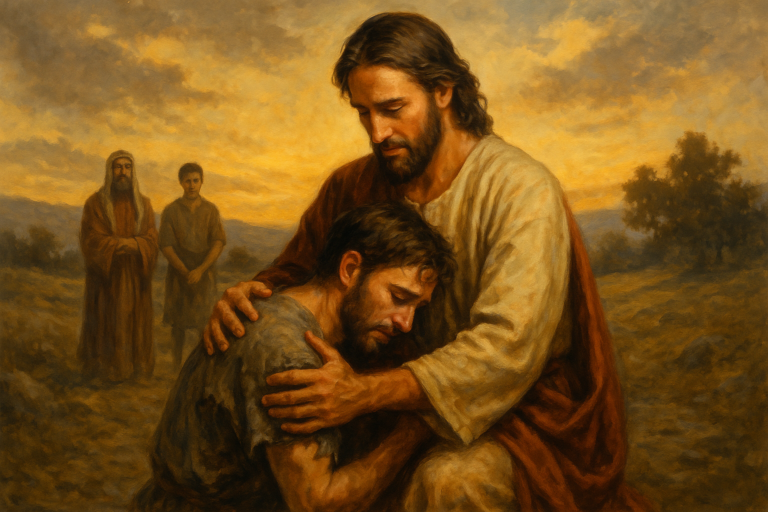
“God so loved the world that He gave His only begotten Son, that whosoever believes in Him shall not perish but have everlasting life.” John 3:16
Does this single passage say all that needs to be stated regarding the gospel of Jesus Christ and the message of salvation? Will you then merely ‘believe’, and ‘trust’ that you have eternal life when the fruit of your life testifies to the opposite of this? Did you know that the Bible also says that the ‘devils believe’ and tremble? James 2:19 reads, “Thou believest that there is one God, thou doest well: the devils also believe, and tremble.” The devils also believe in basic facts about God. The primary difference between the faith of devils and the faith of saints or Christians lies in faithfulness and obedience. The devil’s faith is a faith that lacks works of righteousness, whereas faithful Christians have a faith that produces works of righteousness, not sin. What does it mean to believe in the LORD Jesus Christ? Is it merely the intellectual assent to specific facts about the person and work of Christ, or is it more? That is what most evangelical churches peddle. From my article entitled, Believe and Be Saved, I quote a portion of that article for your consideration. I added some vital information to the original article.
……………………………..………..excerpt begins here and ends on page 12…………………………
“You may recall the phrase, ‘easy believism’. It’s used to describe those who preach a gospel that doesn’t include repentance from sin. In the view of those who preach ‘easy believism’, all that is needed to be saved from hell is simple faith or trust in Jesus Christ. ‘Easy believism’ is the rejection that any degree of repentance from sin is required for faith or belief to be saving……. Are faith and believing two different things, or are they synonymous in their meaning as it pertains to salvation?
“But these are written, that ye might believe that Jesus is the Christ, the Son of God, and that believing ye might have life through his name.” John 20:31 KJV. Belief yields abundant life here and now, a new relationship with God Almighty, and eternal life hereafter. Believing in Jesus Christ is the door through which all saved children of God enter.
“And they said, Believe on the Lord Jesus Christ and thou shalt be saved, and thy house.” Acts 16:31. This passage emphasizes the importance of belief.
“That if thou shalt confess with thy mouth the Lord Jesus Christ, and shalt believe in thine heart that God hath raised him from the dead, thou shalt be saved. For with the heart man believeth unto righteousness; and with the mouth confession is made unto salvation.” Romans 10:9-10. Another passage that emphasizes the importance of faith.
“For God so loved the world, that he gave his only begotten Son, that whosoever believeth in him should not perish, but have everlasting life.” John 3:16. This was the opening scripture verse for this section. In this passage, belief is emphasized. But what kind of belief is the apostle talking about? If you read on in John chapter 3, you will soon come to verses 19 through 21, which read, “And this is the condemnation, that light is come into the world, and men loved darkness rather than light, because their deeds were evil. For every one that doeth evil hateth the light, neither cometh to the light, lest his deeds should be reproved. But everyone that doeth truth cometh to the light, that his deeds may be made manifest, that they are wrought in God.” Is it not obvious that the apostle is talking about a faith that is proven by its deeds? The apostle is referring to a faith that loves the light and truth, and departs from darkness and evil deeds. There is no room in the chapter to believe that repentance from the darkness of sin is optional or is the faith the writer is referring to.
“For ye are all children of God by faith in Christ Jesus.” Galatians 3:26. Again, this is the faith that is proven by deeds, righteousness, and the putting away of sin. It is not the faith of devils that is being commended.
“For by grace are ye saved through faith: and that not of yourselves; it is the gift of God. Not of works, lest any man should boast.” Ephesians 2:8-9. Like every other verse that emphasizes the importance of faith, the context always makes it clear that the faith being commended is the faith of true Christians, not the disobedient faith of devils. Verse 10 of Ephesians chapter two mentions that faithful saints, in Christ, are created to do good works. Obviously, this means that true Christians have repented of their sins and entered into a life of righteousness and obedience.
Faith and belief are often used interchangeably in the context of salvation. The critical question is, what is saving faith? What is saving belief?
Does faith or belief mean we simply acknowledge the truth that Jesus Christ is the only begotten Son of God? Does it mean that we accept certain facts about Christ as truth? For example, does it mean that we simply trust that Christ, by dying on the cross for us, paid the penalty for our sins even if we never reduce or stop any of our sins? “Easy believism” says yes, that is all that it takes to be saved. Repentance or turning from any sins is not a condition or necessarily the fruit of saving faith or saving belief. It is easy to see why ‘easy believism’ is so popular. It says that you can believe in Christ, go your own sinful way, and do your own sinful thing.
Can that be true? It is easy to say you believe certain beneficial facts about proper diet and exercise, but not actually exercise or eat healthy. People believe that facts are actual, but they do not necessarily lead them to obedience or change their behavior. James chapter two, talks about the fact that demons believe in God, yet they are not saved because their faith (belief in God) is empty. Faith without works of righteousness is dead, says the writer, James. An intellectual acknowledgement of God’s existence or any facts about Him is not sufficient and is not saving faith or saving belief. Belief and faith must result in trust, obedience, and whole-hearted commitment to Jesus Christ before they are considered saving faith or saving belief. Repentance from sin is implied and implicit in saving faith or saving belief.
What about those passages that emphasize repentance from sin?
There are numerous scripture verses that proclaim that we are to repent and believe in order to be saved. Those verses of scripture cited above that did not specifically demand repentance must be understood as including repentance from sin. That notion is contrary to what the antinomians (another word for those who teach ‘easy believism) today preach and teach.
“And saying, the time is fulfilled, and the kingdom of God is at hand: repent ye, and believe the gospel.” Mark 1:15. Repent from what? Believe what? Most agree that repentance means a change of mind about God, Christ, and sin. It most certainly does not mean to form a new opinion of the mind that does not alter the behavior of the person. Repentance is a change of mind and conduct. What were they to believe? Those seekers who are considering following Christ were instructed to believe what Jesus Christ was telling them about the truth of the gospel. Now let’s consider what the Word of God teaches regarding repentance.
“Then Peter said unto them, Repent, and be baptized every one of you in the name of Jesus Christ for the remission of sins, and ye shall receive the gift of the Holy Ghost.” Acts 2:38. Without repentance from sin, there is no remission of sins or the gift of the Holy Ghost. The apostle seems to emphasize repentance from sin over faith.
“Repent ye therefore and be converted, that your sins may be blotted out, when the times of refreshing shall come from the presence of the Lord.” Acts 3:19. Calvinists most often tell us that first comes conversion or regeneration, then comes repentance. This passage tells us that first comes repentance, and then comes conversion or regeneration. Notice also that faith is not mentioned and that repentance from sin is most prominent. I am going to get lots of pushback on that one!
“But shewed first unto them of Damascus, and at Jerusalem, and throughout all the coasts of Judea, and then to the Gentile; that they should repent and turn to God, and do works meet for repentance.” Acts 26:20. Paul is again telling us that first we should repent and turn to God. Some say that repentance is a turning to God, but here we are told to repent and turn to God, which suggests that they are not exactly the same. He adds that we should do works that correspond with repentance, that show we have changed our minds about sinning. We should not be sinning, and we should be doing good works of righteousness. What else can this passage mean?
“Bring forth therefore fruits worthy of repentance and begin not to say within yourselves. We have Abraham to our father: for I say unto you. That God is able of these stones to raise up children unto Abraham.” Luke 3:8. The Jews believed in a doctrine of eternal security. They believed that because they were the descendants of Abraham, Isaac, and Jacob, they were automatically saved and were going to heaven. Jesus came to tell them that they were mistaken. If they were saved, they would be bringing forth fruit worthy of repentance. Without the fruit of repentance, there is no salvation for them because there is no real repentance without fruit. True repentance is always fruitful. Again, the focus is on repentance from sin more than faith.
John the Baptist and Jesus Christ both preached repentance from sin, which is a turning from a life of sin to a life of holiness by the grace and truth of God. It is a wholehearted turning away from everything displeasing to God and a turning to everything pleasing to God. This is what repentance means. It is a change of mind, heart, and will with respect to sin in our lives. It is a change in the end for which we live. Jesus proclaimed, “Go and sin no more.” Most Christians actually do not believe Jesus was serious because of the false teaching of ‘easy believism’ and carnal Christianity.
Jesus in Luke 13:3 said, “I tell you, no; but unless you repent you will likewise perish”. In Luke 5:32 Jesus said, “I came not to call the righteous, but sinners to repentance.” Now tell me, if you can with a straight face, that Jesus was not calling the unrighteous to righteousness and I will marvel at your blindness.
“And the times of this ignorance God winked at, but now commandeth all men everywhere to repent: Because he hath appointed a day, in the which he will judge the world in righteousness by that man whom he hath ordained, whereof he hath given assurance unto all men, in that he hath raise him from the dead.” Acts 17:30-31. The issue God has with humanity is not our lack of knowledge or our inability. The issue is our sin. That is why the central message of both the Old and New Testaments is that of repentance from unrighteousness and a turning to righteousness. The entire Bible is focused on calling men and women to repent of their many sins and be converted to the gospel of truth. This is the constant theme of the entire Bible. Our sins separate us from God. God doesn’t want anyone to perish in hell, but for all to come to a knowledge of the truth. God pursues His wayward children, but only a few are willing to repent of their sins and follow God.
“The Lord is not slack concerning his promise, as some men count slackness: but is longsuffering to us-ward, not willing that any should perish, but that all should come to repentance.” 2 Peter 3:9. God waits patiently for the unrepentant to repent because He does not want to condemn anyone. He desires the salvation of all men and women not just the chosen/elect few.
In the Book of Matthew, chapter 12, verse 50, Jesus was told that His mother and brothers wanted to speak with Him. Jesus then proceeded to tell everyone that those who do the will of the Father are His mother, brothers, and sisters. The word repentance was not mentioned, but the necessity of repentance was. Jesus did not say that those who believe in Him are his mother, brother, and sisters, did He? Nor did Jesus say that those who hear the word of the Father are His family. Jesus said that those who do the word of God are His mother, brother, and sister. True faith and true belief always produce obedience to the Father’s will, contrary to what most evangelicals teach. They falsely claim that a faith without obedience is a saving faith, when in fact it is not. There are many more verses I could quote, but I will leave it to the ones above.
What’s the problem with the evangelical gospel being preached today?
Many pastors proclaim that all one needs to do to be saved is to believe in the LORD Jesus Christ, “believe and be saved”. The one and only condition of salvation is to believe. Repentance from sin has no part in it. It is the antinomian gospel of “easy believism”, “receive Jesus”, “trust Jesus.” The antinomian gospel of today is to believe in Christ or have faith in Christ, which only means that you trust that Christ paid the penalty for your sins. Repentance from sin is not a condition or necessarily the fruit of belief. That false gospel will save no one, literally or figuratively. The false gospel preached in most pulpits today is the gospel of being saved in our sin, rather than from our sins, as seen in Matthew 1:21. It is salvation from the penalty of sin, but not from the practice of sin.
Moreover, many of these individuals believe that believing in or having faith in Christ is a work of God, not our own, and not a condition that we must meet to be saved. The strict Calvinist believes that God elects some (not all) to regeneration, gives them faith, which includes some repentance from sin. They believe, even with the grace and power of God, that sinners can never expect that sin will be the exception in their lives and not the rule. These antinomians teach that we regenerated “Christians” sin in thought, word, and deed every day. The blood of Christ is clearly inadequate to cleanse sinners from the practice of sin in their theology.
I am convinced that the scriptures command us to repent and believe. These two conditions rest on us. We can and must repent and believe. To many of these antinomian folks, that means we save ourselves and that we do not need God. But meeting the conditions of salvation gives us the right to become children of God. It doesn’t mean we save ourselves. Jesus Christ alone met the most important condition of our salvation by His shedding of innocent and pure blood on the cross for our sins. It was the love of God toward sinners (that for the sake of which, the prime moving cause of our salvation) that gave us the atonement. We are required to meet the conditions of repentance and faith (that not without which). Just because we believe there are conditions to salvation, it doesn’t mean we think we can save ourselves and don’t need God. We know that we are saved by grace through faith and that not of ourselves, it is a gift of God. Just because a gift has conditions attached to receiving it, doesn’t mean the nature of the gift is changed.
Our Judicial system and God’s Justice
It is true that sinners can never save themselves because they are guilty of a crime against God. Sinners are not necessarily guilty of breaking every law of God. When one law of God has been violated, a crime against God has been committed. How is a sinner going to pay for that sin against God? We have nothing to offer God to atone for our sin. We can’t tell God that we didn’t break some of His commandments; therefore, He should simply forget about the crimes we actually did commit. It doesn’t work that way in heaven or on earth.
Likewise, a bank robber can’t plead his or her obedience to other laws to offset their crime of robbing a bank. The law condemns, along with many other such criminal actions, the crime of robbing a bank. The same goes for God’s laws. If we have broken one or more of God’s laws, we can’t plead our obedience to a few of His laws to offset the breaking of some of His laws. Justice demands that we pay for our crimes. Some vainly imagine that God has a scale and He balances our sins against our good deeds. And if the good deeds outweigh the bad deeds, we get into heaven. It doesn’t work that way in our judicial system, nor does it work that way in God’s.
Meeting the conditions of salvation does not earn salvation. They qualify us to receive salvation. Repentance from sin and faith in Jesus Christ are conditions of salvation that we must meet. The choice is ours, not God’s, contrary to what many Calvinists believe.
Examples of those who do not believe repentance from sin is a condition of salvation
I recently watched a YouTube video by Brian from Faith on Fire. In this video, he shared his thoughts about faith and repentance. He wanted everyone to know that faith is the sole condition of salvation and that if people think repentance from sin is also required for salvation, they are adding works to the gospel message. He doesn’t seem to realize that he added the “work of faith” to the gospel message.
Brian produces some good material about the errors of Calvinism, but doesn’t understand that unless a person is a five-point Calvinist, they add the work of faith and/or repentance to the gospel of salvation by definition. A work is something we must bring to the table. Five-point Calvinists believe that God alone picks and chooses who will be saved and who will be lost. Only these Calvinists can claim that people bring nothing to the table.
What Brian doesn’t seem to be able to get his head around is that he has added the “work” of “faith” to the gospel of salvation. As R. C. Sproul said, “Is not faith (supplied by men and women to be saved) a good work? Surely it isn’t a bad work.” I prefer to look at faith and repentance as conditions of salvation because that is clearly what the Word of God teaches. Conditions are the “that not without which” while the procuring cause of salvation is the love of God, “that for the sake of which”. Think of an inheritance that contains conditions before the inheritance will be distributed. It is still a free gift, and the conditions aim to ensure that the gift is used appropriately.
Brian believes that if we see repentance and faith as being the same thing, then we have not added ‘works’ to the message of salvation. He believes that repentance means only that we change our minds and believe in Jesus Christ. He doesn’t think this implies or demands repentance from sin. Repentance from sin is a gradual process of sanctification, but it is not part of the salvation message, according to Brian. He couldn’t be more wrong about repentance and sanctification. Godly sorrow for sin and a commitment to put away all sin now and forever are conditions of forgiveness and justification. In many passages, we are told to repent and believe. If repentance only means belief, the message is redundant. It makes the message ‘believe and believe.’ Please refer to my book, When Lies Become Truth, Chapter Six, “Eternal Security,” for a refutation of the doctrine of eternal security. Additionally, please refer to many of my other articles on the topic of holiness as a condition of salvation.
Brian is another former Calvinist who still holds onto the doctrine of ‘Eternal Security,’ not realizing that this doctrine is embedded in Calvinistic determinism. He claims to have come out of Calvinism but is actually a three or four-point Calvinist. How so?
Calvinism’s TULIP
- T = for total depravity or total inability
- U = for Unconditional election or salvation
- L = for Limited atonement
- I = for Irresistible Grace
- P = for Perseverance of the saints.
If you believe in eternal security and that the only condition (work) of salvation is faith generated by the free will of men and women, then you believe that grace is resistible until you are saved. But once you are saved, grace is now irresistible (a deterministic tenet of Calvinism). You can never leave or fall away from salvation. Now salvation is unconditional, another tenet of Calvinism. Before salvation, men and women have a free will and ability to choose to believe, but after their initial salvation, they lose free will and the ability to change their mind. (Another tenet of deterministic Calvinism).
Those who believe in eternal security also believe that we can exercise faith in Christ to be saved. But once we do exercise faith in Christ, we now have an “inability” to get out of that relationship. Inability is another tenet of Calvinism. People like Brian and Leighton Flowers, who believe in eternal security, are likely four-point Calvinists, as demonstrated. Yet they claim that they have rejected Calvinism. They have not; they have just modified it.
Another example, the ‘No Nonsense Christianity’ YouTube channel
I recently watched a 2.5-hour video produced by this gentleman. He believes that repentance from sin is a false gospel. That makes me and others heretics. Is it possible that this teaching is false? The one and only condition of salvation is to believe or have faith in Jesus Christ. Not surprisingly, he also believes the Bible teaches eternal security. When I first got right with God, my mentors believed in eternal security. It sounded great to my young ears. After studying the proof texts and the Bible, I came to reject the lie of eternal security.
He rightly points out that the words ‘repent or repentance from sin to be saved’ are never mentioned in the New Testament. The words “repent,” “repentance,” and similar words are used in a variety of ways in the Bible, both in the Old Testament and the New Testament. That is all true. In the Old Testament, we read of God repenting numerous times. That is another true statement. Repentance does not always mean repentance from sin. In multiple places, God repented. God is without sin; therefore, repentance in these cases does not mean repentance from sin. It means that God changed His mind.
For example, based on mankind’s wickedness, God was sorry that He had made man. God repented that He had made man. He destroyed the earth in a flood and only saved Noah and his family. Here is another example: God told Jonah to go to Ninevah and tell them that in 40 days He would destroy their city. When God saw their humble repentance, He changed His mind (repented) and did not destroy the city. God has always offered mercy to the repentant person and nation, and in that sense, He did not change at all. The people of Ninevah changed and repented; therefore, God no longer needed to destroy them. God relented and did not destroy Nineveh.
In the places where repentance is mentioned in the Bible, this YouTube channel does not believe that repentance from sin is a condition of salvation, nor part of salvation, nor a fruit of salvation. For example, when Paul in Acts 17:30 confronted the group who worshipped the unknown god in Athens, Paul told them to repent of this idolatry. The website author doesn’t believe this was about repentance from sin, as if idolatry is not sin. (See the first two of the ten commandments.) His argument is so pathetic that it is hard to believe. He thinks that if someone poses the obvious question, ‘Isn’t idolatry a sin?’, that is a stupid question to begin with. His response to them is to avoid stupid questions. Does he really think that is an answer? He then goes on to associate this question with illogic and a lack of basic math skills. Say what? He says, if you can understand logic and basic math, you can understand why this is a stupid question. Apparently, I do not understand logic or basic math because his comment seems ridiculous to me. He goes on to say that idolatry does not equal sin but is only a subset of sin; the question is stupid. Say what? In other words, unbelief doesn’t equal sin but is a subset of sin. I have no idea what he is attempting to say, do you? The Bible clearly labels unbelief a sin, even though guys like Charles Stanley call unbelief a state and not a sin. Isn’t unbelief both a state and a sin? Of course it is. This is their way of refuting an argument without actually refuting anything.
He then goes on with this absurd illustration. He says a cat is a mammal and a dog is a mammal; therefore, a cat is a dog. That is stupid, and it is just like someone asking the stupid question, ‘Isn’t idolatry a sin?” If you can make sense out of this, you are more learned than I am. Sometimes people believe that if they talk long enough, their word salad will convince others that they know what they are saying.
Then the video shifts to another preacher, who states that God views justification as a single event that lasts for all time. He never revisits it. Once a person is declared not guilty, they can never again be found guilty. In other words, God declared us not guilty of our future sins even before we commit those sins. (Please see my book, When Lies Become Truth, and the chapter on Justification). If this idea is not repugnant to you, then I am not sure anything I say will make a difference. You can live in the blindness and deception if you want.
This pastor goes on to quote scripture that states, ‘he that believeth hath eternal life but he who doesn’t believe hath not the life but the wrath of God abides on him’. His interpretation is that once God declares you not guilty and gives you eternal life, which can never be lost, you can never become guilty again, even if you commit unspeakable evil. I do not believe the devil could dream up a more creative falsehood.
This pastor thinks Paul’s comment was just about idolatry and not repentance from sin in general and in its entirety. I find that it is almost impossible to believe that these pagan idolaters were not also breaking other commandments of God, as well as the sin of idolatry. How about you? Was Paul suggesting that they stop their idolatry, but not the other things they were doing that offended the one true God? Impossible.
In the gospel of John, the only stated condition of salvation is to believe. Therefore, this guy believes that it is the only condition in the Bible. This guy actually lumped Charles Stanley into the teachers of a false gospel because, at times, Stanley actually told people that they needed to repent of their sins when they came to God in salvation. If he knew what Stanley really taught, he would understand that Stanley believed exactly what he believes, and that is the one and only condition of salvation: to believe or have faith. Moreover, Stanley taught that believers do not need to repent of any sins or have any fruit to be saved, just like this guy believes.
He quotes Michael Pearle as if he were like himself, believing the only condition of salvation is to believe. Pearly believes that if a person has true faith, they will obey the gospel and produce good works (which I feel as well). They reject that idea and think that it is the Lordship salvation false teaching, which Pearle claims to deny, but they say he really doesn’t. They say Lordship salvation is the ugly cousin of the ‘repent of your sins’ teaching. I do not think Satan could be more pleased.
Michael Pearle of No Greater Joy Ministry holds the following beliefs.
Michaelproduced a YouTube video titled “Repentance: Not What You Think It Is!” Part 1. These are his key points. According to Mr. Pearle, repentance or repent means to change your direction, and most of the church has it wrong, thinking it is about repenting of sin. Do your own search on the meaning of the word repentance. Using the Bible application, Bible Hub, and Strong’s Exhaustive Concordance, this resource says that the word repent means “I repent, change my mind, change the inner man (particularly with reference to the acceptance of the will of God). The word comes from the Greek words meta and noieo; to think differently or afterwards, i.e., reconsider (morally, feel compunction)-repent. To change one’s mind or purpose.
Thayer’s Greek Lexicon for Strong’s New Testament 3340 says that in some scriptures it means “to change one’s mind for the better, heartily to amend with abhorrence of one’s past sins.” In other places, it means, “conduct worthy of a heart changed and abhorring sin.”
According to the Topical Lexicon, the Greek word repent is “often associated with the Hebrew word (shub, Strong’s 7725), which means ‘to turn back’ or ‘to return.” “Another related term is the Hebrew word (nacham), Strong’s 5162, which can mean “to be sorry” or “to comfort,” often used in the context of relenting or changing one’s mind. These terms convey a similar idea of turning away from sin and returning to God, paralleling the New Testament concept of repentance (from the Greek). The verb in the NT is used to denote a transformative change of heart and mind, often in the context of turning away from sin and turning toward God. It is a call to repentance and a fundamental aspect of the Christian message.
According to Mr. Pearle, most Christians mistakenly believe that repentance is about stopping sinning. As a Christian, he has ministered to people on the street, and he never thought that telling sinners to repent of their sins was a good and effective message. Telling the drug addict that he or she simply needs to repent of all their sins and all will be well is not a Biblical message. And that is not the message he tells sinners. How the message of the gospel is delivered is not the same as the actual message of the gospel. Mr. Pearle tells unbelievers to have faith in Christ and not to repent of their sins.
Mr. Pearle (an elderly gentleman) also says that he is not sure he has repented of all his sins, even at the time of making this video. Really? He says that maybe God will reveal to you something you have not yet repented of, which may date back several years. And perhaps there will be other things yet to be repented of in the future that we are unaware of today. Can we ever be sure we have repented of all sin? In other words, to tell anyone they must repent of all their sins is ridiculous and impossible. That is how I understand what he is saying. My responses are 1) it is impossible to repent of unknown sin for the simple reason that you do not know what the sin is, and, 2) if God brings something to mind that is either a “sin” of omission or commission that we are unaware of, then and only then are we required to do something about it. Mr. Pearle, like most of the church, wants to make it seem that being clear of sin is impossible and impractical.
The Church of Christ and others believe that there are steps to salvation and to get to heaven. Some say there are 6 steps. The steps might include confessing Jesus Christ, repenting of your sins, believing in Jesus Christ, listening to the gospel, being baptized, and maintaining good works to remain saved. He says he has never met anyone in the Church of Christ who has the assurance of salvation. According to him, the Church of Christ believes that after you believe, then you must repent of your sins in order to be saved (Acts 17:30-31; 2 Corinthians 7:10; Acts 2:37-38). Michael believes that 98% of the Christian church believes Christians must repent of their sins, as stated in 1 Thessalonians 1:9 and Matthew 3:8. After repentance, which involves turning away from sin and doing good works, the person is then ready for baptism. This is a works-based plan of salvation, according to Mr. Pearle.
I include the following information because it is interesting. Mr. Pearle says that the words “repent,” “repentance,” and “repenting” in the concordance he uses are listed around 110 times. He actually counted all of them and determined that these words are used 112 times in the Bible, using the KJV.
Of the 112 times these words are used, 39 times it is written that God repents. And all of those are listed in the Old Testament, which contains 39 books.
Of the 112 times these words are used in the Bible, 66 times it is written that man repents. As we know, there are 66 books in the entire Bible. Interesting, isn’t it?
There are 6 sets of 6 within this total. We know that the number of men is 6. And 6 times these words are used of man’s repentance regarding sin or God, and 6 times these words are used by John the Baptist, and 6 times repentance and baptism mentioned together, and 6 times the apostles (excluding Paul, preached repentance), and 6 times in the Book of Revelation it refers to sinners will not repent, and 6 times these words are used in the book of Revelation instructing the church to repent. If accurate, that is also interesting.
Of the 39 times the Bible writes that God repents. There are 5 groups of 7. 7 times it is about God repenting of sending judgment on people for their sins, 7 times God has determined not to repent, 7 times God will not repent of His judgments, 7 times these words are used regarding something nonreligious, and 7 times these words are used regarding man-to-man repentance and have nothing to do with God or salvation. But nowhere in the Bible do these phrases occur: “Repent of sins, repented of sins, repentance from sin”. Not once are any of these statements used in the Bible, according to Mr. Pearle. Therefore, Michael Pearly says that this belief that we are to repent of our sins is a man-made doctrine, not a God-made doctrine. In other words, because these phrases are not used, the idea or concept of repenting of our sins or stopping our sins in our lives is not found in the Bible. According to Mr. Pearle, it is a significant error. What do you think? Can he be right?
Just because these phrases are not used, it doesn’t mean that God doesn’t demand that we return to obedience and stop sinning. This is God’s entire controversy with mankind, is it not? The Word of God tells us that man brought sin into the world and death through sin. Our sinning and rebellion against God are the issue. The Bible employs various terms and words to emphasize the importance of repentance from sin in the context of salvation. I have used many of them in these articles. For example, let me just quote two of many.
“Those who confess and forsake their sins will find mercy.” Proverbs 28:13. Mr. Pearle wants us to believe that all we need to do to find mercy is have faith or believe in Jesus Christ, but that is not what this passage tells us, is it?
“Let the wicked forsake his way and the unrighteous man his thoughts; and let him return to the LORD, and he will have mercy upon him, and to our God, for He will abundantly pardon.” Isaiah 55:7. Mr. Pearle wants us to believe that salvation doesn’t include “Let the wicked forsake his way and the unrighteous man his thoughts. All the wicked need to do is believe to receive a pardon.
In other passages of scripture, it is written, “amend your ways and your doings”, “make for yourselves a new heart”, “circumcise the foreskins of your heart”, and on and on it goes. Though the word repent/repentance is not in these passages, the idea of repentance from sin is most certainly in all these passages in both the Old and New Testaments.
Pearle says that repentance is to turn and go in the opposite direction. Repentance is a reversal of direction. But from what and to what must we repent and turn? If I understood him correctly, we turn from our independence of God to a dependence on God. We turn from self to God, and that is what repentance means, according to Mr. Pearle. Does it make any sense at all to claim that we have turned from self-independence to God-dependence, and at the same time, we continue our rebellion against God, evidenced by our continued sin? I find that to be ridiculous. How about you?
Mr. Pearle suggests that we must be willing to turn away from sin. Is that the truth? Some gospel tracts have repentance following belief. He says that is false. He believes that repentance and faith are not two separate acts, but one and the same, or that they happen at the same time. But as I have said already. Being willing to turn from your sin is not repentance. In his street ministry, Mr. Pearle has never told homosexuals or drug addicts to turn from their sins. That is not the issue, according to him. The issue is that they do not know God or follow God. The issue is that they are not born again, not their sin, says Michael Pearle. When they are born again, they are willing to turn from their sins. But do they turn or cease from their sins? A drug addict will not give up the drugs unless he gets something better, like a good meal, suggests Mr. Pearle. Never tell a sinner to repent of their sins, offer them something better, is his advice. When sinners are offered a better deal, the focus is not on giving something up but on getting something better. Is that just another form of selfishness? What about their crimes against God and man? Does that not have a place in the salvation process? Mr. Pearle says offer them God and what He brings to the table, then they will be willing to do what God requires. And if that doesn’t work?
Is the phrase “be willing to turn from your sins” in the Bible? Are the two words “Repent and Turn” in the Bible together? There is only one place, Luke 17:4, and it is about a man forgiving another man. In Acts 26:20, we have ‘repent and turn to God’. Mr. Pearle notes that the passage doesn’t say “turn from sin,” it says ‘turn to God Say what? Is it really possible to “turn to God” but not turn from sin at the same time? I think not. It defies common sense, reason, and the Bible. Turning to God is turning from sin. The verse also states that we are to do works meet for repentance, which is turning to God. To imply that this doesn’t at the same time imply turning away from sin is preposterous. Mr. Pearle says that when you turn to God, in the process of turning, you will turn from sin, but it is a lifelong process. In other words, as a Christian, you will continue to sin all of your life. In this, Mr. Pearle is like just about every other evangelical pastor and teacher. The sin never stops.
According to Mr. Pearle, nowhere in the Bible does it say that we must be willing to turn from our sins as a condition of salvation. These words and concepts are not in the Bible. He knows that his position makes people mad, because they think he is saying that we can go on sinning and still go to heaven. He says that is not what he is saying, but it sure sounds like it, doesn’t it? From what I have read and heard by Mr. Pearle, he believes both at the same time. In one breath, he says that none of us will ever be without sin in our lives, and in the next breath, he says that Christians cannot continue to sin and inherit the Kingdom of God.
From what and to what must one turn? Where in the Bible does it tell us to “repent toward, repent to, or repent from”? Repentance is a turning. See Acts 20:20 where this phrase is recorded, ”repentance toward God and faith toward our Lord Jesus Christ.” According to Mr. Pearle, this is Paul’s summary of the gospel he preached. Turning toward God and faith in Jesus Christ is the essence of the gospel. In Hebrews 6:1, the word of God tells us to move past “ repentance from dead works… and of faith toward God”. It says, according to Mr. Pearle, nothing about sin or being willing to give up sinning. Dead works are those dead works of religion, such as circumcision, water baptism, dietary laws, and so on. And Mr. Pearle says the biggest “dead work” that we offer to God is repentance from sin. Can he be serious? Are we to believe that God is telling us that when we make efforts to stop sinning and do stop sinning, we are performing dead work, and we should move past that? His ideas seem to me to be incoherent and ridiculous at the same time. What do you think?
What Mr. Pearle fails to bring into the discussion are all the passages that tell us that those who practice sin and unrighteousness will not inherit the kingdom of God or Christ. The Bible tells us that those who confess and forsake their sins will find mercy. Like Ryrie and many others, Mr. Pearle believes that faith and repentance are two sides of the same coin. If properly defined and understood, there is truth to that statement, but it doesn’t appear to me that Mr. Pearle has rightly and accurately defined either term.
May I remind us all that God’s controversy with Adam and Eve and then Israel and all other nations was their forsaking of God for other gods and the sinfulness that then ensued. God judged Adam and Eve, Israel, and other nations for their wicked deeds. Every soul that turns to God must forsake their evil ways before they can have fellowship with God. Sinners come to God wanting hope, forgiveness, meaning, and purpose in life. But to think that we can turn to God and hold onto our sinful and wicked ways, which offend God, is ridiculous at best.
In Matthew 1:21, the angel announced that Mary would have a son, and his name would be Jesus. His purpose in coming is to save His people from sin, not in sin. Does that sound like the message Mr. Pearle is asking us to believe? In Matthew 9:13, Jesus said that He did not come to call the righteous (those who do not live in sin) but sinners (those who live in sin) to repentance. Would Mr. Pearle acknowledge this truth, that in the mind of Jesus, repentance is from sin? It is impossible to turn to God without also turning away from sin.
What did the leaders of the early church believe regarding repentance?
What about the early church fathers? What did they believe regarding repentance? Please refer to this article, “The Early Church Preached Repentance Proven by Deeds”, which is part of this series of articles on repentance. From the Old Testament prophets, including Jesus Christ and the apostles, as well as the earliest church leaders after them, repentance from sin and faith in God have been preached.
Another example
Another preacher, in this video, goes on to say that only God Himself is able to keep all of God’s commandments. In other words, God never expected us to obey His laws because He knew we lacked the ability to do so. This guy must either be ignorant of the T in Calvinism’s TULIP, or he is simply not telling the truth. He wants us to believe that God issued impossible commands to us and then damns us to hell for not doing the impossible. If that is true, which it is not, then repentance from sin is utterly ridiculous unless God makes us sinless without any help from us.
Works-based salvation is what we teach, and those who teach that repentance is a necessary part of salvation are heretics according to many of these false teachers. They say Christians should have good works, but if you don’t have good works as a result of your faith, that’s not a big deal. You are still saved because God declared that you are not guilty once, and that declaration lasts for eternity. It makes no difference if you continue to break God’s laws in the future. The declaration of not guilty lasts for eternity. Faith in Jesus is counted for righteousness and obedience. Good works and not sinning are not essential. Jesus said He who comes to Me, I will never cast you out; under any circumstances or any conditions according to this blind guide. Faith in Jesus is counted as righteous for us, no matter if we don’t stop sinning or do not perform any good works. That is what they believe, and it is exactly what Charles Stanley also believes. Those with saving faith may not turn from any sins at all or have any good fruit at all. In the clip, the preacher was telling all these ‘repent from sin’ false teachers, like me, to ‘shut up’, from one clip to the next. What a miserable exhibition of Biblical truth and the gospel. This team, and others like them, are the reason why the Church of Jesus Christ looks and acts like the unsaved world around us. It is because of false teachers like these folks that our culture is in a moral freefall. Shame on them.
Christian Perfectionism?
This guy also believes that the stop-sinning false teachers (like me) believe in Christian perfectionism or sinless perfection, and both are heresy. But what is Christian Perfectionism? Finney described a group that believed in Christian perfectionism, which teaches that one is perfect despite their sinful living. That is exactly what Calvinists and semi-Calvinists actually believe because they hold to the imputed perfect obedience of Jesus being credited to Christian sinners. Interesting. Today, the definition of Christian Perfectionism may vary significantly and encompass Christians who believe in Entire Sanctification, Holiness, Perfect Love, the second blessing, the second work of grace, and similar concepts. Christian perfection may involve the following: humility, which consists in acknowledging our sins, repenting of them, and trusting in God’s forgiveness. It may include growing in holiness or virtue by God’s grace and not of one’s own strength. It may also involve accepting flaws because that is part of human nature and our inherent weaknesses. Can you imagine such awful teaching? My goodness, how far have we fallen? Some deluded Christians actually think the truth and grace of God are able to save us from our sins, and not in our sins.
Another example
Another Christian YouTube site states that Christian perfection or sinless perfection is a heresy, and it holds “that it is possible for Christians to completely defeat sin in the present life and to live holy lives like Jesus did.” This site asserts that it makes sense because Jesus came to save us from sin, and He sent the Holy Spirit to empower us to overcome it. And to be obedient in this present time, see Titus 2:11-13. They say Christians should have the highest aspirations for living holy lives and rejecting all sin.” So, what’s the catch? Where is the ‘but’? They say that if a person claims to have no sin, we deceive ourselves and the truth is not in us (1 John 1:8). However, that is not what 1 John 1:8 teaches at all. (See my article, If We Say We Have No Sin). And as proof of that statement, read the rest of the book of 1 John when it says, numerous times, that no one born of God commits sin or is a habitual sinner. First John 1:8 simply states that the person who claims to have never sinned, in the first place, is deceived. Some religious leaders at the time claimed that they had never sinned and it was impossible for them to sin.
This site goes on to say that “Until the resurrection, we must be at war with sinful desires: Galatians 5;16-17. Sin is an enemy that lives within and feeds off our fallen human desires and weaknesses (see James 1:13-15). That is why sinless perfectionism is not only untrue but also dangerous, according to this site. This is not what James 1 states or implies, as just mentioned. Moreover, who says human nature is fallen and we are unable to say no to sin? Original Sin advocates all make this false claim. In other words, death, not Jesus, is our savior from sin. Desire is how we are tempted. To have ‘fallen desires’ is not the same as sin. Desires are how we are tempted, and no one, that I know of, believes that Christians are exempt from temptation. To yield to those desires is when we sin. In other words, the atonement of Jesus Christ is inadequate to cleanse us from all sin, and the grace of God is not strong enough to cleanse us from sin. Do you believe that? If you do, then you are brainwashed and deceived. Is that possible?
Any person who has sinned, even once, can never claim sinless perfection, even if they have only sinned once in their entire life. They need a savior for that one capital crime against God. Jesus is that savior. This site then tells the story of Charles Spurgeon testing a preacher of perfection by pouring milk on his head and watching the preacher become enraged. Perfection debunked, says the site. How shallow and ridiculous. On the other side of the argument, they do go on to warn about the peril of Christian complacency, which suggests sin is inevitable. That thinking is simply an effort at justifying sin in our lives. This is just as bad, according to this site. TGC Australia edition.
Do real Christians sin?
No one is suggesting that a real Christian can’t sin or will never again sin. But what we are saying is that a real Christian does not live habitually in sin. No real Christian is claiming sinless perfection. Real Christians are holy. Those of us who believe that the grace of God and the truth of God will cleanse us from all unrighteousness are mocked and ridiculed by nominal Christians most of the time. We believe that repentance and faith in Christ make us new creations, where sin will become the exception in our lives and not the rule. No one is claiming sinless perfection. These folks teach that sin is the rule in our lives, but no big deal because we are eternally secure. Which teaching is the most dangerous?
This author believes those like me add good works to the conditions of salvation. He fails to understand or admit that he has already added the good work of faith to the gospel as the one and only condition. He didn’t sound like he was a 5-point Calvinist. And only the hyper Calvinist (5 point Calvinist) can logically claim that they have no conditions at all for salvation. All others have at least one or more conditions for salvation. Therefore, these guys are teaching a works-based salvation without even recognizing their contradiction. And by believing in eternal security, they also teach other tenets of Calvinism, simultaneously claiming to reject Calvinism and doctrines such as total inability, irresistible grace, and determinism.
The Acid Test of Truth
Titus 1:1 states that all truth leads to godliness in those who hear and embrace the truth. Telling ‘Christians’ that they are eternally secure in their unrepentant sins is the exact opposite of the truth, encouraging godliness. Lies always encourage compromise and more sin, always. And that is what these false doctrines bring forth. The serpent, in the Garden of Eden, is the first one to teach the lie of eternal security. The serpent told Adam and Eve that God lied to them. He said that the day they ate of the forbidden fruit, they would surely not die as God said.”
…………………..I added more information to this excerpt above than was originally contained in the article……
After reading some of the typical comments by false or deceived teachers in this excerpt from my article, “Believe and Be Saved”, you can see how prodigious and pernicious false teaching is in our Evangelical Christian churches. Are you willing to stake your eternal destiny on the testimony of what deluded pastors and teachers have said about John 3:16 and similar passages? Is it really ‘faith alone’ that saves the soul? Many pastors and Christians think so, but the real question is: ‘Did Jesus and the apostles teach that? I quoted many passages that make it clear that Jesus and the apostles preached the condition of repentance from sin and faith in Jesus Christ as the means of salvation.
Remember what Jesus said. He said that not everyone who says to Him Lord, Lord will enter the Kingdom of Heaven, but only the one who does the will of My Father in heaven, see Matthew 7:21. To those nominal Christians, who do not do the will of the Father, Jesus will say to them, depart from Me for I do not know who you are. In another passage, Jesus spoke about those who, at the judgment, claimed to have done many great things in Christ’s name, such as healing the sick and performing marvelous works. And Jesus responds to these deluded nominal Christians that they must depart from Him because they commit lawlessness. Their “saving faith” was a faithless faith that will not save them. Saving faith always produces faithfulness and the putting off of sinful practices. In both examples, living without sin is a prerequisite for entering the kingdom of God. Yet most evangelical pastors will tell you just the opposite. They will tell you that all Christians sin habitually. Few are those who are an exception to this, and fewer still are those who, at the same time, reject the false doctrine of once saved, always saved.
Is doing the will of God merely ‘believing’ in Jesus? Many Evangelical leaders will tell you so. But yet Christ Himself answered the question of who would be saved in Luke 13:24. He said: “Strive to enter in at the strait gate: for many, I say unto you, will to enter in, and shall not be able.” The Christians who will be rejected by God and sent to hell are those who believe that faith alone (without striving and works of righteousness) will save them, even if that faith is a disobedient faith or a faithless faith.
Churches tell you that we should ‘seek and you shall find,’ but that’s only a part of this message. If you fail to strive (that is, put forth a strenuous effort in the face of all adversity and temptation), you will not enter. Why is that? Because not only is the gate small that leads to heaven, but the path is narrow also. Consequently, few are those who find it, as Matthew 7:14 states. No wonder the Apostle Peter proclaimed to the saints that the ‘righteous’ are scarcely saved, as seen in 1 Peter 4:18. In other words, the actual righteous person is barely saved. And if the truly righteous (those Christians not living in sin but are living in righteousness) are just barely saved, what will come of the godless Christian sinners? It certainly appears that Peter understood the gospel message of his Lord in plain, simple language. (See my article titled, If The Righteous Are Scarcely Saved, What Will Become Of Sinners).
Moreover, the fact that ‘repentance or turning from sin and faith in God’ is preached as the foundational message pertaining to reconciliation to God from the book of Genesis forward. When Jesus described those coming to Him at the Judgment, claiming good works done in His name, He called those Christians, ‘workers’ of Iniquity.’ (see Matthew 7:22-23). They were not among the few real Christians who had, in fact, ‘departed from iniquity.’
“Nevertheless, the foundation of God standeth sure, having this seal. The Lord knoweth them that are his. And, let everyone that nameth the name of Christ depart from iniquity.” 2 Timothy 2:19. Yet evangelical churches today are filled with those CINOs that “nameth the name of Christ” who have not and will not “depart from iniquity.” If you believe the plain meaning of this scripture, how in heaven’s name can you also believe that real Christians live in sin and do not depart from iniquity?
Under the God so loved the world gospel preached in evangelical churches today, few, if any, are departing from their iniquity. In fact, they are being taught the very opposite. Christians are being told that they come to Christ ‘in their sins’, Christ receives them without their repentance, and that Christ will clean them up at a later time. But that cleansing will never actually succeed in this life. Is this really what the Bible teaches? Are you absolutely sure that message is correct? Your soul is hanging in the balance.
The Bible, reason, and common sense tell us that sin (crimes against our Holy God) must be repented of and stopped before God’s pardon and forgiveness can be granted. “For godly sorrow worketh repentance (from sinning) to salvation not to be repented of (not to fall short of): but the sorrow of the world worketh death. For behold this selfsame thing, that ye sorrowed after a godly sort, what carefulness (about continuing to say no to sin) it wrought in you, yea, what clearing of yourselves (getting right with God and man), yes, what indignation, yea, what fear, yea, what vehement desire (to love God and do his will), yea, what zeal, yea, what revenge! In all things ye have approved yourselves to be clear in this matter (free from offences),” 2 Corinthians 7:10-11, emphasis added. No doubt that this is an extremely difficult concept for you to accept, having sat under the corrupted evangelical gospel for so long. But it’s true none the less. John the Baptist and Christ Himself followed the Prophets and called for this kind of repentance as the single condition for being reconciled to God and entering the Kingdom. (See Matthew 3:10, and Luke 3:8)
Isaiah said: “Let the wicked forsake his ways and the unrighteous man his thoughts. Let him return to the Lord, and He will have mercy on him. For He will abundantly pardon,” Isaiah 55:7. Hundreds of passages could be cited proclaiming the exact same message of repentance from sin of forsaking evil deeds. When the Lord compared His message to that of the prophets, He used Jonah as His example. (See Luke 11:29-32, Mathew 12:38-42). Upon hearing Jonah’s repentance message, the people of Nineveh stopped sinning, shut down their city, and cried out to the Lord, not knowing if God would forgive them. Real repentance includes a season of godly sorrow in which the penitent person stops or gets clear of their wrongdoings. It does not happen after salvation but during the process of repentance. That’s why 2 Corinthians 7:11 concludes by saying, “In all these things you proved yourselves to be clear (pure) in this matter.” Therefore, genuine repentance unto saving faith is evidenced or proven by deeds of not sinning and deeds of righteousness. Salvation is not simply saying a prayer, believing in Jesus, accepting Jesus, receiving Jesus, or trusting Christ, unless these phrases also include repentance from sin. “To open their eyes, and to turn them from darkness to light, and from the power of Satan unto God, that they may receive forgiveness of sins, and inheritance amount the them which are sanctified by faith that is in me, Acts 26:18. Being turned from darkness to light is to say that they have repented from their sins of darkness and are now walking in the light of righteousness.
Most Christians have been lied to, and they do not know it because so few have an intimate knowledge of the Word of God. They are, unfortunately, simply believing what their pastor tells them and not taking the time to test what they are being told against the truth of Scripture. It is much easier to think simply, especially when what we are being told is true, that doesn’t require much, if anything, from us. You have been and are being lied to. Will you and I wake up, or will the blind lead us? Are your eyes closed to the truth? Open your eyes and ears while you still have time. Turn from your sins, while mercy is still available.
Come out from among them, the false teachers. Depart from iniquity. Repent from your sins and seek His mercy now while the offer of mercy is still open. Remember that God finally told the Prophet Jeremiah not to even pray for the unrepentant Jews. God said I will have no mercy on them, so don’t even pray for them.
The path to paradise will cost you everything. It is a small gate and a narrow way that leads to eternal life. Every diversion and distraction under the sun will try to hinder your progress, including your own passions and desires. The old man has to die in repentance, and the new man must live in righteousness, dead to sin. Put off the old and put on the new. Read Romans chapter six for an understanding that real Christians are dead to sin and alive to righteousness. Sin is no longer master over us, and we are no longer slaves to sinful behaviors and habits. If any man or woman is in Christ, they are a new creation. Old things (sinful habits) have passed away, and things have become new (righteous living). The gate to heaven must be entered by repentance from our sins and faith in Jesus Christ.
Will you repent?
