
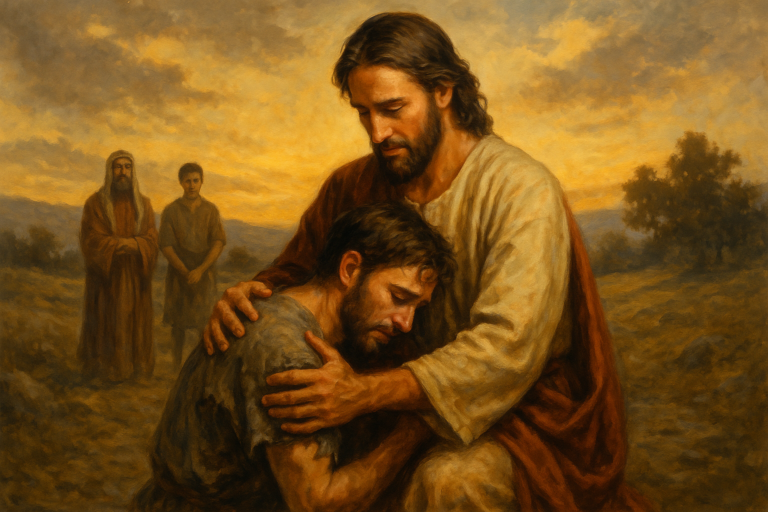
“Let the wicked forsake his way, And the unrighteous man his thoughts; Let him return to the LORD, And He will have mercy on him; And to our God, For He will abundantly pardon”. Isaiah 55:7
The message of repentance from sin begins in the book of Genesis and ends in the last book of the Bible, Revelation. And this is the message throughout: ‘Forsake’ your wickedness, ‘Purge’ your heart of evil, and ‘Seek’ the mercy of God. If you are a thief, do you wish to be forgiven? Admit your sins to God, plead with God for forgiveness, and stop stealing right now. Start making restitution immediately, in person, to all you have stolen from. Do you honestly think that you can continue to steal that which does not belong to you, or not give back what you have stolen, and be forgiven simultaneously? If you do, you are deceived, and your salvation is doubtful.
If you are a fornicator or an adulterer, stop it right now and seek God’s forgiveness. Only those who confess and forsake their sins will find the mercy of God according to the Bible. Do you honestly believe that your spouse will be okay with your ongoing adultery? In most cases, that will never be accepted, condoned, or allowed. Do you honestly think God will forgive you if you do not immediately stop your fornication and adultery? If you do, then you may be hopelessly lost. And if you believe God forgives you in advance, as many Christians believe, then you are deceived and your salvation is very doubtful.
If you are a liar or a false witness, you must stop that immediately and begin to tell the truth. I might name all ten commandments, and the message is the same. Stop the sinning right now, or you will never have the mercy of God and His forgiveness. Why isn’t this obvious? Can you imagine a convicted child molester being forgiven and pardoned of his great wickedness without him stopping such evil acts? Impossible. But this is exactly what Christians are being taught to believe. This is Satan’s idea of the perfect religion, one without repentance from sin. This kind of Christianity, which preaches the death of repentance, will destroy the world, not save it. Jesus came to save our lives, not to destroy us. These lies are destroying people’s lives here and now and in the hereafter.
Repentance is the purging of our minds and hearts. It is the commitment to live for God as your primary end for which you live. By definition, that means you are forsaking everything that offends your LORD and God immediately, when it comes to your mind that God forbids such acts. There is no negotiating this with God or negotiating the timing of when you must repent. You must repent from everything sinful immediately. Only in this overall cleansing and purging is your temple fit for the indwelling of the Holy Ghost. Does it really make sense to you that God will inhabit a human temple that refuses to be holy and refuses to be cleansed of all its filth?
If this does not fit into your definition of repentance, is it possible that you are already brainwashed and deceived? Moreover, the Bible, common sense, and reason must all be in error if you do not understand what true repentance looks like. For all that is written on repentance is consistent with this clearing, indignation, zeal, and fear, see 2 Corinthians 7:10-11. That results in actual purity of heart. Is it heresy to believe that God expects our sin to stop in repentance? Can the just God of heaven forgive us and grant us mercy and the Holy Ghost, if we refuse to stop sinning against Him? No person will ‘receive’ Christ in a saving way while still clinging to their sins. Might that actually be the message of the Bible?
The evangelical church at large pretends to teach true repentance but does not. Not teaching and believing in Biblical repentance has done its nefarious work. Our society and our churches are filled with carnal “Christians” and outright reprobates, all claiming to be Christians. This is exactly what we expect when repentance from sin is viewed as optional or even heretical, in the present evangelical church. This is the death of repentance. It is seen in the following:
1) Aspiring Christians are told that they come to Christ in their sins. Sin isn’t the problem.
2) New Christians are told that they can’t choose to cease sinning even after salvation.
3) New believers are told that God saves them “in” their sins, and then the process of cleaning up their life begins slowly over time. But never to the extent that a born-again child of God lives a life where sin is the exception and not the rule.
It is absolutely pathetic that you can’t find, but a rare few preachers or Bible teachers, who have the right concept or definition of Biblical repentance. Across the many evangelical churches, they believe that man is wholly incapable of obeying God consistently. They believe that God graciously enables us to obey Him after we are saved. Even so, that grace of God is never sufficient to cleanse us from habitual sin. This gracious ability only goes so far, but not far enough for the sin to stop.
Many Christians believe that before we are saved, we do not have the ability to obey God. Yet we are somehow responsible for obeying God even though we have no ability to do so. If that makes sense to you, then you are already blinded and deceived. Is that unreasonable?
Christians are constantly told that repenting of sinful practices, in the sense of stopping the habitual sin, is beyond our ability. Most also believe that we are completely without free will to choose the right actions that would lead us to faith in Christ. God has to do all this for us through an elaborate application of His grace. Grace is explained in various terms, including universal grace, prevenient grace, divine grace, assisting grace, and effectual grace. These expressions are all in an effort to soften the false belief of inbred sinful nature ‘just enough’ so he can ‘believe’ in Jesus, but not enough for us to stop sinning. All these are simply efforts to make their false theology believable and reasonable. Bottom line is that this false theology spells the death of repentance.
Thus, we have the following fallacies being preached as the Gospel:
- We can choose ‘freely’ to do wrong, even though we have no ability to do otherwise. What nonsense is this?
- We can’t choose to turn to God unless and until God chooses us and enables us. We are free to reject God, even though we have no ability to accept Him. What great delusion is this?
- We are free to sin but not free to stop sinning. Yet in this twisted theology, we are still accountable for involuntary sin. Involuntary sin is no sin at all, which really makes us innocent of all sin and without guilt. And their minds are so darkened that they actually think we are held responsible to do what God commands, but totally unable to do what God commands. Only the gullible and brain-washed person could believe such foolishness. Do you agree?
Any right action on our part is attributed to God enabling it, but any wrong action is us choosing to rebel. But the truth of their position is that we are born rebels to begin with, by God’s decree. These blind guides say God is not even ‘indirectly’ responsible for your wrong actions, even though God determines that you will commit them with specificity. Although God is directly responsible for any good you may do because He decreed it. And all the while, they claim that we have free will. What utter nonsense is this thinking? No good will come from listening to these blind guides.
Given this perspective, it is clear that repentance must be ordained by God, who is ultimately the source and cause of all evil and all good. Why would God decree that His elect children should wallow in sin all their lives? Does that really bring glory to Himself? I do not believe it. Their reasoning is seriously impaired, don’t you think?
Some Calvinists believe that we have the ability to accept God, but once we do receive or accept Jesus, we lose the ability to reject Him. They smuggle in Calvinistic determinism while pretending to reject determinism. Grace, they say, can be resisted until you once believe in Christ, and then grace becomes irresistible, and we no longer have free will. Three or four-point Calvinists are blinded to the truth, as are the five-point Calvinists, who are at least more logically consistent than the partial Calvinist.
Now that we have established what is going wrong in most evangelical churches, it is time to dig a little deeper. We will do that by using information from Mike DeSario and his YouTube channel. The following responses are from Nazarene Pastors in the USA, gathered by Mike and his team. Mike writes, “The Nazarene pastor’s bondage to the doctrines of Original Sin and Prevenient Grace has badly distorted their concept of repentance. As a result, they have the Gospel in REVERSE. According to them, since you can’t obey God, can NEVER Stop sinning, and are not able to DO anything right, YOU COME to God ‘in sin’ are forgiven, filled, and Sanctified, while STILL SINNING.” And you may eventually gain some victory over your bondage to sin, if you choose to allow God full access to your will. Your free will was restored in salvation just enough for you to believe, but not quite enough for you to stop sinning, according to these guys.”
If you still believe there is any redeeming value to anything these Pastors are saying, may God help you wake up to the truth. Please read and study your Bible. They have got it wrong. Is that possible? And coming to Christ in this manner will only result in the mind-numbing effect of false teaching, which effectively kills repentance. The truth is that you come to God in real repentance and faith if you come at all. That means the sin stops, and you start to obey God. Here are some Nazarene pastoral quotes:
“Coming to Jesus as we are results in repentance, which means literally to change our mind, to get off one path and onto another, to leave behind our old person and our old ways and take on a new person and new ways. It is true that we come to God in a state of sin, with all our sinful thoughts and habits. But if we truly encounter Him, if we really meet Him, if we respond to His presence as we ought to, we will forsake our old sinful life so that we can live as one of His children and as one of His followers. Jesus said, “Come to me” (Matthew 11:28), but He also said, “Anyone who comes after me must first deny himself and take up his cross and follow me” (Matthew 16:24-26). We don’t have to have our act all together to receive Jesus, but if we do receive Him, then He’ll begin to clean it up Himself, by the power of His Spirit and as we submit and surrender to His presence day by day.” Pastor P.
This pastor begins well by defining repentance as putting off the old man and his sinful habits, and putting on the new man and his righteous habits. But then adds that we do not need to have our act together to receive Jesus, which is both true and false at the same time. It is true that we come to Christ as sinners who need to repent and believe in Christ. It is false in that we come to Christ as repentant sinners (not unrepentant sinners refusing to stop sinning) and in only that way to actually receive Him. We come to Christ willing to immediately forsake and stop every sin that offends God. And only in that way do we actually receive Jesus. But many Pastors believe we come as sinners, receive Jesus without repentance or the forsaking of our sins, and then, by the power of God, we stop sinning as much as we did in the past. As this pastor declared, “Then He’ll begin to clean it up (our lives) Himself…” Bottom line is that we can receive Jesus in a saving way, but not forsake any sins at all before we are born again and justified. In other words, we can confess our sins and receive God’s mercy. Forsaking some sin comes later as God directs and enables. I do not believe that is the truth of scripture.
“Yes, everyone has the free will to stop known sins. However, they may not have the power to do so. We only have such power through the Lord Jesus Christ. John 1:12-14, Pastor L.”.
What insight this pastor has. Everyone has the free will to stop known sins. Can anyone stop sin that they do not know about? Obviously not intentionally. This pastor goes on to say that all can stop known sin, but they may not have the power to do so. In what sense is it true that they have the free will to stop known sin but not the power to stop known sin? This is nothing but theological nonsense. Obviously, free will without the power to stop sin is not truly free, because free will must include the actual power to stop sin. Is this not a pathetic response, to claim a free will that has no freedom?
“In reflection upon my last email, I need to restate my first sentence. The ultimate purpose of prevenient grace is to bring us to Christ in repentance. It gives the option for good, right choices all the time, but the purpose is to bring us to Christ. What is lacking is the power of a man’s will in a fallen state to consistently live a righteous life. Indeed, much of what passes for good in this world is merely enlightened self-interest. Pastor W.”.
Much of what passes for good in this world is indeed merely enlightened self-interest, but it is not true or reasonable that man lacks the power of his free will. Power/ability and free will are one in the same thing. A person lacks truth and genuine repentance, not the ability to do what God demands. Even the Nazarene denomination is sucked into the lie of Original Sin and the total depravity we are born with. I think it may have been John Wesley who invented the doctrine of prevenient grace (convenient grace), which is a grace that goes before and prevents our children from being born without the guilt of Adam’s sin, but still with a strong inclination or bent to sin. This may not be equivalent to, but it is very close to, the concepts of total depravity and total inability.
“It empowers us for one thing and one thing only: to choose for salvation in Christ. Think of it like the starter motor on your car. It doesn’t move the car, but starts the engine which does. Why this particular interest in “stopping all known sin so we can repent and get saved?” If getting your mind/life to accord with this standard (again, if the standard could be met without Christ there would be no need for Christ) is keeping you from experiencing the joy of salvation, you’re making things more complicated that God intends and the Bible teaches. Just confess your need of forgiveness to God, trust Christ for it and allow Him Lordship over your life. This forensic interest in the “nature of repentance” causes me to wonder if you’re coming from or dealing with someone from the Church of Christ.” Pastor W.
This pastor is even surprised by the question itself. Amazing. Why is the question about stopping all known sin rarely addressed when a person comes to accept or receive Christ? Why is that? The disgusting answer is that repentance from sin doesn’t imply stopping sinful practices, if it is even mentioned at all. We can come to and receive Christ as sinners who still cling to their sin. What utter nonsense. No wonder the Church of Jesus Christ is full of unsaved hypocrites and carnal members. The simple truth is not complicated at all, but their explanations are the very definition of convoluted and complicated.
“I’m saying we are not able to stop all known sin until we receive Christ. What we DO need is to be forgiven, the desire to stop all known sin and to receive Him into our lives so He may accomplish this. “If by the Spirit you put to death the misdeeds of the body, you will live” Romans 8:13. Pastor W.
Here, the Original Sin dogma is clear when this pastor says, “We are not able to stop all known sin until we receive Christ.” Total inability is a get-out-of-jail-free card and is definitely not biblical. Again, this pastor asserts that we can be forgiven before we confess and forsake our sins, which contradicts common sense and the Word of God. Only those who confess and forsake their sins shall find mercy, as seen in Proverbs 28:13. However, this pastor and many others teach us that if we confess our sins alone, we will find mercy. They overlook the second condition of receiving mercy, which is the forsaking of sin. It seems they all do this.
“Prevenient grace gives us the ability to respond to the gospel but we are still capable of rejecting this call. Non-believers have exercised free will to stop a habit like smoking, drinking, or doing drugs (will power). As explained, Prevenient Grace is grace to choose God’s salvation. There is also the continual grace of God available to all Christians; Prevenient Grace is available to all people, so that a sinner can hear and accept the gospel for salvation. All people including Christians can choose to appropriate (or not) God’s grace. There is prevenient grace that comes before salvation so that a sinner can hear and be saved. There is grace as a free gift of salvation (we are saved by grace, through faith), and there is the continued favor, help, grace of God to all believers. Pastor G.”
In this denomination (Nazarene), you will hear much about prevenient grace, but not in other denominations. Prevenient grace is their way of reconciling the doctrine of Original Sin with the Word of God and their own sense of justice. This grace enables us to choose God and is directly opposed to high Calvinism and its doctrine of unconditional election (effectual determinism), which asserts that God alone chooses His elect, and people have no choice in the matter. But is it really grace that allows us to get right with God or not get right with God? It seems more like a level playing field than a matter of grace, and more like justice than grace.
“Prevenient grace is God’s grace that goes/comes before, the grace one has before one can make an informed decision to follow or reject Christ. It refers to God’s activity prior to any human movement toward God. From the human side, its necessity is the all-pervasiveness of original sin, which affirms the total inability of man to initiate the divine-human relation. From the divine side, it is grounded in the nature of God as love. Prevenient Grace must not be confused with free will. In the fall man lost his freedom for God. This did not affect his power of contrary choice. The freedom for God, is restored by the grace of God. Grace is extended to every human being but is resistible. Thus, God offers Himself to all, it offers man the awareness and capacity, but neither is saving unless responded to or exercised by one’s grace-endowed freedom.” Pastor E.
Even in a denomination that professes to believe in conditional salvation, the ugly lie of Original Sin is present. He says that prevenient grace should not be confused with free will. In the fall, man lost his ability to choose God, but man did not lose his ability to reject God and to sin. This makes no sense whatsoever. Do we have a free will to sin but not a free will to do good? That is not free will. Read the next quote reflecting what John Wesley said about free will.
“John Wesley says, “Indeed, if man were not free, he could not be accountable either for his thoughts, words, or actions. If he were not free, He would not be capable either of reward or punishment; he would be incapable either of virtue or vice, of being either morally good or bad.” Wesley also says, ”I believe that Adam before his fall, has such freedom of will, that he might choose either good or evil; but since the fall, no child of man has a natural power to choose anything that is truly good.” John Wesley taught that prevenient grace allows us to choose good. Grace offers good choices including regeneration, so we have free will.” Pastor R.
Again, the false theology of Original Sin is clearly present. But what if the doctrine of Original Sin is nothing but pagan philosophy brought into Christianity in the 5th century by Augustine? What if the church of Christ for the first four centuries believed in free will as Adam had when he was in the garden? Also note what a good job Wesley did defining the moral foundation for virtue and vice, which he then obliterates by stating that, after the fall, no one is born with free will. What a sad comment by such a great man.
“God is a God of Grace, meaning he wants to extend his love to everyone especially the undeserving. God wants to change people with his love, he doesn’t wait for people to be perfect to be saved. He just wants them willing to give all of themselves to him”. Pastor M.
It is true that God is a God of grace who wants to extend mercy to repentant sinners. Obviously, God does not wait for sinners or the imperfect to become perfect (which is an impossibility) before He extends mercy. Just as obviously, God does not extend mercy to unrepentant sinners who refuse to stop their criminal behavior. This pastor suggests that all that is needed is a “willingness to give all of themselves to Him”. And he and others simply mean that sinners pretend to be ‘willing’ to stop sinning and give all of themselves to Him, but are not actually willing to stop sinning and give all of themselves to Him, because they continue to sin.
“Salvation is a gift from God by which he grants full pardon and forgiveness of all guilt and release from the penalty of sins committed. It is available only through Jesus Christ, he made it possible because he shed his blood on the cross — paying for our sins. It is not by our works or goodness, only by the grace of Jesus Christ. We ask the Lord to forgive us. He does just that. Although we can try to “clean up” our lives before we are saved — that will not save us. We must repent and ask the Lord to forgive us. We then become a new person, because Christ makes us new. We become his children. If we are truly sincere and true, then we will turn our back on Sin and live for God. Sin must not be a part of our life. In fact, as we draw close to the Lord and allow him to Sanctify our heart, we will begin to not even have the desire to sin. And when we do, we simply say no to the devil and yes to the Lord. Ask him to forgive us and we keep on living for him. Back to your question — salvation is not dependent upon anything except us accepting God’s gift of true life and we will turn from our sin. If we are truly saved and going to make heaven our home, sin will not be a part of who we are. We will still make mistakes, but if sin begins to enter in, we will turn away from it and keep our eyes upon the Lord. We will have perfect motives.” Pastor D.
Some of this seems reasonable and Biblical, but not all of it. Let me highlight a couple of statements that are not well said. At the beginning, this pastor states that we are saved by the grace of God when “we ask the Lord to forgive us and he does just that.” It is very easy to see how this can create the false impression that confessing one’s sin is all that is required to be forgiven, rather than forsaking it. To find the mercy of God, a sinner must confess and forsake sin, as seen in Proverbs 28:13. Pastor D. goes on to say that we must repent of sin and stop sinning. That is true. He goes on to say that our salvation is dependent only on us accepting God’s gift. That is not the whole truth. To accept that free gift of salvation from God, there are conditions which we must meet: faith and repentance. The Pastor could certainly do a better job of making that declaration. Being very clear is mandatory due to the widespread confusion surrounding repentance and salvation.
“When God saves and sanctifies a person, the personality is raised to its highest pitch of freedom; one is free now to sin if he or she wants to; before, one was not free, sin was impelling and urging him; when one is delivered from sin one is free not to sin, or free to sin if one chooses. The doctrine of sinless perfection and consequent freedom from temptation runs on the line that because I am sanctified, I cannot now do wrong. If that is so, you cease to be a human being. If God puts us in such a condition that we could not disobey, our obedience would be of no value to Him. My question to you is why would you want to sin?” Pastor B.
This pastor is trying to thread the needle by assuming total depravity and free will at the same time. We are always free not to sin, even before we are saved. The fact that we sin, even though we do not have to sin, establishes our guilt. Wesley and many of his followers believed in entire sanctification, which means that we are so committed to God that we do not sin and are not tempted to sin. He then attempts to refute the idea or doctrine of sinless perfection, which is not being proposed. I agree that involuntary obedience would be of no value to God. I do not agree with the idea of entire sanctification that we are no longer tempted. I see no promise in the Bible about freedom from temptation, but do read of promises of freedom from sin.
“Don’t know if you received my first email, but to answer your question, Adam was created with a free will, but after he sinned his will was no more. His free will had been tampered with. So it is with the descendants of Adam. Man does have a will but not towards God. He has the ability to choose for he has an intellect. However, there must be the drawing of the Holy Spirit for a man to come to Christ, and there must be a regeneration for a man’s will to be turned towards God. This my opinion.” Chancellor.
Again, we see the false Doctrine of Original Sin when he says Adam was created with free will but lost it when he sinned. The same applies to all of us. This Nazarene pastor sounds like a Calvinist who believes that God must first regenerate us and our will before we can or will choose God.
“The condition for being saved is our sinfulness. When His grace meets our sinfulness then we are saved. Change in us comes afterward.” Pastor D.
The reason these Pastors never seem to arrive at a clear answer is that they lack the courage of their convictions due to their contradictory ideas about sin, repentance, and salvation. Most of the time, they want to ease our burden and suggest that we are passive in repentance, and all of it depends on God and not us. That is not true, nor is it reasonable. Change in us does come. However, change comes simultaneously with salvation, not afterward, as the pastor states. Change and salvation are the same.
“The answer to your question as found in the Bible is this; When Jesus was brought a woman caught in adultery, Jesus told those who were accusing her to stone her if they were, without sin. When no one throw a stone, Jesus asked her, “Where are they? Has no one condemned you?” “No one, sir,” she said. “Then neither do I condemn you,” Jesus declared. “Go now and leave your life of sin.” (John 8:1-11). To what extent can we leave our life of sin depends on how close we live to God. But it is clear that it is God’s desire for us to leave our lives of sin when he has created a new spiritual being within us”. Pastor D.
In other words, we can live close to God and commit fewer sins. Or we can choose not to live so close to God and commit more sins. In either case, we are still children of God, is the impression his comments suggest, do they not? This pastor seems to lack the courage to tell the whole truth. Can we really be a born-again Christian while we choose not to live close to God and forsake sin? I do not believe it. The pastor says that God wants us to live close to Him. That is God’s desire. We can all agree on that, but is it optional, and if so, in what sense is it optional? Is it not God’s desire and command both?
“When you ask for forgiveness of your sins and accept Jesus as your personal savior that will happen or should (stop sinning). At times it is not easy, that ole devil fights hard to keep us in sin. Now God will help us stop committing sins, when we ask Him. Sometimes people need to talk with others for support to help them in their new walk with Christ to help them overcome certain sins like drug addiction, child molesting, and others. With God’s help we can stop willful sin in our life”. God bless, Pastor B.
Repentance from sin will or should happen when you make Jesus your savior, according to this guy. Is it really optional as he implies? No, it is not. Repentance from sin must happen. Why can’t this be made clear?
“Hi. I don’t know who you are, but will answer your question as God gives it. Stealing, lying, cheating, or any other action is not THE SIN. They are symptoms of the sin. “All have sinned and come short of the glory of God.” Man cannot be saved by his own acts. To be resurrected with Him, we must first die with Him. Salvation comes from the Lord, by His grace, not by acts, so no one can boast. When the Lord gave Himself as a sacrifice for man’s sin, salvation came. One must believe that. The Bible says one cannot come to the Father except through Christ, and one cannot come to Christ unless called by God. It is His doing, not man’s. If God is calling you to Him, all you must “do” is believe on His Son. So simple. It is not the works of man, but the grace of God.” Pastor M.
This person sounds much like a Calvinist would respond. Cheating, lying, and stealing are not sins, but rather symptoms of a deeper sin, according to this person. The sin is unbelief. That is my guess because it was not explained. Sounds very much like Charles Stanley, who said that it is not sins such as stealing, lying, adultery, fornication, homosexuality, and cheating that send us to hell. It is our state of unbelief, not sinning, that sends us to hell. For Stanley, unbelief is not a sin; it is a state of being. But what if unbelief is a sin and a state at the same time?
“The only requirement for being saved is a belief in Jesus Christ as the only way to being saved and then to sincerely ask for forgiveness of our sins. Once we have asked for forgiveness, we then need to seek God’s help in overcoming these areas of our life. To continue to willingly live in these areas would be to remain in the sin. However, if seek help from Christ and others where necessary, I believe God will help us overcome. In areas that may cause harm to others such as murdering, child molestation, adultery, fornication . . . it is important that one would seek appropriate help to rectify, and overcome these areas”. Pastor G.
This is not the typical response of a Nazarene pastor, but would be of a Baptist. He suggests that it is not inconsistent for born-again believers to continue to walk in sin. For this person, the only requirement for being saved is a belief in Jesus Christ. Repentance from sin is not a condition of salvation, according to this respondent. I strongly disagree. He is clear that he believes in a gospel where repentance is optional. In effect, repentance is dead.
Some comments:
In Acts 20:21, it is written, “Testifying both to the Jews, and also to the Greeks, repentance toward God, and faith toward our Lord Jesus Christ.” The requirement is repentance and faith. And this is the kind of repentance that is proven by deeds. And is it not the kind of faith that works by love? See Galatians 5:6, and Acts 26:20. These Pastors are the blind leading the blind. You will read in a later article about a minister who believes that this repentance is not a repentance from sin, but rather a repentance to God, as if turning to God doesn’t demand a turning away from sin at the same time.
Let us remember that sin is not a ‘symptom’ or ‘disease’, contrary to what many think. Sin is most certainly a high crime against the Almighty God of the universe. Repentance was granted and demanded by God precisely for this reason. Sinners must get clean to stand before a holy God. Therefore, sinners must crucify the flesh and put to death the deeds of the body of flesh, with its passions and desires that are contrary to the will of God. Repentance is demanded for these reasons, not so that God could forgive you “in” your sins.
Most professed Christians today have never repented and have no idea what true repentance means or how it works. And why would they? After reading what the Nazarene Pastors said in response to Mike’s inquiry, why would any of their church members understand the necessity of true repentance? Neither do these professing Christians have a faith that works and obeys God from the heart. At best, they are reformed pagans and nothing more. They are still in their sins. The churches they attend are merely a system of error designed to silence their conscience, making them impervious to the Spirit of Truth. They are like ships being tossed about by the winds of false Doctrine, sailing through time into their eternal ruin, unaware of their final destination. The death of repentance brings eternal death.
